

 Travel Essentials
 Travel Essentials

Compare New Zealand's North and South Islands for landscapes, activities, culture, and travel logistics to plan your perfect visit.
 Travel Essentials
New Zealand’s two main islands offer contrasting experiences that cater to different traveler preferences. The North Island blends urban energy, volcanic drama, and rich Maori heritage, while the South Island captivates with rugged mountains, glaciers, and vast wilderness. This guide breaks down key differences to help you choose or combine them for an unforgettable trip.
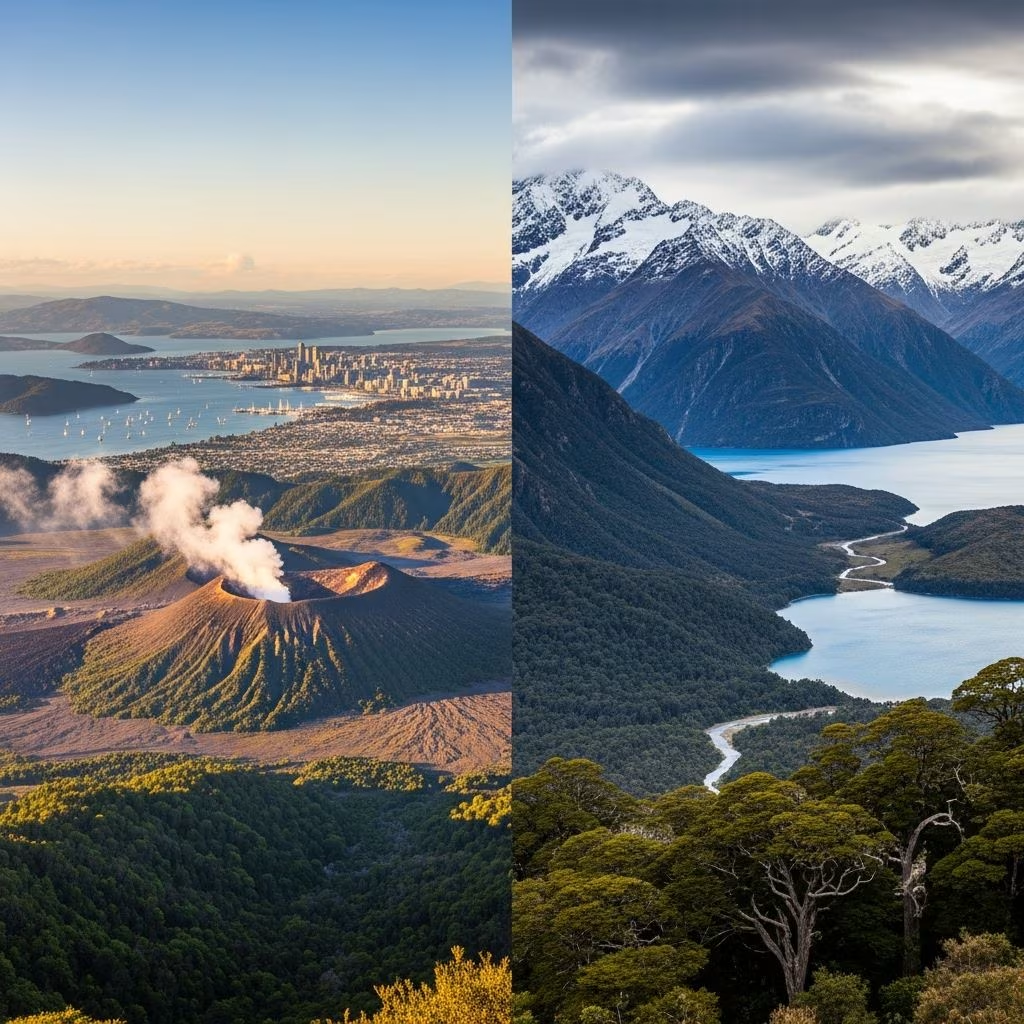
The North Island’s terrain stems from intense volcanic activity, creating a patchwork of geothermal hotspots, lush rainforests, and sandy beaches. Shaped like a long boot, it spans about 114,000 square kilometers with rolling hills, geothermal fields bubbling with hot springs, and iconic volcanic cones visible from cities like Auckland. These features make it a haven for those seeking dynamic, earth-shaping natural phenomena.
In contrast, the South Island’s dramatic profile arises from tectonic collisions, thrusting up the towering Southern Alps that bisect the land. Covering 151,000 square kilometers, it boasts glaciers, deep fjords, turquoise lakes, and golden beaches. Aerial views reveal snow-capped peaks and intricate sounds, evoking alpine Europe amid Pacific isolation. This variety positions it as the go-to for breathtaking, postcard-perfect scenery.
| Aspect | North Island | South Island |
|---|---|---|
| Key Formation | Volcanic | Tectonic/Alpine |
| Iconic Features | Geothermal areas, beaches | Mountains, glaciers, fjords |
| Visual Appeal | Lush, green, coastal | Dramatic, rugged, vast |
North Island enjoys a subtropical to temperate climate, with milder winters (around 10-15°C) and warm summers (20-25°C). Northern regions like Northland stay balmy year-round, ideal for beach days, while central areas see occasional frosts. Rainfall is moderate, supporting verdant forests, but expect changeable weather—pack layers for sudden showers.
South Island’s climate shifts dramatically west to east: wet and cool on the alpine west coast, drier and sunnier in the east. Winters bring snow to mountains (0-10°C), summers hover at 15-25°C. Higher elevations demand cold-weather gear for hikes, and coastal areas face strong winds. It’s generally cooler and more variable, rewarding prepared adventurers.
North Island thrives on geothermal explorations and water sports. Hike the Tongariro Alpine Crossing, a world-renowned day trek through lunar-like volcanoes with spiritual Maori significance—one of New Zealand’s Great Walks. Surf breaks like Muriwai Beach or Surf Highway 45 draw wave riders, while kayaking in Bay of Islands reveals dolphins and seals. Hobbiton tours add a whimsical touch for film fans.
South Island excels in epic outdoor pursuits. Trek Abel Tasman National Park’s golden sands and clear waters, or conquer multi-day Great Walks like Milford Track amid fjords. Glacier hikes on Franz Josef, bungee jumps in Queenstown, and whale watching in Kaikoura highlight its adrenaline-fueled diversity. With 9 of 13 national parks, it’s a hiker’s paradise.
| Category | North Island Highlights | South Island Highlights |
|---|---|---|
| Hiking | Tongariro Crossing (1 day) | Milford Track, Abel Tasman (multi-day) |
| Water Sports | Surfing, kayaking | Fjord cruises, whale watching |
| Adrenaline | Volcano tours | Bungee, skydiving, heli-hikes |
Home to 80% of New Zealand’s population, the North Island pulses with Maori culture. Visit Rotorua for geothermal marae (meeting houses), haka performances, and hangi feasts (earth-oven meals). Auckland’s multicultural scene mixes Pacific, Asian, and European influences, with harborside markets and galleries. It’s the cultural heartbeat.
South Island’s culture leans toward European settler history and adventure ethos. Queenstown and Wanaka buzz with global tourists, but Maori presence is subtler. Focus on pioneer tales in gold-rush towns or art in Christchurch. Wilderness fosters a sense of isolation and raw Kiwi spirit.
North Island’s infrastructure shines with 12 cities, including bustling Auckland (1.7 million residents) and artsy Wellington. Public transport links attractions efficiently; no car needed for many itineraries. Shorter drives (e.g., Auckland to Rotorua: 3 hours) suit short trips. It’s busier but more convenient.
South Island feels wilder with just 4 cities and vast open spaces. Queenstown is the adventure hub, Christchurch the gateway. Longer drives (Christchurch to Queenstown: 6 hours) demand a rental car or campervan. Fewer crowds outside peaks enhance remoteness, but plan for distances.
Fly into Auckland (North) or Christchurch/Queenstown (South); ferries connect via stunning Interislander voyages (3.5 hours). Rent cars for flexibility—North roads are smoother, South more winding. Budget 10-14 days per island or 3 weeks combined. Peak summer (Dec-Feb) books fast; shoulder seasons (spring/fall) offer deals and fewer crowds.
Costs: North is milder on pockets with hostels from NZ$30/night; South activities like skydiving hit NZ$300+. Camp freely more on North. Visas: Most get 3-6 months visa-free.
South Island for scenery wow-factor, but North eases jet-lag with cities. Ideal: Split time.
Yes, with 3+ weeks. Fly between or ferry for scenery.
North: Shorter drives, kid-friendly Hobbiton/geysers.
North: Cheaper, better public options.
South: More parks, Great Walks.
Choose North for culture and ease, South for nature’s grandeur—or both for the full Aotearoa experience. Customize by priorities: beaches/volcanoes (North), mountains/fjords (South). New Zealand rewards explorers with diversity unmatched globally.
