

 Travel Essentials
 Travel Essentials

Discover vital pre-trip advice for New Zealand: navigate left-side driving, embrace Māori heritage, pack for variable weather, and explore safely across stunning islands.
 Travel Essentials
Planning a trip to New Zealand promises encounters with breathtaking fjords, geothermal wonders, and vibrant indigenous traditions. This archipelago nation, often called Aotearoa by its Māori people, blends rugged adventure with serene beauty. To make the most of your visit, understanding local nuances is key—from road rules to cultural respect. This guide draws from reliable travel insights to equip you with practical knowledge for both North and South Islands.
New Zealand sits isolated in the South Pacific, separated from Australia by the Tasman Sea. Comprising two main islands—North and South—plus over 600 smaller ones, it spans roughly the size of Colorado but houses only about 5 million people. The North Island holds 75% of the population, centered around cities like Auckland, while the South Island boasts vast wilderness areas like Fiordland National Park.
Electricity uses Type I plugs (three flat pins) at 230V/50Hz, similar to Australia. Bring adapters for devices, but skip high-wattage hair tools—opt for local purchases to avoid voltage issues.
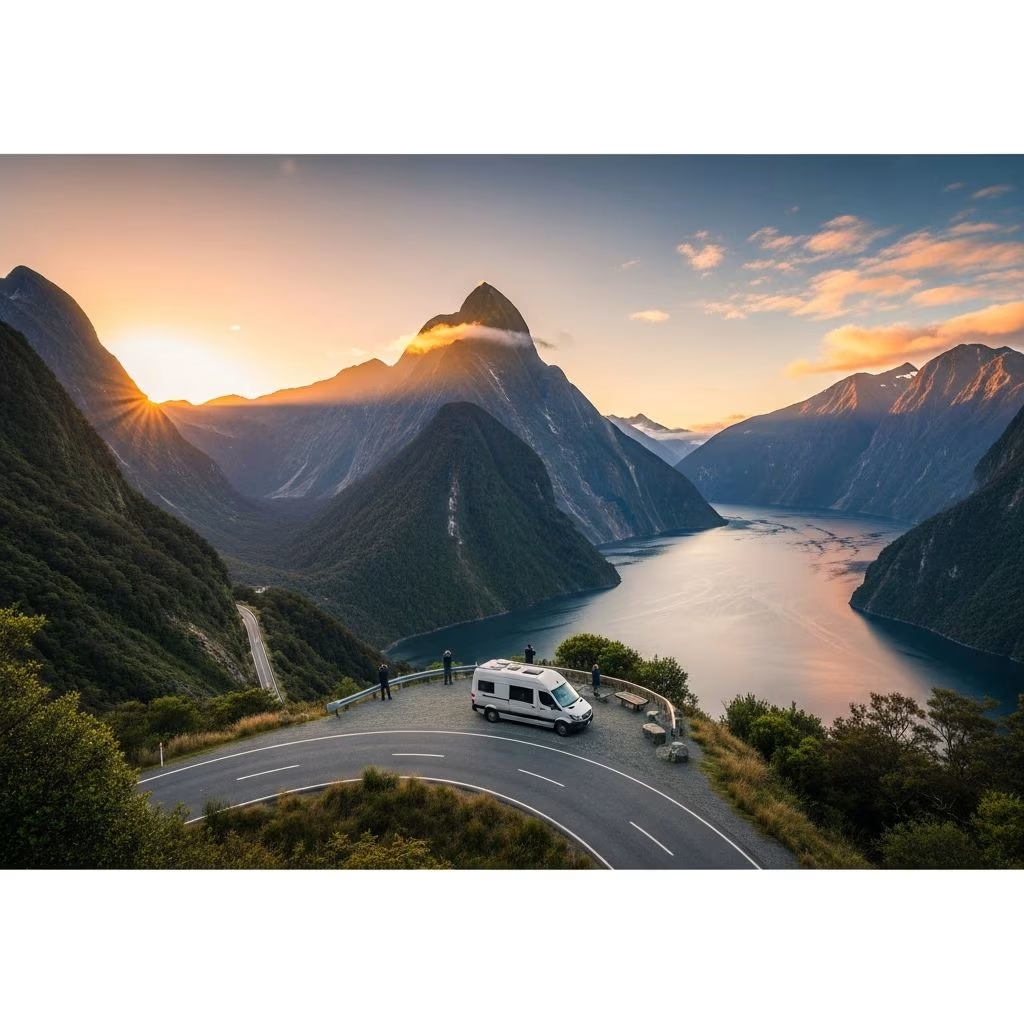
Driving defines New Zealand travel, with scenic routes like the Milford Road or coastal highways. However, key differences demand attention: traffic flows on the left side, a holdover from British influence. Auckland’s congestion hits hardest upon jet-lagged arrival, so ease in with public transport first.
Roads are often narrow, winding, and prone to slips (landslides). No sprawling interstates here—expect dual carriageways at best. Check NZ Transport Agency (Waka Kotahi) for closures before ambitious itineraries, like Auckland to Cape Reinga, which Google underestimates at 5-6 hours but feels far longer in reality.
| Route Challenge | Tips | Estimated Real Time |
|---|---|---|
| Auckland to Rotorua | Avoid rush hour; fuel up early | 3.5-4 hours |
| Queenstown to Milford Sound | Full tank, snacks; tunnel metering 8am-6pm summer | 4-5 hours |
| Christchurch to Mt. Cook | Watch for sheep; one-way sections | 3 hours |
For Milford Sound, stock food and gas beforehand—facilities are sparse. Summer tunnel traffic through Homer Tunnel requires one-way metering outside peak hours to prevent hazards. Rentals include GPS; practice roundabouts patiently.
New Zealand’s climate varies wildly: subtropical north to alpine south, influenced by Antarctic winds. Between 34°-47°S latitudes, expect British-like rain with sudden shifts—even mild days turn stormy. UV rays pierce 40% stronger due to thin ozone and clean air; slather SPF 50+ and wear hats to dodge quick burns.
Pack for microclimates: sunny Queenstown mornings might rain by afternoon. Always carry water—trails offer pristine streams safe to drink.
Aotearoa’s identity hinges on biculturalism, rooted in the 1840 Treaty of Waitangi between Māori iwi (tribes) and the British Crown. Māori arrived around 1300 from Polynesia, predating European settlement by centuries. Today, te reo Māori appears on signs, TV, and welcomes (kia ora means hello).
Immerse respectfully: Attend hāngi feasts (earth-oven cooked meals) in Rotorua, witness All Blacks’ haka (war dance), or visit marae (meeting grounds). Avoid touching carvings or photographing sacred sites without permission. Recent efforts address historical inequities, fostering pride in indigenous arts, language, and history.
No native land mammals except bats—humans introduced predators devastating biodiversity. Birds rule: flightless kiwi (nocturnal, endangered) symbolize the nation alongside tuī and kākā. Since 1300s arrivals, 40 species extinct; rats, stoats, possums persist.
Hiking shines predator-free—no bear canisters needed. Drink from waterfalls or hut rainwater freely. Support via donations to trusts like Routeburn Dart Wildlife Trust. Listen for birdsong—it’s rarer, more precious here.
Currency is NZD; cards dominate, but cash aids remote spots. Food costs more—groceries pricey, dining out reasonable. Black coffee scarce; expect flat whites. Fuel before isolated drives.
Visa: Most need NZeTA (online approval). Passport valid 3+ months post-departure; one blank page. No COVID rules currently, but check Immigration NZ.
North Island (7-10 days): Auckland base, Waiheke wine day trip, Rotorua geothermal/Māori shows, Taupo lake hikes, Bay of Islands for history.
South Island (10-14 days): Christchurch start, Arthur’s Pass, Queenstown adventures, Milford Sound cruise, Franz Josef glacier, Abel Tasman kayaking.
Skip overhyped Instagram spots like Wanaka’s tree; prioritize Rob Roy Glacier hikes instead. Stewart Island for bush treks among 400 residents.
Visitors from visa-waiver countries require an NZeTA, applied online pre-trip.
Yes, on most trails—fresh and untreated.
3-4 weeks minimum for both islands without burnout.
Summer (Dec-Feb) for warmth; shoulder seasons for fewer crowds.
No large predators; watch sea urchins, jellyfish at beaches.
No major risks, but earthquakes occur—follow Civil Defence alerts. Sunburn and dehydration top concerns. Medical facilities excellent in cities.
