

 Travel Essentials
 Travel Essentials

Discover practical ways to travel Nigeria via roads, trains, flights, ferries, and more, tackling congestion and infrastructure realities for seamless journeys.
 Travel Essentials
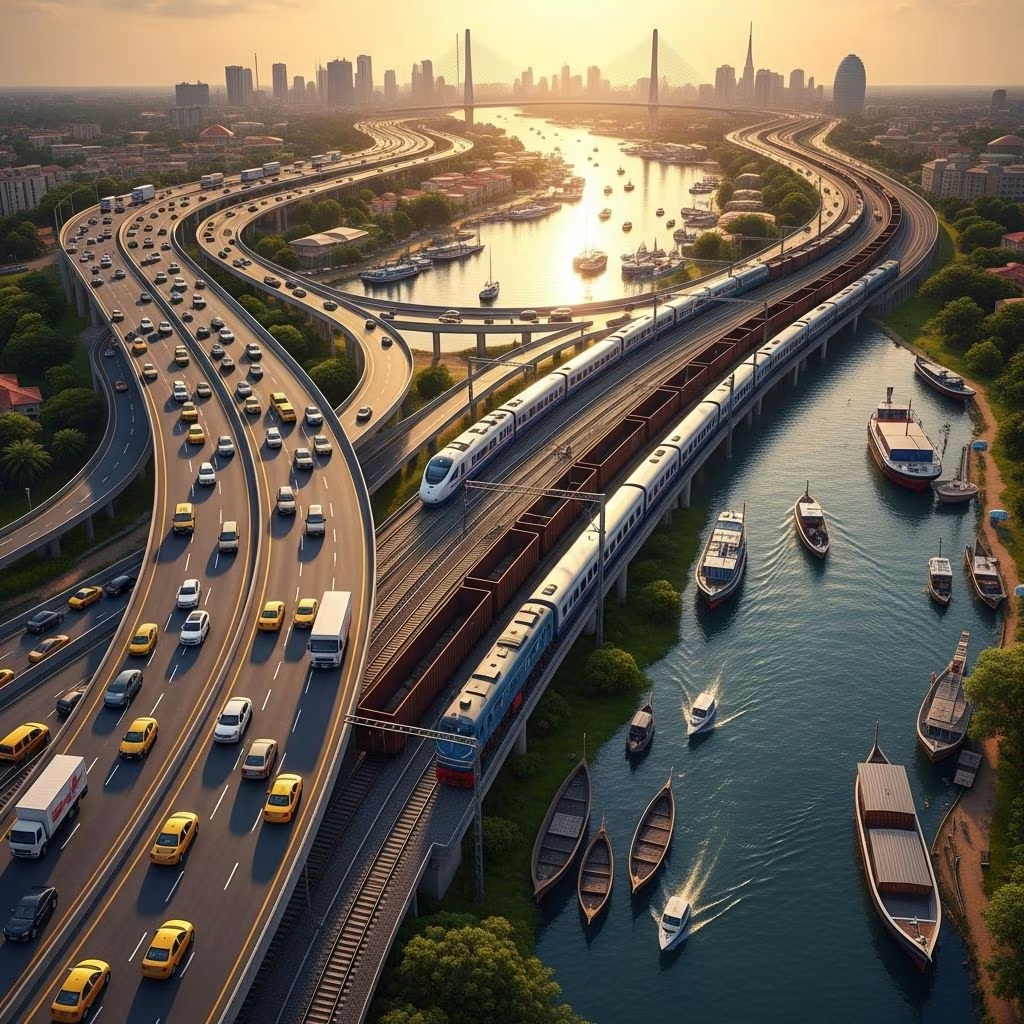
Nigeria’s transport system blends vast road networks, revitalized railways, expanding air routes, and vital waterways to connect its 200 million-plus population across diverse regions. Road transport dominates, handling over 90% of passenger and freight movement on approximately 200,000 km of roads, though challenges like congestion and maintenance persist.
Roads form the backbone of mobility in Nigeria, with federal highways carrying the heaviest loads despite comprising just 18% of the total network. These primary routes link major cities like Lagos, Abuja, and Kano, facilitating both daily commutes and long-haul trips. State and local roads, often unpaved, serve rural areas but can complicate off-main road travel.
Popular options include interstate buses from parks like Lagos’ Oshodi or Abuja’s Utako, offering affordable fares (e.g., ₦5,000-15,000 for Lagos-Abuja). Luxury coaches with AC and Wi-Fi provide comfort for 10-12 hour journeys. Shared taxis (okadas for bikes, keke for tricycles) thrive in traffic-heavy zones.
| Route | Distance (km) | Bus Duration | Approx. Cost (₦) |
|---|---|---|---|
| Lagos-Abuja | 750 | 10-12 hrs | 10,000-20,000 |
| Lagos-Port Harcourt | 500 | 8-10 hrs | 8,000-15,000 |
| Abuja-Kano | 400 | 6-8 hrs | 7,000-12,000 |
Nigeria’s rail network spans over 3,500 km across eight lines and 280 stations in 19 states, historically key for exporting commodities like palm oil and coal since 1916. Recent upgrades, including public-private partnerships (PPPs), signal a renaissance with modern lines easing road burdens.
The Lagos Blue Line, launched in September 2023, stretches 27 km from Okokomaiko to Marina, ferrying 250,000 daily passengers on stainless-steel trains powered by an independent 18 MW plant—resilient to power outages. It slashes commute times from hours to minutes, boosting access to financial hubs.
Future expansions aim for high-speed links under PPPs, concessioning rehabilitated lines to private operators to end state monopolies.
Air travel suits time-pressed travelers, with 32 airports led by Murtala Muhammed International in Lagos and Nnamdi Azikiwe in Abuja. Domestic carriers like Air Peace and Arik Air connect cities efficiently, vital for perishable goods.
Fares range ₦20,000-50,000 for Lagos-Abuja (1-hour flight vs. 10-hour drive). Challenges include occasional delays, but infrastructure investments improve reliability. Private charters cater to business elites.
Nigeria’s waterways, including the Niger and Benue rivers plus lagoons, enable ferries in Lagos and freight in the Niger Delta. State investments expand terminals, decongesting roads.
Lagos exemplifies transport evolution amid megacity growth. The Mass Transit System integrates buses, ferries, trams, and rails to combat gridlock, where commutes once took 3 hours. BRT buses on dedicated lanes (e.g., BRT Red Line) carry thousands daily.
In Abuja and Port Harcourt, similar bus rapid transit (BRT) schemes emerge. Ride-hailing apps like Uber, Bolt, and Gokada fill gaps, though okada bikes risk bans in some areas for safety.
Combine modes for efficiency: fly long-haul, bus mid-range, taxi locally. Apps like GIG Logistics or Redline Bookings simplify reservations. Peak seasons (holidays) spike prices 20-50%.
Dry season (November-March) favors roads; avoid rainy months (June-October) for floods. Early mornings dodge peak traffic.
Buses rarely offer wheelchair access; rails improving. Women may prefer female-only sections amid harassment concerns.
Road accidents claim thousands yearly; adhere to FRSC rules—wear seatbelts, avoid night drives. Rails and BRT enhance safety via regulated ops. Sustainable pushes include bike lanes and smart services for fewer vehicles.
The Road Transport Safety Standardization Scheme (RTSSS) standardizes fleets, while high-capacity BRT investments decongest roads.
Fly (1 hour) or take the train if available; buses take 10+ hours.
Improving with new lines like Blue Line; book ahead for Lagos routes.
Use Blue Line rail, BRT, or ferries; travel off-peak.
Apps like Bolt are popular; share trips, choose rated drivers.
No internal visas; ID suffices for most, passport for flights.
Government targets infrastructure gaps via PPPs, rail modernization, and smart tech. Lagos’ model could scale nationally, promising greener, faster networks amid population booms.
