

 Travel Essentials
 Travel Essentials

NJ Transit rail service faced complete suspension due to a locomotive engineers' strike. Learn about alternative routes, bus services, and contingency plans.
 Travel Essentials
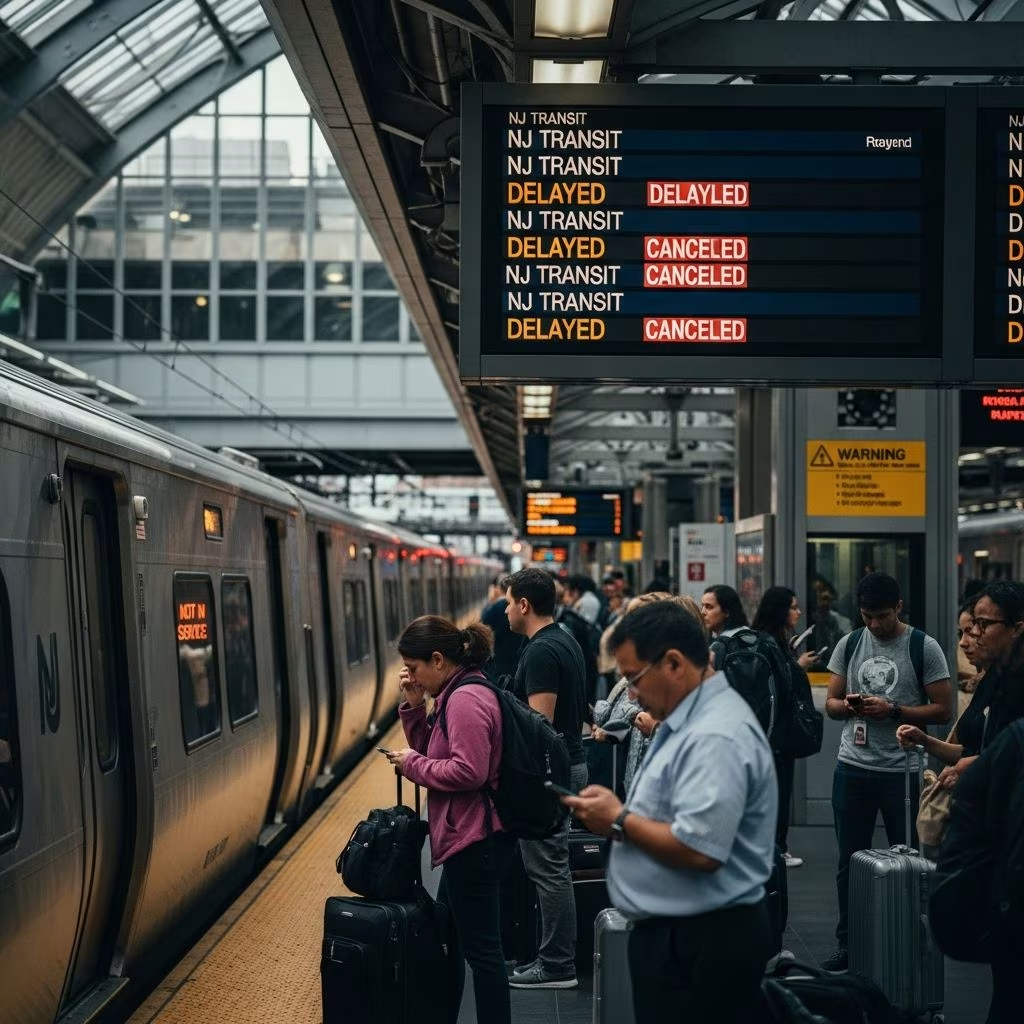
A significant disruption to regional transportation occurred when locomotive engineers represented by the Brotherhood of Locomotive Engineers (BLET) initiated labor action, resulting in the complete cessation of NJ Transit rail operations. This unprecedented event marked the first strike of its magnitude in over four decades, creating substantial challenges for the more than 70,000 daily commuters who depend on rail service to access New York City. The suspension affected not only standard commuter rail lines but also extended to Metro-North service west of the Hudson River, making it one of the most comprehensive service stoppages in recent memory.
The rail strike created a transportation emergency that affected multiple transit corridors and station hubs throughout New Jersey and the tri-state region. Commuters who regularly utilized Northeast Corridor trains, North Jersey Coast Line service, and Morris & Essex Line routes found themselves without their primary means of transportation to employment centers in New York City. Newark Airport, a major transportation hub serving millions of annual passengers, experienced significant disruptions to its rail connectivity. The suspension was comprehensive, affecting every rail line operated by NJ Transit and creating cascading problems for the broader regional transportation network.
Recognizing the critical nature of transportation needs, NJ Transit developed an emergency response plan designed to accommodate a limited subset of regular rail passengers. The contingency strategy focused resources on the largest concentration of commuters—those traveling northbound to New York City destinations, particularly customers transferring to PATH trains at Hoboken Terminal and Newark Penn Station. However, the agency acknowledged a fundamental limitation: bus service capacity could replace only approximately 20 percent of regular rail ridership, necessitating strategic prioritization of routes and services.
NJ Transit implemented specialized Park and Ride services designed to transport commuters from key locations to major transportation hubs serving New York City. These services operated during peak morning hours, providing critical connectivity for workers commuting to Manhattan offices and businesses.
NJ Transit established pricing for the emergency Park and Ride services to ensure accessibility while managing operational costs. The fare structure accommodated various passenger categories including seniors, individuals with disabilities, and children:
| Origin | Destination | Adult Round Trip | Senior/Disabled | Child |
|---|---|---|---|---|
| Secaucus Junction | Port Authority Bus Terminal | $8.00 | $3.50 | $3.50 |
| Hamilton | Newark Penn Station | $24.00 | $12.00 | $12.00 |
| Woodbridge Center Mall | Harrison PATH Station | $14.00 | $7.00 | $7.00 |
Regular NJ Transit bus service remained operational throughout the rail service suspension, providing essential connectivity across the region. The agency focused enhanced service on Northeast Corridor bus routes that parallel suspended rail lines, implementing added capacity and increased frequency to accommodate displaced rail passengers.
Unlike the comprehensive rail service suspension, NJ Transit’s light rail systems maintained regular weekday operations during the strike period. The Newark Light Rail, Hudson-Bergen Light Rail, and River Line continued functioning on standard schedules, providing alternative connectivity for customers where service coverage existed. Additionally, Access Link paratransit service for seniors and individuals with disabilities maintained normal operations, though passengers were advised to anticipate extended travel times due to increased system-wide demand and traffic congestion.
NJ Transit implemented modified ticketing procedures to facilitate use of emergency transportation services. For many Park and Ride services, customers required specific tickets beyond standard NJ Transit passes. Hamilton Rail Station customers could purchase Hamilton-to-Newark rail tickets through the mobile application or ticket vending machines. Woodbridge Center Mall passengers needed to acquire Woodbridge-to-Newark tickets exclusively through the NJ Transit mobile app, with no option for in-person or on-board sales. Notably, standard NJ Transit monthly passes and tickets were not accepted on Academy Bus services operated as part of the contingency plan, requiring passengers to purchase separate tickets.
Newark Liberty International Airport experienced significant transportation complications during the rail service suspension. The airport’s rail station, typically serving as a critical connector for arriving and departing passengers, lost direct access to regional and intercity rail networks. Passengers requiring airport transportation had to rely on alternative modes including rental vehicles, ride-sharing services, and substitute bus routes. The disruption particularly affected international travelers and business commuters accustomed to seamless rail connections from airport terminals to Manhattan business districts and hotels.
NJ Transit advised all individuals capable of working remotely to do so during the strike period, reducing overall system demand and alleviating pressure on alternative transportation infrastructure. The agency specifically requested that only essential travel occur on its network during the emergency period. Commuters with flexible schedules were encouraged to avoid peak hours and consider alternative routing through less congested corridors. Travelers planning air travel were advised to arrange ground transportation well in advance and account for significantly extended travel times compared to normal rail service.
After three days of complete rail service suspension, labor negotiations resulted in a tentative agreement between NJ Transit and the Brotherhood of Locomotive Engineers union. Following announcement of the tentative accord, service restoration could not occur immediately. State transportation officials indicated that comprehensive track and rail car inspection and preparation required a minimum 24-hour period before revenue service could resume. Union members required time to review and ratify the complete agreement details before returning to work. Full rail service restoration proceeded in phases, with complete normal operations resuming after necessary safety protocols and equipment inspections were completed.
No. While regular NJ Transit monthly passes remained valid on most alternative services, Academy Bus operations required separate ticket purchases, as standard NJ Transit passes were not accepted.
Yes. Newark Light Rail, Hudson-Bergen Light Rail, and River Line services maintained regular weekday schedules throughout the rail service suspension.
NJ Transit estimated that emergency bus and Park and Ride services could accommodate only approximately 20 percent of regular rail customer volume. Bus system infrastructure inherently provides less capacity than rail alternatives.
The rail service suspension lasted three days from when locomotive engineers initiated labor action until a tentative agreement was reached.
Access Link maintained normal operations, but customers should have anticipated longer travel times due to increased demand and traffic congestion throughout the region.
