

 Travel Essentials
 Travel Essentials

Explore the growing phenomenon of nighttime travel and discover unique experiences that transform destinations after sunset.
 Travel Essentials
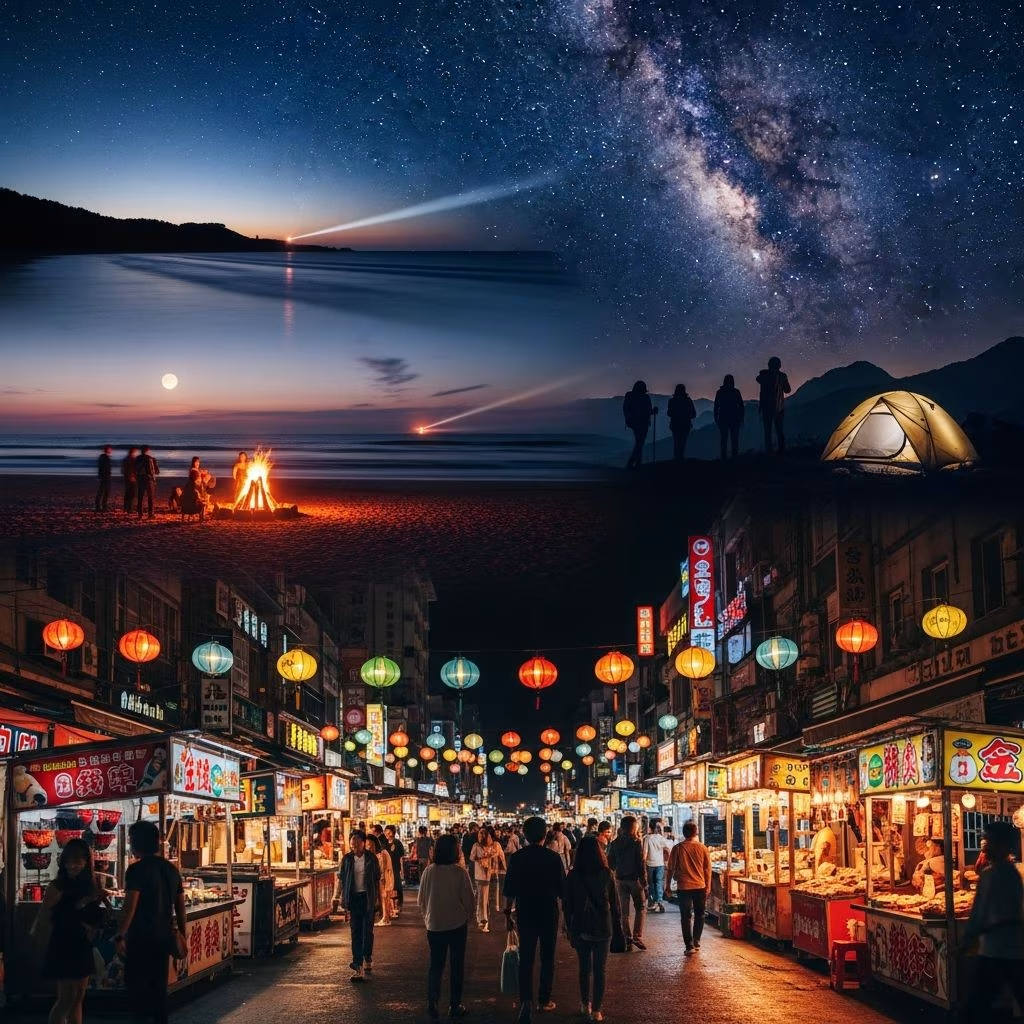
The travel industry is undergoing a significant transformation as a new category of exploration gains momentum among adventurous vacationers. Rather than adhering to conventional daytime itineraries, travelers worldwide are increasingly seeking experiences that unfold once the sun disappears below the horizon. This shift represents more than a simple scheduling preference—it reflects a fundamental change in how people conceptualize and engage with their destinations.
The emerging trend of planning vacations around nighttime activities has created entirely new pathways for exploration and discovery. This approach emphasizes the unique character and atmosphere that only darkness can reveal. Cities, natural landscapes, and cultural sites transform under moonlight and starlight, offering perspectives that remain hidden during daylight hours.
The nocturnal travel sector has experienced remarkable expansion in recent years. According to National Geographic reporting, the global market for after-dark tourism experiences reached a valuation of approximately $9.3 billion, with projections indicating continued growth of roughly 10% annually. This substantial economic footprint demonstrates that noctourism has moved beyond a niche curiosity to become a mainstream travel preference.
What distinguishes this trend from traditional evening entertainment is its focus on genuine exploration rather than passive consumption. Rather than simply dining or attending shows, nocturnal travelers actively engage with their surroundings, participating in guided expeditions, observing natural phenomena, and experiencing cultural practices that occur specifically after sunset.
Several interconnected factors contribute to the rising popularity of after-dark travel experiences. Understanding these motivations reveals why travelers are increasingly dedicating vacation time to nighttime activities.
Daytime tourism frequently involves navigating crowded attractions, competing with other visitors for photographs, and maintaining a hurried pace. Nocturnal experiences offer a compelling alternative by providing access to locations and activities with significantly reduced visitor density. This quieter environment enables travelers to engage more meaningfully with their surroundings, fostering contemplation and introspection that busy daytime schedules typically preclude.
Certain natural events occur exclusively or predominantly during nighttime hours. From auroras to bioluminescence to meteor showers, these occurrences cannot be experienced during daylight regardless of timing or planning. This constraint has naturally drawn travelers toward nocturnal expeditions, creating a built-in demand for after-dark tourism infrastructure.
Modern technology has eliminated many barriers that previously made nighttime travel planning challenging and uncertain. Mobile applications now provide real-time aurora alerts, astronomy guides for identifying constellations, and comprehensive databases of dark sky locations with minimal light pollution. Digital platforms enable travelers to research, book, and coordinate after-dark experiences with the same ease they apply to conventional tourism activities.
Among all nocturnal travel activities, stargazing represents perhaps the most universally accessible and profoundly moving experience. Witnessing the Milky Way stretching across an unobstructed night sky, or identifying individual constellations in their proper positions, connects travelers to fundamental human experiences that transcend cultural and geographic boundaries.
Several locations worldwide have gained recognition as optimal stargazing sites due to their geographic positioning, climate conditions, and minimal light pollution. The Atacama Desert in Chile offers exceptional clarity due to its extreme aridity and high altitude. New Zealand’s Aoraki Mackenzie region provides access to pristine Southern Hemisphere skies. India’s Ladakh region combines high elevation with remote location, creating ideal observational conditions. Within North America, the Central Idaho Dark Sky Reserve offers unparalleled access to northern starry skies with minimal travel from populated areas.
Specialized dark sky parks have been established globally, designated specifically to protect stargazing conditions through light pollution reduction efforts. These preserves function as sanctuaries for nocturnal observation, managed through strict lighting regulations and public education initiatives.
Professional observatories and national parks increasingly offer guided constellation programs and astronomy nights featuring telescopes and expert instruction. These structured experiences serve multiple purposes: they introduce novices to celestial navigation, provide superior equipment for serious enthusiasts, and ensure safety during nighttime outdoor activities. Ranger-led programs particularly benefit families and groups lacking astronomical knowledge.
The earth’s nighttime ecosystem represents a distinct biological realm, with many animal species most active during darkness. After-dark safaris capitalize on this nocturnal behavior, enabling travelers to observe wildlife under conditions that closely approximate the creatures’ natural behavioral patterns.
Professional night safari operations across Africa, Southeast Asia, and India have developed specialized approaches to nocturnal wildlife viewing. These expeditions utilize specialized vehicles, trained guides, and strategic knowledge of animal movement patterns to maximize encounter opportunities while prioritizing animal welfare and natural behavior preservation.
The cool night air conditions provide advantages for both animals and humans compared to daytime safari experiences. Lower temperatures reduce stress for observing wildlife and create more comfortable conditions for extended viewing sessions. The reduced visibility during darkness paradoxically enhances certain aspects of wildlife encounters, as many animals exhibit more natural behavior when they perceive diminished human detection risk.
Beyond natural phenomena and wildlife, cities and cultural centers offer distinctive after-dark activities that reveal different facets of human civilization and artistic expression.
Major museums in cities worldwide now designate specific evenings for extended hours operation. These programs serve multiple objectives: they reduce daytime crowding, enable working professionals to access cultural institutions, and create intimate viewing environments. The Louvre in Paris exemplifies this approach, offering after-hours access to world-renowned masterpieces under controlled lighting that sometimes enhances artwork visibility compared to daytime conditions.
Many architectural sites and historical landmarks are specifically illuminated after sunset, creating dramatically different visual presentations compared to daylight perspectives. This strategic lighting design can highlight architectural details, create atmospheric moods, and generate photographic opportunities impossible during daytime. Gyeongbokgung Palace in Seoul offers special evening tours showcasing traditional Korean architecture under specialized illumination, revealing design elements less visible during standard operating hours.
Cities like Tokyo showcase vibrant nighttime economic and cultural activity through glowing entertainment districts, late-night food markets, and karaoke establishments that represent genuine cultural expressions rather than tourist attractions. Engaging with these venues during their natural operating hours provides authentic immersion in local nightlife culture.
Beyond the primary categories of stargazing, wildlife observation, and cultural experiences, numerous specialized nocturnal activities have developed as distinct travel offerings.
Certain locations feature naturally occurring bioluminescence—organisms that produce light through chemical reactions. Kayaking through bioluminescent bays or beaches creates surreal experiences where water glows with each paddle stroke, revealing an alien-like landscape. These locations represent rare natural phenomena, making them inherently valuable travel destinations.
Underwater environments transform dramatically after sunset as nocturnal marine species emerge and behavior patterns shift. Specialized night diving operations introduce scuba-certified divers to this alternate underwater realm, revealing organisms and behaviors invisible during daytime dives. Night snorkeling and bioluminescent kayaking provide water-based nocturnal experiences accessible to non-divers.
Guided night hikes through forests and natural areas emphasize sensory experiences beyond visual observation. Sounds, scents, and tactile sensations become heightened when vision is limited, creating multisensory engagement with natural environments. These experiences often include wildlife tracking, plant identification using non-visual methods, and meditation-oriented nature connection practices.
Successful nocturnal travel experiences require thoughtful destination selection aligned with specific interests and physical capabilities. Stargazing expeditions necessitate travel to designated dark sky areas; wildlife viewing requires locations with reliable nocturnal species populations; cultural experiences demand cities with developed nighttime programming. Understanding these requirements enables travelers to make informed decisions.
After-dark activities often depend on seasonal factors affecting visibility, animal behavior, or natural phenomena timing. Aurora viewing concentrates in Arctic regions during winter months when extended darkness enables observation. Meteor showers follow predictable annual cycles. Wildlife behavior varies seasonally. Aligning travel timing with optimal conditions for desired experiences dramatically improves probability of successful outcomes.
First-time nocturnal travelers benefit significantly from guided experiences provided by professional operators and established tourism organizations. Expert guides enhance safety, provide educational context, optimize viewing conditions, and navigate technical aspects (equipment usage, location logistics) that could overwhelm independent explorers. Families and groups particularly benefit from structured programs that accommodate varying experience levels.
Optimal nocturnal experiences often occur in locations distant from urban centers and standard tourism infrastructure. Selecting accommodations strategically positioned within or near dark sky reserves, wildlife preserves, or natural phenomenon zones enables extended viewing opportunities and reduces travel time during critical nighttime windows. RV-based travel provides particular advantages by eliminating accommodation-to-viewing-location transit times and enabling flexible scheduling responsive to weather and natural conditions.
Nocturnal activities introduce distinct safety considerations requiring advance planning and appropriate precautions.
The nocturnal travel sector continues expanding as technological innovation enables new experiences and market development increases infrastructure investment. Emerging applications for virtual reality nocturnal simulation, sophisticated aurora prediction algorithms, and expanded dark sky park designations signal sustained industry growth. As environmental consciousness increases, nocturnal tourism’s emphasis on experiencing nature with minimal light pollution aligns with broader sustainability trends, positioning after-dark travel as an increasingly mainstream vacation choice.
Winter months (December through February in the Northern Hemisphere) typically offer the clearest, longest nights. Summer months feature shorter periods of darkness but clearer skies in many regions. Specific meteor showers follow predictable annual schedules. Research your target destination’s seasonal conditions before booking.
Yes, guided stargazing programs and some wildlife experiences accommodate families. However, extended nighttime hours outdoors may challenge very young children. Structured programs with designated break times and appropriate pacing work best for family groups.
Specific experiences like aurora viewing benefit from flexible scheduling that accommodates unpredictable natural conditions. General nocturnal tourism activities can be planned similarly to conventional travel. Guided experiences typically require advance booking.
Basic stargazing requires minimal equipment beyond warm clothing and a red-light flashlight. Professional tours typically provide telescopes and specialized equipment. Check specific tour requirements before arriving.
Most dark sky parks remain accessible throughout the year, though seasonal factors affect visibility and experience quality. Winter weather may occasionally restrict access to mountain locations. Verify seasonal conditions at your target destination.
