

 Travel Essentials
 Travel Essentials

Explore North Carolina's 13 NPS sites including Great Smoky Mountains, Blue Ridge Parkway, and coastal seashores, offering hiking, history, and wildlife adventures.
 Travel Essentials
North Carolina boasts 13 distinct areas managed by the National Park Service, ranging from towering mountains to expansive seashores and pivotal historic sites. Unlike many states with just one flagship park, this southern gem offers a tapestry of natural beauty and cultural heritage, drawing over 14 million visitors annually to its most popular spot alone. These protected lands preserve everything from biodiverse forests to revolutionary battlefields, providing endless opportunities for adventure, reflection, and discovery.
The western region of North Carolina is a haven for outdoor enthusiasts, dominated by rugged Appalachians that harbor some of the state’s premier NPS units. Here, ancient mountains cloaked in mist invite hikers, drivers, and history buffs to immerse themselves in timeless landscapes.
Straddling the Tennessee border, Great Smoky Mountains National Park covers over 522,000 acres, with nearly half in North Carolina. As the nation’s most visited national park, it welcomes millions each year for its 850 miles of trails, cascading waterfalls, and vibrant fall foliage. The park’s namesake “smoke” arises from water vapor trapped in deep valleys, creating an ethereal haze that has inspired poets and painters for centuries.
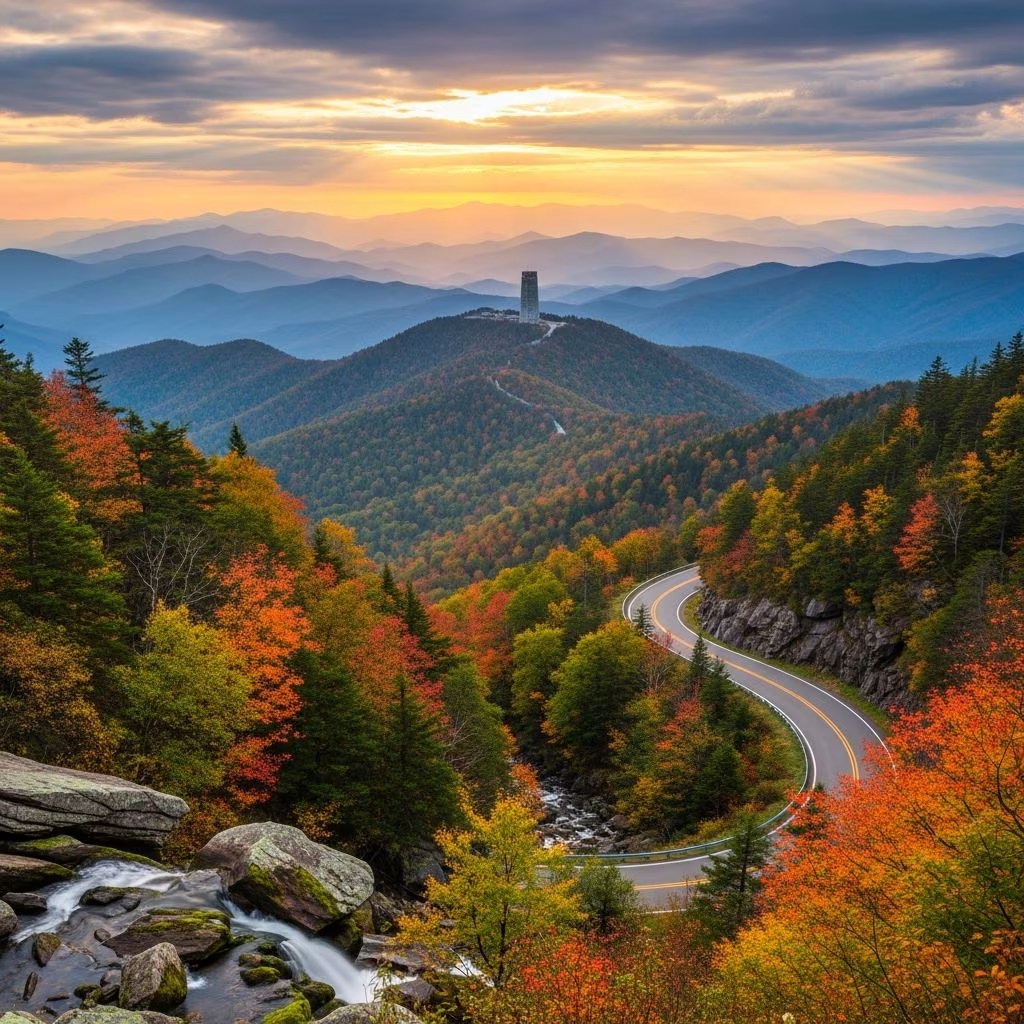
Key attractions on the North Carolina side include the Kuwohi Observation Tower, marking the western end of the Mountains-to-Sea Trail, offering panoramic views at 6,643 feet. Deep Creek Trail leads to three picturesque waterfalls, ideal for families, while Big Creek Trail rewards with Mouse Creek Falls amid lush rhododendron thickets. Wildlife abounds: black bears, elk, and synchronous fireflies light up summer nights in a rare bioluminescent display.
Winding 469 miles from Virginia’s Shenandoah National Park to the Smokies, the Blue Ridge Parkway is the most visited NPS unit in North Carolina. This scenic byway showcases long-range vistas, wildflower meadows, and pastoral farmlands at a leisurely pace—no commercial traffic allowed. Tunnels, overlooks, and side trails make it a driver’s paradise, with elevations topping 6,000 feet.
Highlights include the Linn Cove Viaduct, an engineering marvel hugging the mountainside, and Graveyard Fields for easy waterfall hikes. The parkway protects diverse flora and fauna, from flame azaleas to peregrine falcons.
Stretching over 2,190 miles across 14 states, the Appalachian Trail (AT) cuts through North Carolina for 96 miles, mostly paralleling the Blue Ridge Parkway. In the state, markers appear at spots like the Elkin and Allegheny Rail Trail, W. Kerr Scott Dam, and Catawba River Greenway. Thru-hikers tackle peaks like Mount Mitchell, the East’s highest at 6,684 feet.
North Carolina’s 300-mile coastline guards the Outer Banks and pristine seashores, where wild beaches meet maritime forests. These NPS seashores protect fragile ecosystems from development.
Encompassing 70 miles of barrier islands, Cape Hatteras is famed for shipwrecks earning its “Graveyard” moniker—over 2,000 vessels lost to shifting sands and storms. Lighthouses like Bodie Island and Cape Hatteras (the tallest brick lighthouse in the U.S.) stand sentinel. Activities include surfing, fishing, and wild horse spotting on Ocracoke Island.
South of Ocracoke, this 56-mile stretch of beaches and islands remains remote, accessible only by ferry or boat. No paved roads or facilities mean pure solitude amid dunes, marshes, and the historic Portsmouth Village ghost town. Kayak through sounds teeming with dolphins and sea turtles.
| Seashore | Length | Unique Feature | Access |
|---|---|---|---|
| Cape Hatteras | 70 miles | Shipwrecks & Lighthouses | Drive-in beaches |
| Cape Lookout | 56 miles | Wild horses & cabins | Ferry/boat only |
Beyond nature, North Carolina’s NPS areas illuminate pivotal moments in U.S. history, from colonial struggles to aviation milestones.
On Kill Devil Hills, this site commemorates the 1903 first powered flight by Orville and Wilbur Wright. Replica glider, monument, and museum exhibits detail their experiments amid punishing winds.
Site of the first English settlement in 1587, this Roanoke Island location probes the “Lost Colony” enigma—disappearance of 115 colonists. Outdoor dramas recreate the story summers.
Revolutionary War turning points: Guilford’s 1781 clash weakened British forces, while Moores Creek’s 1776 “Mother’s Day Battle” rallied patriots with women firing cannons.
The poet’s Flat Rock farm preserves his legacy amid goats and gardens. The Overmountain Trail traces 1780 frontiersmen’s march to Kings Mountain victory.
Round out the 13 sites with Trail of Tears National Historic Trail, marking Cherokee forced removal; Carl Sandburg Home; and others like Guilford Courthouse. Cherokee heritage shines at museums near the Smokies, including Oconaluftee Visitor Center.
Most sites are free, but check for timed entries in peaks. Camp in the Smokies (reservations needed), drive the Parkway year-round (closes in snow), and pack bug spray for seashores. Spring wildflowers and fall colors peak visitation; winters offer solitude.
Great Smoky Mountains, with over 14 million annual visitors.
Most are free; Blue Ridge Parkway charges $5-35 vehicle pass.
Fall for foliage, summer for fireflies.
Yes, with permits for off-road vehicles.
13, including one full national park.
These sites blend unparalleled scenery with stories shaping America. Whether summiting peaks or beachcombing, they offer accessible escapes fostering connection to nature and history.
