

 Travel Essentials
 Travel Essentials

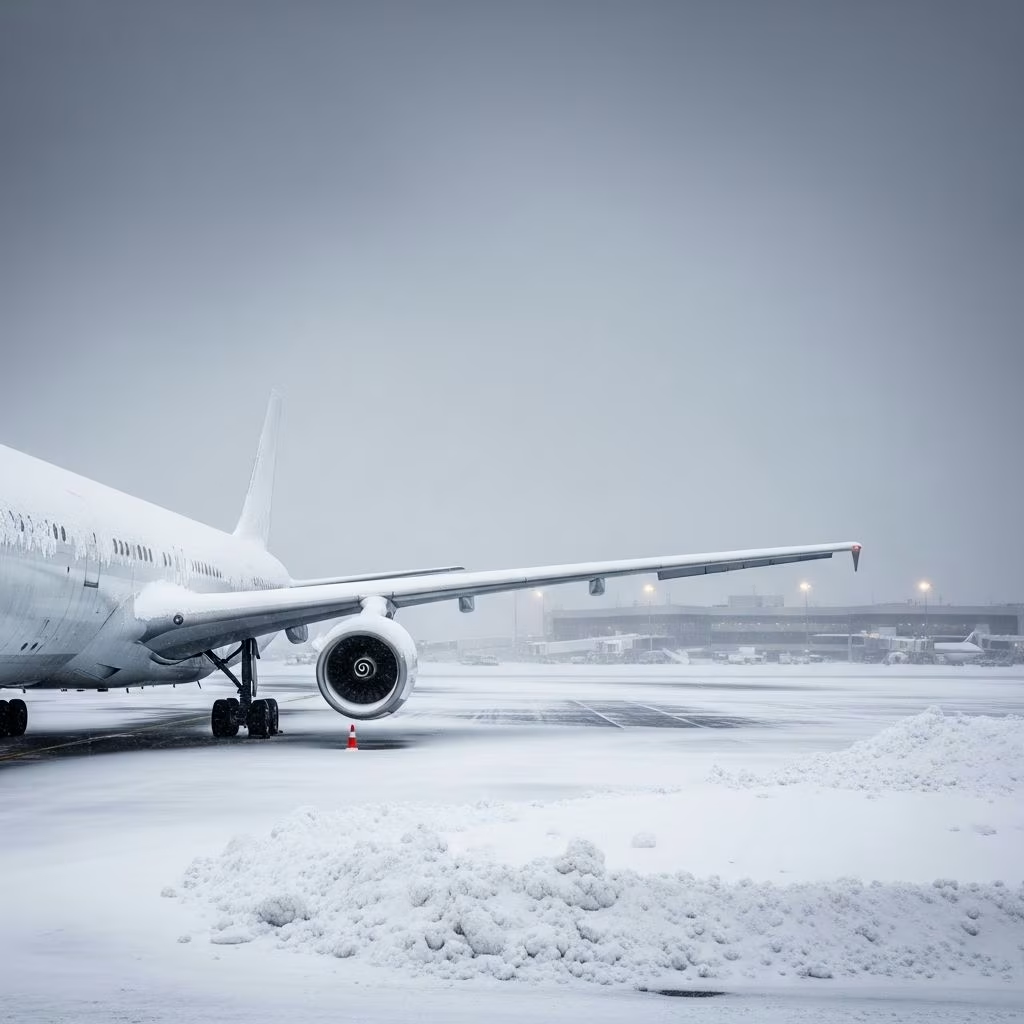
Thousands of flights canceled across Northeast airports as a historic blizzard brings heavy snow, wind gusts, and widespread power outages to the region.
 Travel Essentials
A historic nor’easter swept across the Northeast, leaving a trail of disruption in its wake and fundamentally altering travel plans for millions of Americans. The winter storm brought severe weather conditions that overwhelmed air traffic systems, grounded flights, and created hazardous conditions for ground transportation throughout the region. This comprehensive guide examines the scale of the disruptions, the meteorological factors that contributed to the crisis, and practical information for travelers affected by the chaos.
The magnitude of flight cancellations during this winter weather event reached unprecedented levels. More than 9,000 flights were canceled from Sunday through Tuesday, with the highest concentration occurring on Monday when airlines suspended over 5,700 departures and arrivals. The disruptions extended beyond the immediate impact zone, creating ripple effects across the entire national aviation network as delays at major East Coast hubs cascaded through connecting flights nationwide.
As the storm intensified on Sunday evening, airlines made the difficult decision to preemptively cancel flights starting Saturday to prevent stranded passengers and crew members. By Sunday evening, approximately 8,858 flights had been canceled with an additional 5,196 delayed. The following day proved even more severe, with some airport terminals experiencing near-total operational shutdowns. At LaGuardia Airport, for example, 98 percent of scheduled Monday flights were canceled, while John F. Kennedy and Boston Logan International airports also reported among the highest cancellation percentages in their operational histories.
The blizzard’s path concentrated its most severe impacts along the northeastern corridor, creating a travel disaster zone stretching from Maryland to Maine. More than 40 million Americans fell under blizzard warnings as the system moved through the region. The major aviation hubs most severely affected included:
While the major northeastern hubs bore the brunt of the storm’s fury, secondary airports and facilities in more distant regions also experienced significant disruptions. Tampa International Airport in Florida, for instance, reported over 121 canceled flights on Monday despite being located more than 1,000 miles south of the storm’s epicenter, demonstrating how widespread the knock-on effects of major weather disruptions have become in the interconnected aviation system.
The nor’easter that battered the Northeast combined multiple severe weather elements into a particularly dangerous storm system. Wind gusts reached velocities up to 55 miles per hour, creating whiteout conditions that made visibility nearly impossible and rendered travel extremely hazardous. The National Weather Service characterized conditions as “nearly impossible” for travel during the storm’s peak intensity.
Snow accumulation varied across the region but reached historic levels in many locations. New York City’s Central Park recorded more than 19 inches of snow, marking the ninth largest snowfall in the city’s documented history spanning back to 1869. Other areas experienced even more dramatic accumulations: Babylon, New York received over 29 inches while Freehold, New Jersey recorded more than 26 inches. Many communities throughout Long Island and New Jersey reported accumulations exceeding 2 feet.
The combination of heavy, wet snow and powerful winds created structural challenges for the electrical grid. Strong winds combined with snow weight triggered scattered to numerous power outages across the affected region. By Monday evening, more than 516,000 customers had lost electricity, with Massachusetts accounting for over 275,000 of those outages. By Tuesday evening, approximately 250,000 homes and businesses remained without power, with Cape Cod’s Barnstable County in Massachusetts experiencing the highest concentration of outages at approximately 216,000.
The severity of conditions prompted unprecedented government action across multiple states. New York and New Jersey initially declared states of emergency, which were subsequently expanded to include Connecticut, Delaware, Massachusetts, and Rhode Island. These declarations implemented commercial vehicle bans on major highways and instituted travel restrictions designed to keep non-essential vehicles off roadways.
New York City implemented a particularly strict response, closing all streets, highways, and bridges to vehicular traffic. The travel ban began at 9 p.m. Sunday and remained in effect until 12 p.m. Monday, effectively shutting down the city’s transportation network during the storm’s most intense period. Similar restrictions were implemented in other affected jurisdictions to prevent accidents and allow emergency response teams to operate effectively.
Major carriers recognized the unprecedented nature of the weather crisis and responded by implementing customer-friendly policies. Five of the nation’s largest airlines—JetBlue, American Airlines, Delta, Southwest, and United—announced that they would waive change and cancellation fees for passengers whose flights were affected by the nor’easter. This policy allowed travelers to rebook on later flights or alternative routes without incurring additional charges, providing some financial relief during the disruption.
Airlines advised travelers to monitor their flight status continuously through airline apps and websites, as conditions remained in flux throughout the storm event. The decision to cancel flights proactively rather than allow delays to cascade represented a strategic choice by carriers to manage customer expectations and reduce passenger frustration.
| Time Period | Flight Cancellations | Key Details |
|---|---|---|
| Saturday (Preemptive) | Hundreds | Airlines began canceling ahead of storm arrival |
| Sunday | 3,400+ | Storm arrival; initial major disruptions |
| Monday | 5,700+ | Peak storm intensity; highest cancellation day |
| Tuesday | 2,000+ | Lingering effects; service resumption beginning |
| Total (Sun-Tue) | 11,000+ | Comprehensive regional aviation shutdown |
The nor’easter’s disruptions extended far beyond airport terminals and flight schedules. Ground transportation became treacherous as Interstate 95, the critical Northeast corridor highway, became clogged with stranded vehicles. The heavy snow and gusty winds created blizzard conditions that made highway travel dangerous and, in many cases, legally prohibited.
Public transportation systems also experienced significant disruptions. Rail services faced delays and cancellations as weather conditions made safe operation impossible. These cascading impacts meant that passengers arriving at airports for canceled flights had few alternative transportation options available.
While the storm’s peak intensity lasted approximately 24 hours, recovery proceeded gradually over several days. Airlines hoped to resume service in some areas by Tuesday, though significant cancellations continued. The combination of residual snow cover, lingering power outages affecting airport infrastructure, and the need to reposition aircraft and crews meant that full service restoration took considerably longer than the storm itself.
Passengers scheduled for flights in the days following the storm’s peak were advised to anticipate potential disruptions, as airlines worked systematically to clear backlogs and restore normal operations. The sprawling network of connections meant that delays in major hubs rippled through the entire system for an extended period.
The nor’easter demonstrated the vulnerability of air travel systems to severe winter weather. Travelers planning flights during winter months should consider:
Contact your airline immediately through their website, app, or phone line. Major carriers waived change fees during this event, allowing free rebooking on alternative flights. Check with your specific airline for their policies and available options.
The most severe conditions lasted approximately 24-36 hours, with the heaviest snow and highest wind speeds concentrated on Monday. However, recovery efforts and lingering impacts extended over several days.
LaGuardia, JFK, and Boston Logan experienced the highest cancellation percentages. Newark, Philadelphia, and Washington-area airports also saw significant disruptions. Even distant airports like Tampa experienced secondary effects.
Accumulations varied widely, ranging from 12-24 inches across major cities. Some locations, including Babylon, New York, received over 29 inches. New York City’s Central Park recorded 19+ inches.
Yes. Wind gusts up to 55 mph combined with heavy, wet snow knocked down trees and power lines. Over 500,000 customers lost electricity at the peak, with some remaining without power for days.
