

 Travel Essentials
 Travel Essentials

Explore vast untouched wilderness, Aboriginal heritage, and unique marine ecosystems across Australia's remote northern regions through expedition-based travel.
 Travel Essentials
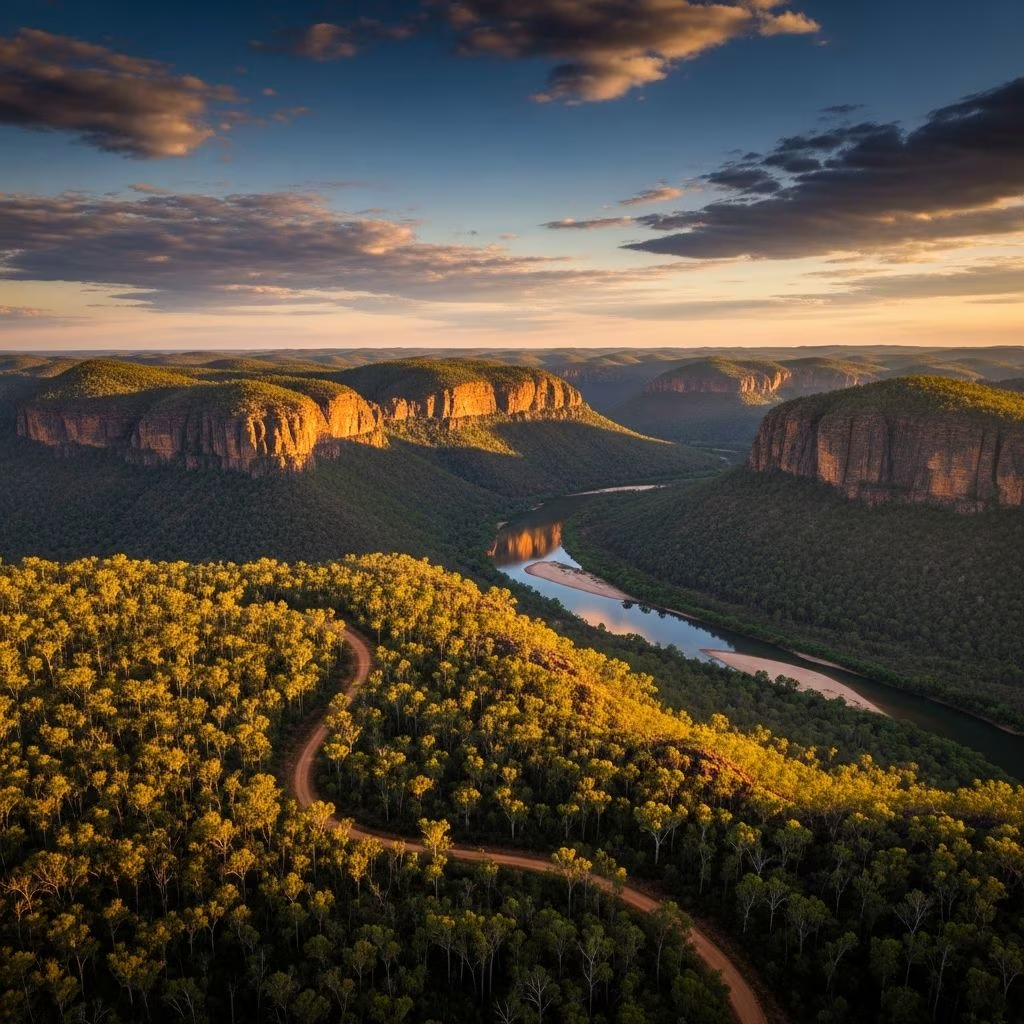
Few places on Earth retain the sense of untamed wilderness that defined our planet centuries ago. Australia’s northern regions represent one of these rare exceptions—vast territories where modern civilization has barely left its mark. Spanning over 160,000 square miles with a population of just 40,000 residents, this expanse rivals the size of California yet remains sparsely developed and largely unexplored by conventional tourism.
The landscape tells a story written over geological time. More than 1.8 billion years ago, continental collisions forged the Australian continent, and the evidence of these primordial forces remains visible today. Towering sandstone escarpments rise dramatically from deep gorges, while ancient waterways continue their relentless carving of the terrain. This remote region offers travelers an opportunity to witness Earth’s natural processes in their rawest form, untouched by the homogenizing forces of modern tourism.
Access to these remote territories begins in an unlikely place—a former pearling town that has transformed into a cultural crossroads. This coastal settlement serves as the primary launching point for expeditions into the wilderness. With its unique maritime heritage and contemporary vibrancy, the town bridges the gap between modern comfort and frontier adventure.
The town’s history as a center for pearling operations has shaped its character and infrastructure. Today, it functions as the essential gateway, offering travelers their last opportunity to resupply and acclimate before venturing into truly remote country. Various tour operators and experience providers are based here, making it the logical starting point for any northern wilderness journey.
Indigenous heritage plays a significant role in shaping local experiences. Guided tours led by Aboriginal people provide authentic insights into traditional land management, cultural practices, and the deep spiritual connections between people and landscape that span thousands of years.
Given the vast distances, limited road infrastructure, and pristine conditions that must be preserved, expedition vessels represent the optimal way to experience this region. These specialized ships navigate shallow waters, remote anchorages, and challenging tidal conditions that standard tourism vessels cannot access.
Expedition-based travel offers several distinct advantages:
A typical expedition spans multiple weeks, allowing travelers to experience the region’s diversity across different seasons and tidal conditions. The relatively small passenger capacities of these vessels ensure that environmental impact remains minimal while enabling meaningful interactions with guides and fellow explorers.
Among the world’s most unusual natural spectacles exists a phenomenon that appears nowhere else on Earth. Massive volumes of seawater surge bidirectionally through narrow cliff passages, creating the appearance of horizontal waterfalls. The effect occurs because tidal ranges in this region are among the most extreme on the planet. Millions of gallons of water compressed through narrow openings generate currents and whirlpools visible from considerable distances.
This location has gained international recognition for its geological and hydrological significance. The narrow passages create dramatic visual displays as tidal cycles generate currents that reverse direction multiple times daily. Viewing platforms and boat tours position visitors to witness this remarkable natural engineering firsthand.
Moving further south, massive reef systems emerge from the ocean at low tide, creating temporary landscapes that disappear beneath the waves during high tide. These formations host extraordinary concentrations of marine life, from large predators to microscopic organisms. Waterfalls cascade from the elevated reef surfaces, creating a surreal landscape of flowing water meeting exposed stone.
The marine fauna surrounding these reefs includes species found nowhere else in comparable concentrations:
Certain destinations require aerial access to fully appreciate their scale and beauty. Helicopter tours launch from coastal bases, providing panoramic views of waterfalls cascading down multi-tiered formations into emerald pools below. These elevated perspectives reveal landscape patterns invisible from ground level and provide context for understanding the geological processes that shaped the region.
Luxury seaplane operations offer similar aerial access while maintaining the romance of aviation history. These aircraft can land on pristine water bodies, providing direct access to remote locations while creating the unique experience of arriving by air to previously untouched landscapes.
From the air, the true scale of the wilderness becomes apparent. River systems snake across the landscape like arteries through muscle tissue. Multiple waterfalls create dramatic vertical elements against cliff faces. Vegetation patterns reflect subtle shifts in soil composition and water availability. The sparse human presence becomes obvious—vast areas showing no signs of development, roads, or human activity.
Scattered throughout the region are thousands of islands ranging from tiny rocky outcrops to substantial landmasses. These archipelagos function as biodiversity refuges, protecting species from mainland pressures while creating unique island-specific populations. Guided zodiac boat tours navigate these island systems, positioning travelers for close wildlife observation.
The islands host significant bird populations, particularly colonial nesting species. Certain locations support the largest concentrations of specific sea turtle species in the region. The combination of protected anchorages, abundant fish populations, and minimal human disturbance makes these archipelagos ideal for comprehensive wildlife viewing.
Within weathered sandstone and dolerite outcrops across the largest archipelago islands lies an extraordinary collection of rock art created over millennia by Aboriginal peoples. These artistic traditions represent some of the oldest continuous cultural expressions on Earth. The art depicts creation stories, spiritual beings, and practical knowledge about the landscape and its resources.
Access to these sites requires respectful engagement and often involves local Indigenous guides who can contextualize the artwork and explain its significance. The rock art galleries function as outdoor museums, preserving knowledge systems that predate written history by thousands of years.
Several locations showcase the complex interactions between freshwater river systems and ocean tides. During high tide, ocean water surges many kilometers inland, creating brackish environments where mangroves thrive. During low tide, exposed mudflats reveal the intricate web of life adapted to periodic submersion and exposure.
Guided walks through mangrove systems reveal the productivity of these often-overlooked ecosystems. Participants may encounter evidence of historical human activity through middens—accumulated shells from centuries of Indigenous harvesting activities. Modern ecological surveys document the extraordinary biodiversity supported by these transitional zones.
The tidal ranges in this region rank among the most extreme on Earth. A single tidal cycle can expose or submerge areas spanning several kilometers horizontally. This dynamic environment constantly reshapes itself through natural processes, creating ever-changing conditions that prevent human settlement and preserve pristine conditions.
Typical expedition itineraries span 10-14 days at sea, supplemented by pre- or post-journey experiences. The monsoon season (November through March) brings heavy rainfall and potentially challenging maritime conditions. The dry season (April through October) provides more predictable weather and optimal wildlife viewing conditions.
Specific seasonal advantages include whale migration periods when humpback populations move through the region, and turtle nesting seasons when marine reptiles come ashore in extraordinary numbers. Planning expeditions around these natural cycles enhances the probability of exceptional wildlife encounters.
While expedition vessels provide comfortable accommodations, the activities involved require moderate physical fitness. Zodiac boat rides, hiking across uneven terrain, and extended time on water in variable conditions demand preparation. Most operators provide detailed fitness guidelines to help participants assess their suitability.
Typical expedition days begin early to maximize daylight hours for exploration. Morning activities might include helicopter tours, seaplane flights, or guided hikes. Afternoons often feature boat-based exploration of marine environments. Evenings include presentations from onboard naturalists, cultural experts, and historians who contextualize the day’s observations.
The pristine nature of this region depends on maintaining strict environmental standards. Expedition operators implement protocols including waste management, minimal-impact landing procedures, and limited group sizes at sensitive sites. Travelers participate in conservation efforts by following guidelines that protect wildlife and habitats.
Indigenous land management practices that sustained the region for tens of thousands of years inform modern conservation approaches. Collaborative management between government agencies, Aboriginal communities, and tourism operators aims to balance preservation with sustainable economic development.
The dry season from April through October offers the most reliable weather, optimal wildlife viewing, and comfortable conditions for exploration. Specific months align with particular wildlife events like whale migrations and turtle nesting.
Most guided water-based activities do not require certification. However, opportunities for certified diving exist at certain locations. Check with specific operators for activity requirements.
Vessel accessibility varies significantly. Discuss specific needs with operators, as some vessels accommodate mobility devices better than others. Many activities involve uneven terrain that may prove challenging for certain limitations.
Bring lightweight, quick-drying clothing for tropical climate conditions. Sun protection, insect repellent, sturdy footwear for hiking, binoculars for wildlife viewing, and camera equipment represent essential items. Vessels typically provide detailed packing lists.
Many operators welcome children, though age restrictions and activity suitability vary. Family expeditions often offer child-appropriate activities while maintaining educational rigor.
Northern Australia’s remote wilderness represents a rare opportunity to experience Earth’s natural systems in relatively pristine condition. Expedition-based travel makes this extraordinary landscape accessible while maintaining the environmental protections necessary to preserve its character for future generations. From geological marvels and unique wildlife to ancient cultural heritage and Aboriginal artistic traditions, the region offers multifaceted experiences that connect travelers to the planet’s natural and human history. Whether witnessing horizontal waterfalls, encountering marine megafauna, or standing before ancient rock art, explorers return with memories of places that remain largely untouched by modern development.
