

 Travel Essentials
 Travel Essentials

Explore Northern Italy's artisan heritage, from Venetian glassblowers to Florentine leatherworkers, and how these crafts endure in a modern world.
 Travel Essentials
Northern Italy stands as a bastion of age-old craftsmanship, where skilled hands continue to shape materials into enduring works of art. These artisans, often working in family-run workshops, blend historical methods with subtle modern touches, ensuring their legacies thrive amid contemporary challenges.
Italy’s craft traditions form a vital thread in the nation’s cultural fabric, recognized globally for their precision and beauty. Artisans in regions like Veneto, Tuscany, and Umbria pass down skills honed over generations, resisting the pull of industrialization. UNESCO highlights the importance of these intangible cultural heritages, emphasizing how they connect past and future. In Northern Italy, this spirit manifests in workshops where visitors can witness and participate in creation processes, fostering a deeper appreciation for handmade goods.
Despite economic pressures favoring mass production, many creators remain committed to manual techniques. Consumers increasingly seek authenticity, driving demand for items like hand-stitched leather or blown glass, which carry stories of origin and labor. This revival not only sustains livelihoods but also preserves techniques that define Italian identity.
Murano, an island in the Venetian Lagoon, has been synonymous with glassmaking since the 13th century. Artisans here master the art of blowing molten glass into intricate chandeliers, vases, and jewelry, using methods unchanged for centuries. The island’s furnaces glow day and night, where silica sand transforms under intense heat into shimmering forms.
Visitors to Murano’s botteghe (workshops) often observe masters at work, their movements fluid and precise. One can see how colored glass rods are fused, shaped with tools passed down through families, creating pieces that capture light in mesmerizing ways. This craft faced near extinction in the 20th century due to factory competition, but a resurgence tied to tourism and global appreciation has revitalized it.
In Florence, leatherworking traces back to the Middle Ages, centered around the bustling San Lorenzo Market. Artisans tan hides using vegetable methods, then hand-stitch bags, belts, and jackets with threads dyed in natural hues. The scent of tanned leather fills narrow streets, where workshops double as sales rooms.
These creators emphasize customization, allowing travelers to design personal items under expert guidance. The process involves cutting patterns by eye, sewing with awls, and burnishing edges for a luxurious finish. This tradition underscores Tuscany’s role in luxury goods, where quality trumps quantity. Economic shifts once threatened these small operations, yet their focus on bespoke work ensures survival.
| Craft Aspect | Traditional Method | Modern Adaptation |
|---|---|---|
| Tanning | Vegetable dyes from oak bark | Eco-friendly, low-water processes |
| Stitching | Hand-saddle stitching | Custom laser-guided patterns |
| Finishing | Beeswax polishing | Organic conditioners |
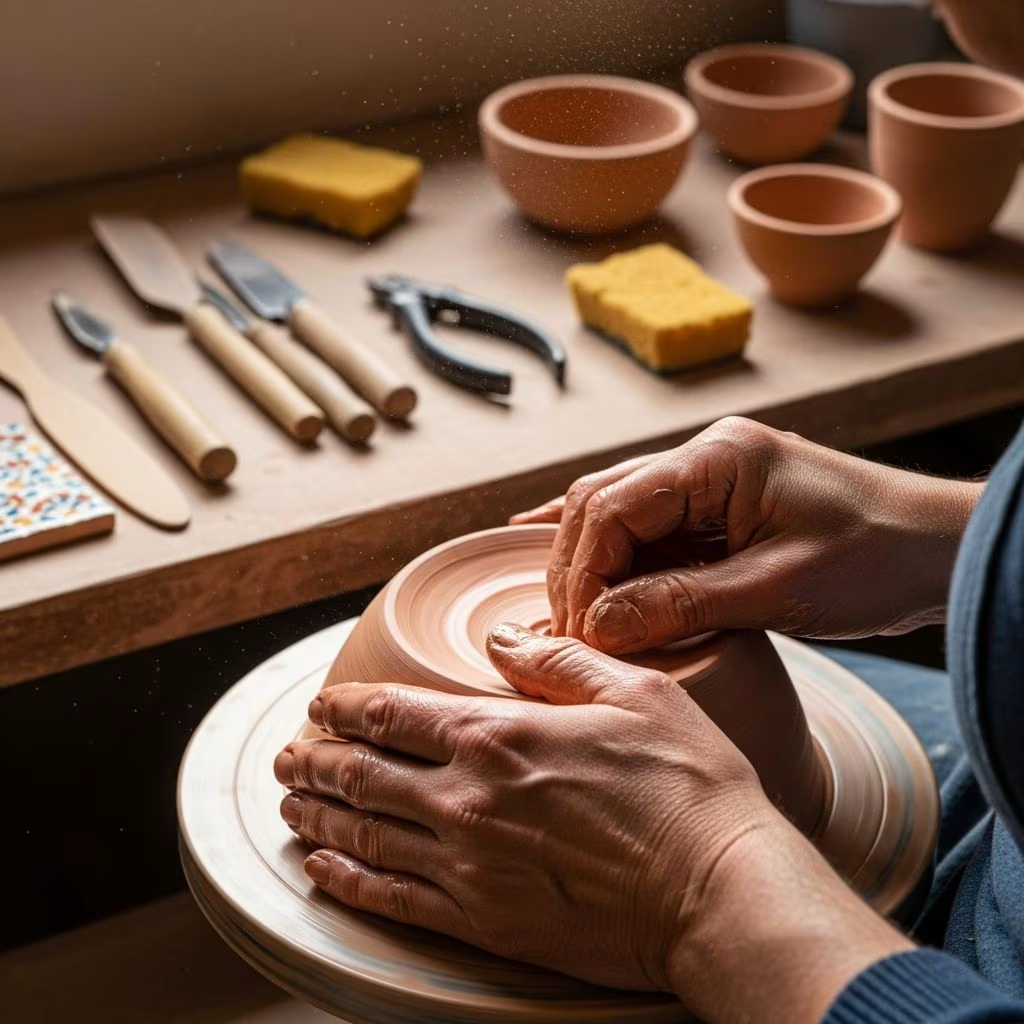
Nestled in Umbria, Deruta has produced ceramics since the Renaissance, renowned for lustrous glazes and intricate motifs. Artisans paint freehand designs inspired by nature and history, firing pieces in wood kilns for unique finishes. The town’s museums showcase evolution from medieval maiolica to vibrant contemporary tableware.
Workshops invite participation, where guests learn to apply pigments and glaze simple plates. This craft exemplifies how Northern Italian regions adapt ancient kilning techniques to meet modern tastes, blending bold colors with functional forms. UNESCO’s recognition bolsters efforts to teach these skills to youth, preventing loss.
On Burano, another Venetian island, lace-making endures as a symbol of meticulous artistry. Dating to the 16th century, nonne (grandmothers) weave cotton threads into elaborate collars, doilies, and shawls using needles alone. The island’s vibrant houses mirror the craft’s lively patterns.
Demonstrations reveal the hours required for each piece, with stitches so fine they challenge the eye. Though mechanization looms, Burano’s lacemakers prioritize teaching apprentices, ensuring the technique’s survival. Travelers can purchase heirloom-quality items, supporting this fragile tradition.
Tuscany excels in wood carving and wrought ironwork, crafts rooted in the region’s forests and forges. Carvers shape olive wood into utensils and sculptures, while ironworkers hammer decorative gates and furniture. These disciplines highlight Italy’s harmony with natural resources.
In villages like Sorrento or the Chianti hills, workshops produce items blending utility and ornament. Marquetry, inlaying woods for intricate panels, adds another layer, seen in furniture that tells visual stories. These trades thrive through fairs and collaborations with designers.
From Piedmont’s silks to Umbria’s linens, textile weaving weaves regional identities. Artisans operate looms producing scarves and upholstery, employing jacquard techniques for complex patterns. Embroidery elevates fabrics with floral motifs, a skill shared in communal settings.
This craft’s revival ties to sustainable fashion, where slow production counters fast trends. Visitors join weaving sessions, gaining insight into the labor-intensive joy of creation.
In a globalized era, Northern Italy’s artisans combat homogenization by championing uniqueness. Their work fosters community, tourism, and cultural continuity. Supporting them means investing in heritage—buying a piece sustains not just a maker, but a lineage.
Government initiatives and EU funds aid preservation, funding apprenticeships and exhibitions. Travelers play a key role, choosing experiences over souvenirs.
Northern Italy’s craft trail spans Venice to Perugia. Start in Murano for glass, Florence for leather, Deruta for ceramics, Burano for lace. Spring and fall offer mild weather and fewer crowds.
| Destination | Must-Visit Workshop | Best Activity |
|---|---|---|
| Murano | Furnace tours | Glassblowing demo |
| Florence | San Lorenzo | Custom leather design |
| Deruta | Maiolica labs | Hand-painting class |
| Burano | Lace schools | Weaving lesson |
They combine centuries-old techniques with regional materials, emphasizing handwork over machines.
Yes, many offer classes from glassblowing to lace-making, lasting 1-3 hours.
Many adopt eco-friendly practices, like natural dyes and low-waste methods.
Look for maker stamps, workshop visits, and avoid mass-market chains.
Avoid summer peaks; April-May or September-October ideal for events.
