

 Travel Essentials
 Travel Essentials

Discover how geomagnetic storms create opportunities to view the aurora borealis across multiple U.S. states and learn the best strategies for successful observation.
 Travel Essentials
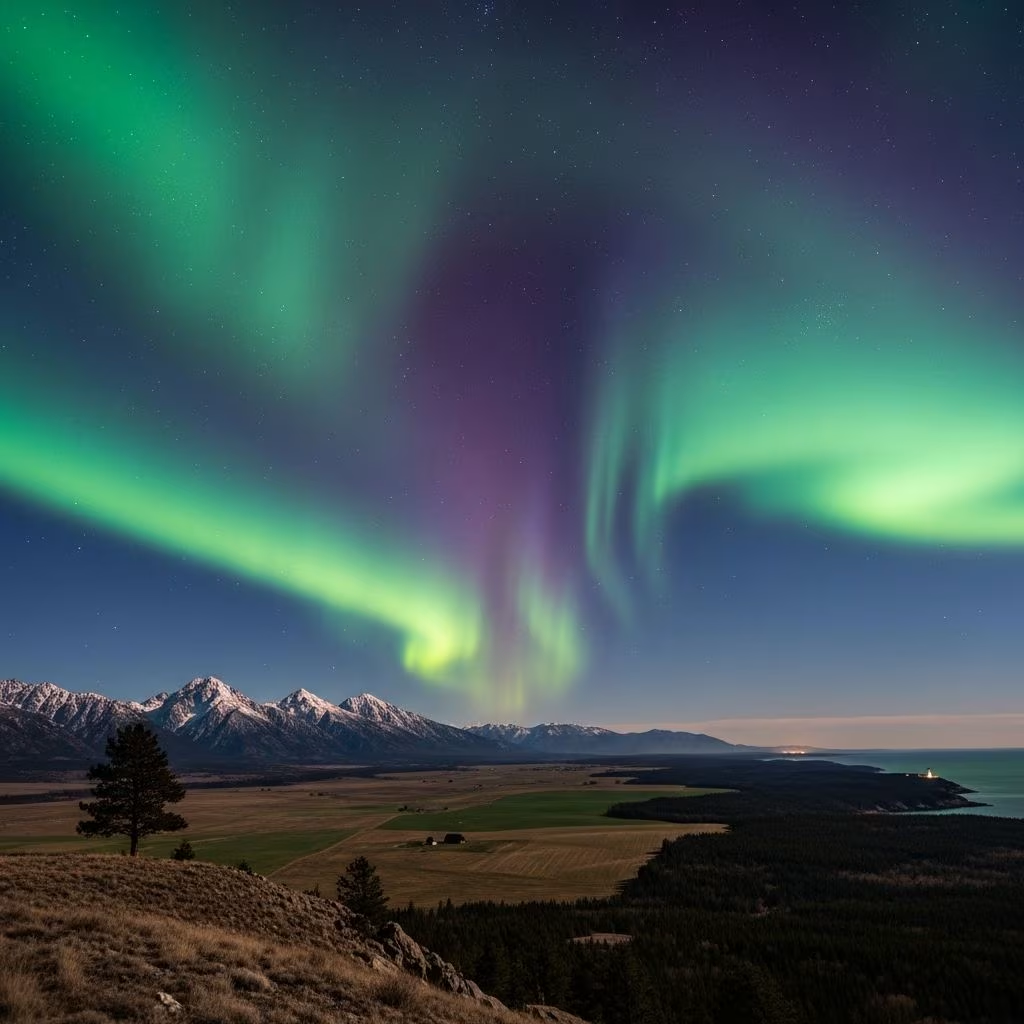
The aurora borealis, commonly known as the northern lights, represents one of nature’s most breathtaking celestial phenomena. While traditionally associated with Arctic regions like Alaska, Canada, and Scandinavia, these magnificent light displays occasionally become visible across the continental United States during periods of heightened solar and geomagnetic activity. Understanding when and where these auroras might appear requires knowledge of space weather patterns, geomagnetic forecasting, and optimal viewing conditions.
The northern lights result from interactions between charged particles from the sun and Earth’s magnetic field. When the sun experiences significant activity—including solar flares and coronal mass ejections—these energetic particles travel toward Earth and interact with our planet’s magnetosphere. This interaction creates geomagnetic storms, which scientists classify on a scale ranging from G1 (minor) to G5 (extreme).
During significant geomagnetic events, the aurora oval—the region where auroras typically occur—expands southward from the Arctic. This expansion enables observers in northern U.S. states to potentially witness auroras that would normally remain visible only in higher latitudes. The intensity and reach of auroras correlate directly with the strength of the geomagnetic disturbance, meaning stronger storms push the aurora oval further south, making northern lights visible in more populated areas.
Space weather forecasters use standardized classifications to predict auroral visibility across different regions. These classifications help observers understand the likelihood and potential reach of aurora displays:
During strong geomagnetic events, observers in states such as Montana, North Dakota, Minnesota, Wisconsin, and Michigan stand reasonable chances of witnessing aurora displays. In exceptional circumstances, even observers in states further south may catch glimpses of this spectacular phenomenon.
Space weather prediction relies on sophisticated monitoring systems maintained by organizations like the National Oceanic and Atmospheric Administration (NOAA). NOAA’s Space Weather Prediction Center continuously monitors solar activity and forecasts geomagnetic conditions several days in advance. These forecasts generate aurora visibility maps that indicate which regions have the potential to observe northern lights based on current space weather parameters.
The prediction process incorporates real-time data from satellites monitoring the sun and Earth’s magnetosphere. When solar activity escalates, forecasters issue alerts and update their aurora forecast maps regularly. These maps display an “aurora view line”—a geographical demarcation indicating the southernmost latitude where auroras might become visible.
Even when geomagnetic conditions favor aurora displays, multiple environmental and atmospheric factors determine whether observers will successfully witness them. These conditions require alignment to maximize viewing opportunities:
Successfully observing auroras requires intentional preparation and strategic location selection. Observers planning to chase northern lights should consider traveling to designated dark sky areas away from metropolitan regions. Many states maintain dark sky parks and preserves specifically designed for astronomical observation.
Preparation should include scouting locations in advance, checking local weather forecasts, and arriving early enough to allow eyes to adjust to darkness. Most observers require 20-30 minutes for pupils to dilate fully, enabling them to perceive fainter auroral displays. Bringing minimal lighting—using red-light flashlights to preserve night vision—and positioning oneself away from any artificial light sources dramatically enhances visibility.
Photography enthusiasts should prepare cameras and tripods beforehand. Aurora photography requires different settings than typical nighttime photography, with higher ISO values, wide apertures, and longer exposures capturing the dynamic movements of auroral curtains and arcs.
Modern aurora observers benefit from specialized applications providing real-time space weather data and location-specific forecasting. These applications integrate NOAA forecasts with GPS location services, delivering personalized aurora predictions based on the user’s coordinates.
Popular aurora forecasting applications include:
These tools enable observers to receive alerts when conditions become favorable, eliminating guesswork about optimal viewing windows. Push notifications alert users to rapidly changing conditions, allowing last-minute adjustments to viewing plans.
Geomagnetic storm activity typically peaks during specific hours rather than persisting uniformly throughout the night. NOAA forecasts identify these peak windows, when aurora visibility probability reaches maximum levels. Earlier evening hours often demonstrate the strongest geomagnetic activity, though timing varies depending on the specific storm event.
Observers maximizing their chances should plan viewing sessions around forecasted peak activity windows. Arriving at designated viewing locations before peak activity begins allows time for preparation and eye adjustment. Remaining until activity subsides ensures observers won’t miss intensifications that occasionally occur during secondary activity pulses.
Northern lights exhibit diverse appearances and behaviors depending on geomagnetic activity intensity. During minor geomagnetic events, observers in low aurora zones might perceive only subtle glows or faint bands of light on the horizon. These displays require adaptation time and may appear as diffuse illumination rather than the dramatic curtains depicted in popular images.
Strong geomagnetic storms produce more pronounced displays featuring vibrant colors, dynamic movement, and increased visibility. Auroral curtains may dance across the sky, shifting between green and occasionally red hues. These more dramatic displays remain visible even from locations with moderate light pollution, though dark sky sites always provide superior viewing experiences.
Aurora observation requires maintaining realistic expectations about visibility certainty. Despite favorable forecasts and optimal conditions, auroras remain inherently unpredictable phenomena. Several factors can prevent expected aurora displays from materializing as anticipated:
Observers should approach aurora chasing as an exciting outdoor adventure rather than a guaranteed experience. The possibility of witnessing this remarkable phenomenon justifies the effort, but flexible attitudes about outcomes and alternative enjoyment of nighttime stargazing preserve satisfaction regardless of aurora visibility.
When geomagnetic forecasts predict strong storm activity, numerous U.S. states present viable aurora observation opportunities. Northern states benefit from their higher latitudes, positioning them closer to typical aurora oval locations. States including Alaska, Washington, Montana, North Dakota, Minnesota, Wisconsin, Michigan, and Vermont historically experience more frequent aurora visibility during geomagnetic events.
However, aurora visibility extends beyond these traditionally northern states during exceptional geomagnetic storms. Enhanced activity occasionally enables aurora observation from states further south, surprising observers and expanding viewing opportunities across broader regions.
While geomagnetic storms occur year-round, certain seasonal factors affect aurora observation success. Late autumn through early spring typically provides the most favorable viewing windows, as extended darkness hours—from early evening through late morning—maximize observation time. Winter darkness extends from late afternoon through early morning, offering extended viewing opportunities.
Summer observations face challenges from compressed darkness periods in northern latitudes, where twilight persists much of the night during summer months. This limited darkness window constrains observation opportunities, though summer aurora displays remain possible during exceptionally strong geomagnetic events.
Observers seeking to maximize aurora viewing success should invest time developing observation skills and knowledge. Understanding basic space weather terminology, geomagnetic classifications, and forecasting interpretation enables more informed decision-making about viewing plans. Following space weather news and regularly checking forecasts maintains awareness of potential opportunity windows.
Connecting with local astronomy clubs and aurora observation communities provides valuable insights from experienced observers. These communities share real-time reports of aurora activity, location recommendations, and technique advice. Online forums and social media groups focused on northern lights observation facilitate information sharing among enthusiasts across different regions.
