

 Travel Essentials
 Travel Essentials

Explore Northwest Argentina's colorful canyons, high-altitude vineyards, indigenous ruins, and colonial towns through scenic drives, hikes, and cultural immersions in Salta, Jujuy, and beyond.
 Travel Essentials
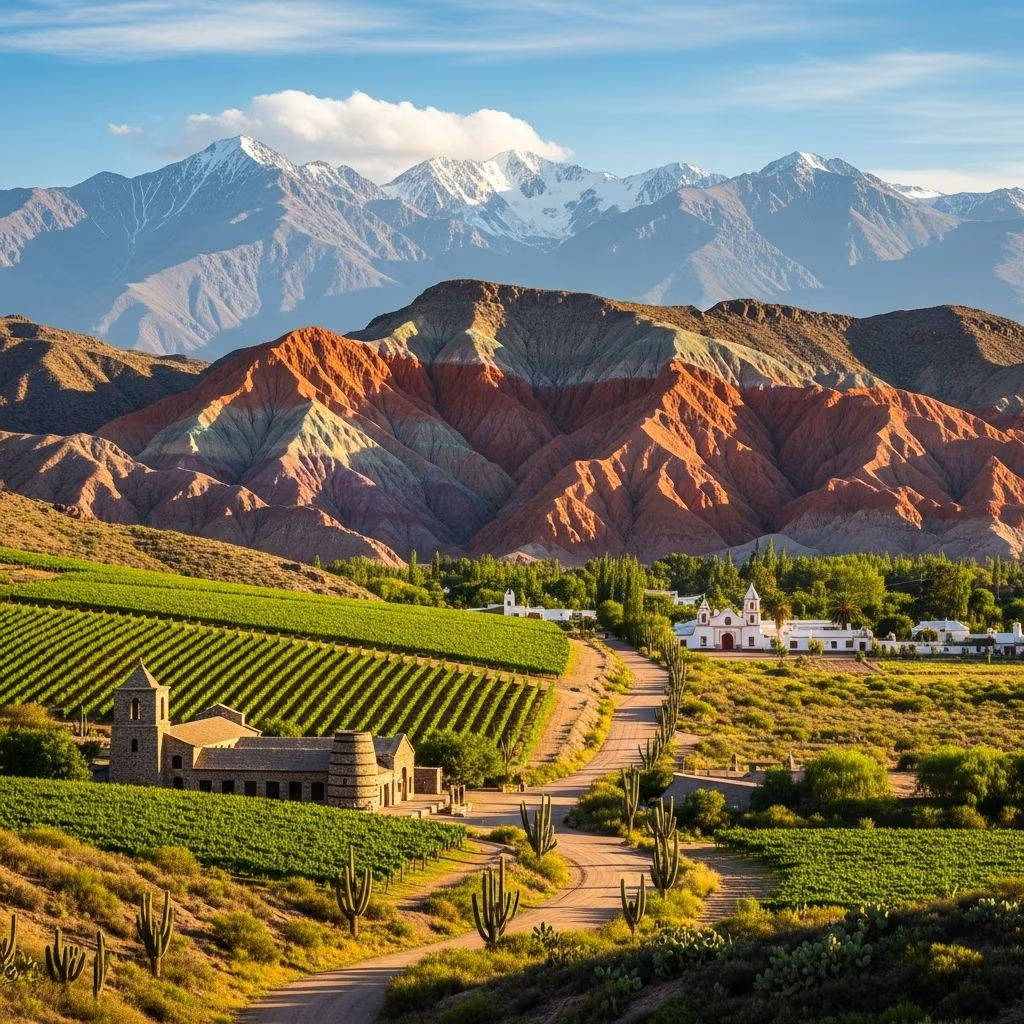
Northwest Argentina, often called the NOA (Noroeste Argentino), captivates travelers with its surreal geology, rich indigenous heritage, and emerging wine culture. Stretching across provinces like Salta and Jujuy, this region offers a stark contrast to the tango-filled streets of Buenos Aires or the glaciers of Patagonia. Here, jagged red-rock formations rise like alien spires, rainbow-hued hills glow at dawn, and ancient ruins whisper tales of pre-Columbian civilizations. Ideal for road trippers and nature enthusiasts, it’s a land where high-altitude deserts meet colonial charm.
This corner of Argentina blends raw natural beauty with cultural depth. Unlike the tourist-heavy spots in the south, the northwest feels undiscovered, with fewer crowds and more authentic experiences. Expect Andean influences in the food—think hearty empanadas stuffed with local meats—and lively peñas featuring folkloric music and dance. The region’s altitude (often over 3,000 meters) brings crisp air and dramatic sunsets, perfect for stargazing in remote valleys.
The best months for visiting Northwest Argentina are April to November, dodging the summer rains (December-February) that can flood dirt roads and make travel tricky. Fall (March-May) and spring (September-November) offer mild days around 20-25°C and chilly nights, ideal for hiking. Winter (June-August) suits those who don’t mind cold evenings, with clear skies for viewing the Andes. Peak events like Carnival in February or Easter draw locals, so book ahead.
| Season | Temperature (Day/Night) | Pros | Cons |
|---|---|---|---|
| Spring/Fall | 20-25°C / 5-10°C | Mild weather, vibrant colors | Occasional winds |
| Winter | 15-20°C / 0-5°C | Fewer tourists, clear views | Cold nights |
| Summer | 25-30°C / 10-15°C | Festivals, greenery | Rain, road closures |
Fly into Salta’s Martín Miguel de Güemes International Airport (SLA) from Buenos Aires or international hubs. From there, renting a 4×4 is essential for Ruta 40’s gravel stretches—companies like Hertz or local outfits provide reliable vehicles. Buses connect major towns like Salta to Purmamarca or Cafayate, popular with backpackers. For flexibility, self-drive: allow 9-10 days for a loop covering Jujuy’s Quebrada de Humahuaca, Cachi, and Cafayate. Guided tours handle altitude acclimatization and remote access.
Salta, the ‘Beautiful’ (La Linda), buzzes with baroque churches and leafy plazas. Start at the Plaza 9 de Julio, flanked by the pink-hued Cathedral and Cabildo. Ride the cable car up Cerro San Bernardo for panoramic views, then delve into the Museo de Arqueología de Alta Montaña (MAAM). This world-class museum displays remarkably preserved Inca child mummies from Llullaillaco volcano, offering insights into ancient rituals.
Evenings come alive in peñas—traditional spots with guitar-strumming gauchos and zamba dances. Stay at luxury paradores like the historic Legado Mítico, blending colonial elegance with modern comforts.
Declared a UNESCO World Heritage site, this 155-km valley along Ruta 66 showcases Quechua and Aymara heritage amid psychedelic geology. Base in Purmamarca to catch sunrise over Cerro de los Siete Colores (Hill of Seven Colors), its mineral stripes shimmering in pinks, greens, and yellows. Hike gentle trails or browse artisan markets for ponchos and ceramics.
Push north to Tilcara’s Pucará ruins, a reconstructed pre-Inca fortress, and Humahuaca’s lively streets. Day-trip to Salinas Grandes, vast salt flats mirroring the sky like Bolivia’s Uyuni. Remote Iruya clings to cliffs, reachable via a thrilling dirt-road drive—its adobe homes and suspension bridge evoke timeless Andean life.
South of Salta, the Calchaquí Valleys unfold like a painter’s canvas. Drive Ruta 68 through Quebrada de las Conchas (Shell Canyon), stopping at El Anfiteatro’s echoey rock walls, Garganta del Diablo gorge, and Mirador Tres Cruces for fossil-peppered vistas. It’s a Martian playground of crimson spires and layered badlands.
Cafayate, the wine heartland, rivals Mendoza with Torrontés whites grown at 1,700m+. Visit 50+ bodegas like El Esteco or Domaine Bousquet for tours amid Quebrada de las Flechas’ arrow-like formations. Nearby, Quilmes Ruins—the largest pre-Hispanic site—housed 5,000 Quilmes people who resisted Incas and Spaniards for centuries. Climb to the mirador for valley views.
Cachi, a serene pueblo blanco, offers colonial churches and access to Los Cardones National Park’s cactus-studded deserts. Detour to Bodega y Estancia Colomé, Argentina’s oldest winery (1831), famed for high-altitude Malbecs and James Turrell’s light-art installations that play with perception in sky-filled chambers.
Northwest cuisine fuses Andean staples with Spanish twists. Savor humita (corn stew), tamales, and cabrito (goat) in mountain asados. Cafayate’s Torrontés pairs perfectly with regional cheeses. Markets overflow with quinoa soups and anticuchos (grilled meats). Don’t miss salteñas—spicy empanadas—in Salta’s cafés.
Yes, it’s generally safe; stick to main routes and use reputable guides for remote areas.
Recommended for gravel sections like to Iruya or Cachi; standard cars suffice on paved Ruta 40 parts.
Torrontés, a floral white thriving in high altitudes.
Possible, but expect rain; best for festivals like Carnival.
9-10 for a comprehensive loop without rushing.
