

 Travel Essentials
 Travel Essentials

Discover Notre-Dame's rich history, the 2019 fire's impact, meticulous restoration efforts, and essential visitor tips for experiencing this Paris icon post-reopening.
 Travel Essentials
Notre-Dame de Paris stands as one of the world’s most iconic Gothic masterpieces, a symbol of Parisian heritage that has endured centuries of turmoil and transformation. After a catastrophic fire in 2019, the cathedral underwent an extraordinary restoration, reopening its doors on December 7, 2024. This guide delves into its storied past, the path to recovery, architectural wonders, and everything travelers need to plan a visit to this reborn treasure.
Construction of Notre-Dame began in 1163 under Bishop Maurice de Sully, aiming to create a grand cathedral that reflected the era’s spiritual and architectural ambitions. Spanning over 180 years, the project saw completion around 1345, blending Romanesque foundations with pioneering Gothic innovations like flying buttresses and ribbed vaults. These elements allowed for unprecedented height and light-filled interiors, revolutionizing sacred spaces across Europe.
The cathedral’s western facade, with its three portals depicting biblical scenes, became a canvas for intricate stone carvings. Rose windows, massive circular stained-glass marvels, flooded the nave with colorful light, symbolizing divine illumination. Throughout the Middle Ages, Notre-Dame hosted coronations, royal weddings, and pivotal events like the preaching of the University of Paris scholars.
Notre-Dame faced neglect and damage during the French Revolution, when revolutionaries vandalized statues mistaken for biblical kings and melted down bells for cannon. By the early 19th century, the structure teetered on collapse, prompting Victor Hugo’s novel The Hunchback of Notre-Dame in 1831. Hugo’s work sparked public fervor, leading to a major restoration led by Eugène Viollet-le-Duc from 1844 to 1864. This intervention added the famous spire, new gargoyles, and chimera sculptures, restoring the cathedral’s medieval glory while infusing 19th-century interpretations.
Subsequent upkeep included facade cleanings in the 1990s, but no comprehensive work occurred for over 150 years until the 2019 blaze necessitated full-scale revival.
On April 15, 2019, flames erupted in the cathedral’s attic, dubbed “the forest” for its ancient oak beams. The fire raged for nine hours, destroying the 19th-century spire, much of the wooden roof, and damaging vaults and artworks. Quick actions by firefighters saved the main structure, including the north bell tower and treasured relics like the crown of thorns.
The cause remains undetermined, but the inferno mobilized global support. President Emmanuel Macron vowed reconstruction within five years, launching a fundraising drive that amassed over €840 million from donors worldwide.
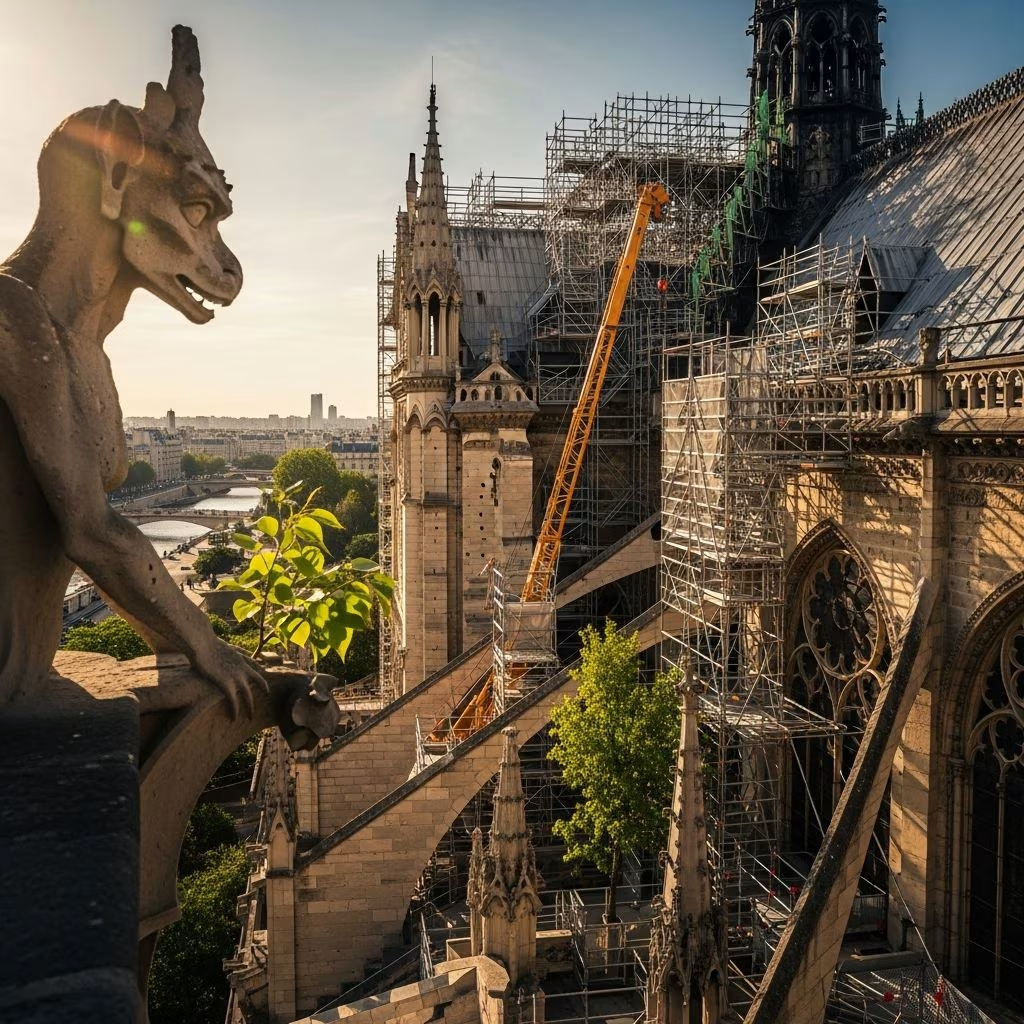
The revival engaged nearly 1,000 workers on-site and in workshops, coordinated by the Établissement Public and chief architect Philippe Villeneuve, with assistants Rémi Fromont and Pascal Prunet. By 2023, burned scaffolding was fully removed, enabling interior cleaning and securing key elements like vaults, buttresses, and rose windows.
Major milestones included dismantling the Grand Organ ahead of schedule for lead-dust decontamination, with reassembly targeted for 2024. Roof reconstruction advanced rapidly: the choir frame (32m x 14m x 10m) finished in January 2024, followed by nave trusses in March. The spire’s timber framework was prepared off-site, honoring Viollet-le-Duc’s design.
Over 2,000 craftspeople and 250 firms contributed, with costs nearing $900 million. Security measures post-fire cost €165 million, covering lead decontamination, pillar reinforcement, and gargoyle protection. The cathedral reopened on December 7, 2024, though full completion extends to 2026, including final roof and spire installation.
Visitors will marvel at the nave’s stonework, choir stalls, and chapels housing relics like the tunic of Saint Louis.
As of 2026, Notre-Dame welcomes crowds post-reopening, with ongoing works in select areas. Book tickets online via the official site to skip lines; expect €10-15 entry fees. Free access for under-26 EU residents and disabled visitors. Open daily 7:45am-7pm, with masses at 8am, 11am, and 6:30pm.
| Best Times to Visit | Details |
|---|---|
| Early Morning (7:45-9am) | Fewer crowds, serene atmosphere for worship or quiet exploration. |
| Weekday Afternoons | Balanced visitor flow; ideal for photos without peak-hour rushes. |
| Avoid Weekends & Holidays | High attendance; book timed slots in advance. |
| Winter Months | Shorter lines, festive lighting; note shorter daylight. |
Getting There: Metro lines 4 (Cité) or 10/11 (Hôtel de Ville); RER B/C (Saint-Michel Notre-Dame). From Louvre or Sainte-Chapelle, a 10-minute walk along the Seine.
Pair your visit with Île de la Cité gems: stroll Point Zero marker (Paris’s geographic heart), explore Sainte-Chapelle’s stunning stained glass, or relax in Square Jean-XXIII gardens. Across the river, Shakespeare and Company bookstore and Latin Quarter cafes await. Evening Seine cruises offer illuminated views of the cathedral’s facade.
Reopened December 2024, but roof and spire works continue through 2026. Core areas are accessible.
Reserve via official website 2-3 months ahead for peak times; walk-ups possible off-season.
Yes, 387 steps to panoramic views; €10 supplement, not for under-14s or those with mobility issues.
Modest attire required; no shorts, tank tops in worship areas.
Official 1-hour tours (€20) available; private groups book separately.
Beyond stone and glass, Notre-Dame embodies resilience. From medieval builders to modern restorers, each generation has preserved its spirit. In 2026, witness this living legend, where history whispers through every arch.
