

 Travel Essentials
 Travel Essentials

Discover Nova Scotia’s lobster industry, from historic fishing grounds and sustainability efforts to festivals, recipes, and the best places to taste it.
 Travel Essentials
Nova Scotia’s lobster industry stands as a cornerstone of Canadian maritime culture, blending centuries-old traditions with modern sustainability efforts. This prized crustacean supports coastal economies and draws food enthusiasts worldwide to its fresh, flavorful bounty.
Lobster fishing in Nova Scotia traces back over a century, evolving from a survival staple to a global export powerhouse. In the early 1900s, as shipbuilding declined in northern regions like Pugwash and Pictou, coastal residents pivoted to lobster as their primary livelihood. This shift marked the birth of a resilient industry that has adapted through technological advances, regulatory changes, and shifting markets.
Today, the sector lands vast quantities annually, with over 97,000 tonnes caught along Canada’s Atlantic coast in 2018 alone, valued at more than $1.4 billion. Nova Scotia plays a pivotal role, exporting nearly 60% of its catch to the United States while sustaining local communities. The lobster grounds off southwestern Nova Scotia, particularly in Shelburne County—known as Canada’s Lobster Capital—rank among the world’s richest, teeming with high-quality specimens.
Nova Scotia’s lobster thrives in cold North Atlantic waters, primarily in shallow coastal zones less than 40 meters deep and within 15 kilometers of shore. Key areas include the Gulf of Maine, Bay of Fundy, Southern Gulf of St. Lawrence, and coastal Nova Scotia. Lobsters here benefit from the province’s nutrient-rich currents, growing larger and more flavorful than in warmer regions.
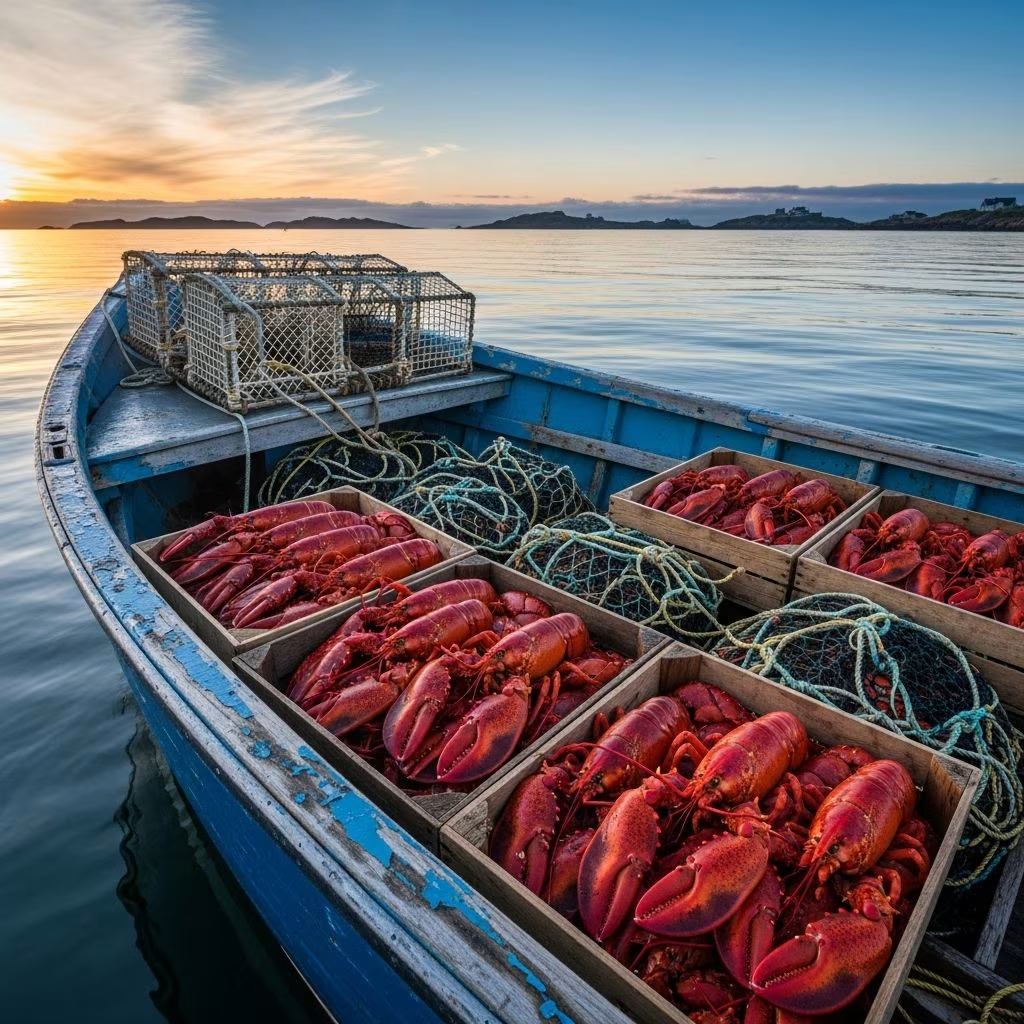
Fishing occurs in designated Lobster Fishing Areas (LFAs), with LFAs 33 and 34 representing the province’s largest fleets. These zones see intense activity from late fall through early summer, though unpredictable weather like high winds and rough seas often disrupts operations. Harvesters use wooden traps baited with herring or capelin, hauling them daily during open seasons regulated to protect stocks.
Nova Scotia prioritizes sustainable practices, with strict quotas, size limits, and v-notch programs to safeguard egg-bearing females. The province’s seafood sector, encompassing over 50 species like halibut, scallops, and snow crab, leverages its North Atlantic location for premium quality. Yet, challenges persist: recent seasons in LFAs 33 and 34 faced weak landings, lower-quality catches, and weather delays, straining processors.
In 2023, the industry reportedly lost $77 million in spring and summer compared to prior years, exacerbated by Chinese tariffs impacting exports. Despite this, steady prices and innovation—like improved bait and gear—help maintain viability. The Canadian lobster sector spans five provinces, fostering economic stability for hundreds of communities.
| Challenge | Impact | Mitigation |
|---|---|---|
| Weather Disruptions | Reduced hauls in LFAs 33-34 | Advanced forecasting tools |
| Market Tariffs | $77M loss in 2023 | Diversifying export markets |
| Quality Fluctuations | Lower processor profits | Grading standards and tech |
Fresh Nova Scotia lobster shines in its simplicity—boiled, steamed, or grilled with butter. Select live ones with intact claws and a lively bounce. For authenticity, visit waterfront shacks where harvesters sell directly.
Classic Lobster Boil: Serve whole with lemon, drawn butter, and corn. Pairs perfectly with local brews.
Lobster Rolls: Mix chunks of claw meat with mayo, celery, and chives in a toasted bun—Nova Scotia’s lighter take skips heavy seasonings.
Lobster Bisque: Simmer shells for a rich stock, blend with cream and sherry for velvety soup.
Grilled Lobster Tails: Split tails, brush with garlic butter, and char for smoky flavor.
Nova Scotia buzzes with lobster-centric celebrations. The Shelburne Lobster Festival draws thousands for cook-offs, parades, and feasts amid stunning harbor views. Digby Scallop Days pairs lobster with bivalves, while the Lunenburg Lobsterfest offers live music and chef demos. These events showcase community spirit and fresh catches straight from the sea.
Seek lobster at its source: Barrington’s Clark’s Harbour for dockside buys, Peggy’s Cove for scenic eats, or Halifax’s waterfront markets. Stay at fishing inns for sunrise hauls and chef-prepared dinners. Pair with oysters, mussels, or haddock from Nova Scotia’s diverse seafood lineup.
May to July offers peak season freshness in most LFAs, though southwestern grounds fish year-round.
Highly sustainable via DFO regulations, including berried female protections and area quotas.
Hard-shell (shed post-molt) travels better; soft-shell is sweeter but delicate.
Recreational licenses allow limited catches; check DFO rules for zones and sizes.
Live prices fluctuate $10-20/lb seasonally; expect higher at tourist spots.
Combine feasting with hikes in Cape Breton or whale-watching in the Bay of Fundy. Book processing plant tours or join a fishing charter for immersion. Nova Scotia’s lobster legacy promises unforgettable flavors and stories from the sea.
