

 Travel Essentials
 Travel Essentials

Explore why the NPS warns against licking Sonoran Desert toads, their potent toxins, health dangers, ecological impact, and safer alternatives for psychedelic experiences.
 Travel Essentials
The National Park Service has issued a direct and unusual advisory to visitors in the American Southwest: do not lick the Sonoran Desert toad. These large amphibians, known for their striking appearance and potent secretions, pose serious health risks due to a powerful psychoactive toxin. This warning underscores both immediate personal dangers and broader ecological concerns as interest in the toad’s venom surges.
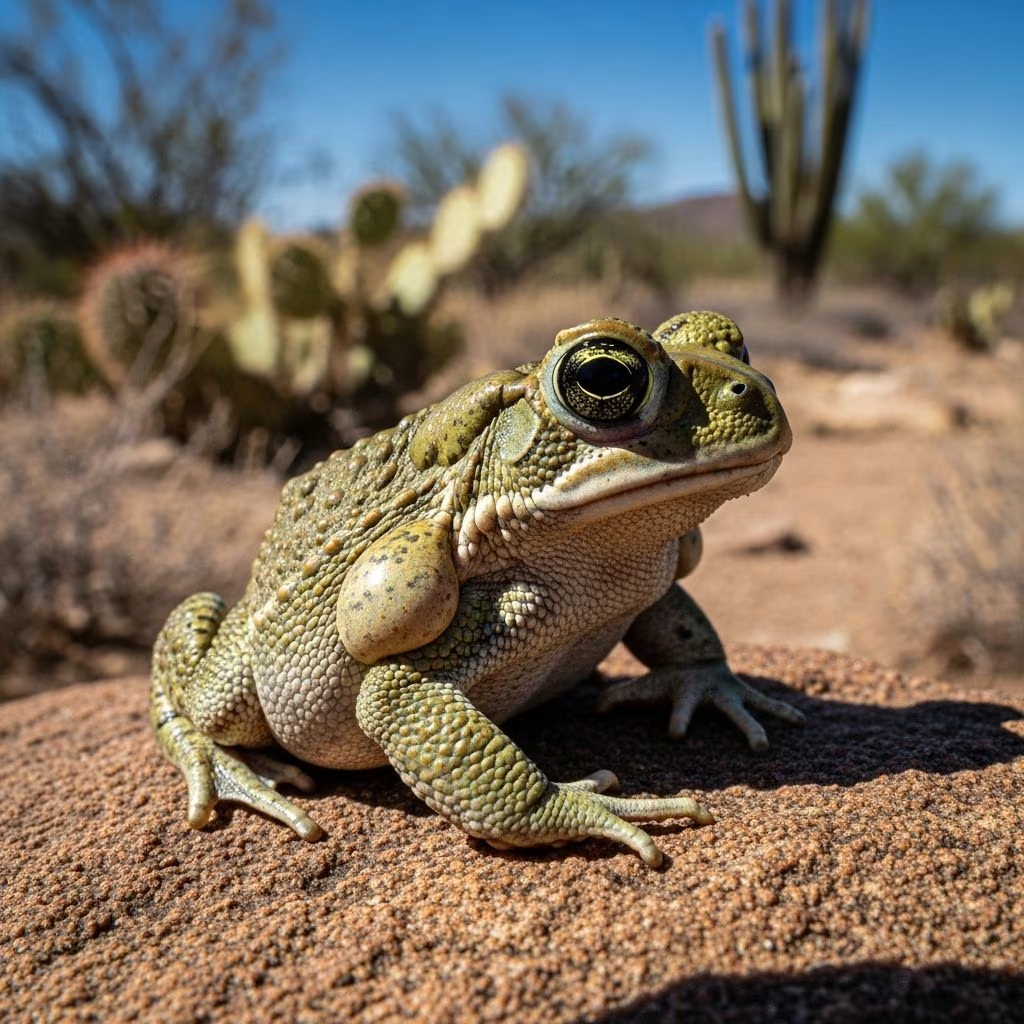
The Sonoran Desert toad, scientifically named Incilius alvarius and also called the Colorado River toad, is one of North America’s largest toads. It measures up to 7.5 inches long, with rough, warty skin in earthy tones of green, brown, and gray that provide camouflage in arid landscapes. Native primarily to the Sonoran Desert spanning Arizona, Mexico, and parts of New Mexico and California, these toads emerge dramatically after summer rains, breeding in temporary pools.
Behind their prominent eyes lie parotoid glands—swollen structures that produce a milky venom when the toad feels threatened. This secretion contains high concentrations of 5-MeO-DMT, a potent psychedelic compound, alongside bufotenin and other cardioactive steroids. The toxin serves as a defense mechanism against predators, capable of killing dogs or small animals upon ingestion. In humans, even brief contact can cause irritation, while ingestion leads to rapid onset of symptoms.
Contacting or ingesting Sonoran Desert toad venom triggers a cascade of physiological effects. The primary active ingredient, 5-MeO-DMT, induces intense hallucinations, euphoria, and altered perceptions within seconds if smoked or ingested. However, this comes at a steep cost: nausea, vomiting, rapid heart rate, high blood pressure, and seizures. Effects can incapacitate individuals for up to 30 minutes, with risks of respiratory failure or cardiac arrest in severe cases.
Even handling the toad without licking can be hazardous. The venom absorbs through skin or mucous membranes, causing localized swelling, burning sensations, or systemic illness if eyes or mouth are touched afterward. Medical experts emphasize that no safe dosage exists in raw form, as the mixture of compounds varies and can overwhelm the body. Recent reports note increased emergency visits linked to toad venom misuse, straining park resources and healthcare systems.
| Risk Factor | Symptoms | Severity |
|---|---|---|
| Skin Contact | Irritation, swelling | Moderate |
| Oral Ingestion/Licking | Nausea, hallucinations, heart palpitations | High |
| Heavy Exposure | Seizures, respiratory distress | Life-Threatening |
The NPS posted the advisory on social media platforms like Facebook, using blunt language to deter reckless behavior: refrain from licking unfamiliar wildlife, including these toads. Park officials in Saguaro National Park and other Southwest sites observed visitors approaching toads at night, drawn by online hype around psychedelic experiences. No specific incident was cited, but the timing aligns with media coverage of rising demand for toad-derived substances.
This public service announcement reflects a proactive stance amid growing tourism in toad habitats. Rangers report more sightings during monsoon season (July-September), when toads congregate near water. The message also promotes general park etiquette: observe wildlife from a distance to avoid disturbance or injury.
Interest in Sonoran Desert toad venom has exploded in recent years, fueled by wellness retreats, underground ceremonies, and social media influencers touting it as a ‘spiritual shortcut.’ The venom is harvested by ‘milking’ stressed toads, then dried and smoked for short, intense psychedelic trips. Demand has led to commercial operations in Mexico and black-market sales in the U.S., despite legal ambiguities—5-MeO-DMT is a Schedule I substance federally, but raw toad venom occupies a gray area.
A New York Times investigation highlighted how this trend threatens toad populations through overcollection and habitat disruption. Harvesters transport toads to urban areas, subjecting them to repeated stress that depletes their health. Conservationists warn of potential population crashes, echoing declines in other exploited species.
Despite a ‘Least Concern’ status on the IUCN Red List globally, Sonoran Desert toads face localized threats. In New Mexico, they are listed as threatened due to urban sprawl, roadkill during migrations, and collection for the pet trade or drugs. Climate change exacerbates risks by altering rainfall patterns critical for breeding.
Experts advocate for synthetic 5-MeO-DMT production to spare wildlife. Labs can manufacture the pure compound, eliminating ecological harm while providing regulated access for research or therapy.
Encountering a Sonoran Desert toad can be a highlight of a Southwest trip—without the risks. Follow these guidelines:
Educate children and companions about the dangers. Apps like iNaturalist allow logging sightings for citizen science without physical interaction.
Possessing or harvesting these toads violates NPS regulations and state wildlife laws. Penalties include fines up to $5,000 and park bans. Ethically, exploiting wildlife for recreation undermines conservation efforts. Researchers study toad venom for potential mental health treatments, but emphasize humane, non-extractive methods.
For those seeking psychedelic benefits legally and safely:
Conservationists like those from High Country News urge shifting to lab-produced options, preserving toads for ecosystems.
Yes, due to 5-MeO-DMT, it produces intense, short-lived hallucinations when ingested or smoked.
Absolutely—dogs have died from licking or biting them. Keep pets leashed.
Arizona’s Sonoran Desert, especially near rivers and washes during rains.
Synthetic 5-MeO-DMT is Schedule I; raw venom sales are unregulated but risky and unethical.
Avoid handling, support habitat protection, and use synthetic alternatives.
