

 Travel Essentials
 Travel Essentials

Explore Eastern Indonesia's island-hopping routes across Lombok, Sumbawa, Flores, and Timor through accessible ferry and bus connections.
 Travel Essentials
The eastern reaches of Indonesia present an extraordinary opportunity for travelers seeking to move beyond the familiar confines of Bali. The Nusa Tenggara archipelago represents a compelling alternative for those interested in sequential island exploration, offering a natural progression eastward through increasingly remote and culturally distinct destinations. This region encompasses thousands of smaller islands orbiting major landmasses including Lombok, Sumbawa, Flores, and West Timor, each presenting unique natural features and cultural experiences.
The Nusa Tenggara chain stretches across eastern Indonesia as a series of connected islands linked by modern transportation infrastructure. Unlike many remote archipelagos, this region benefits from established ferry networks and overland bus routes that make sequential travel feasible for independent travelers. The geography of the region creates natural corridors for movement, with ferries connecting major ports and buses traversing the spine of larger islands through established highway systems.
What distinguishes Nusa Tenggara from other Indonesian destinations is its combination of accessibility and authenticity. While infrastructure exists to facilitate movement between islands, the region remains less developed than Bali, allowing visitors to encounter communities living according to traditional practices and ancestral customs. This balance between infrastructure and cultural preservation makes the archipelago particularly attractive for travelers seeking substantive cultural engagement without extreme logistical challenges.
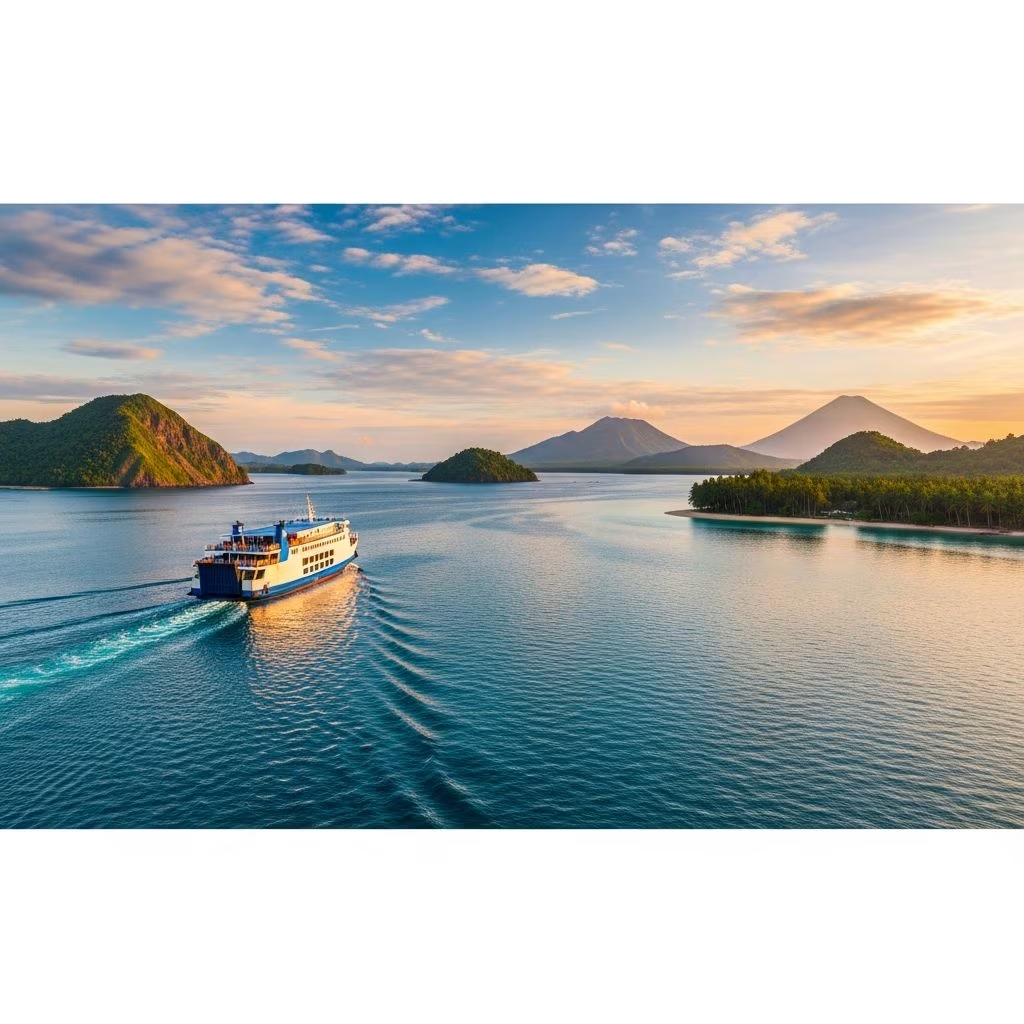
Movement through the Nusa Tenggara archipelago relies primarily on ferry services connecting major ports. The initial journey from Bali establishes the pattern for subsequent travel. Public ferries operate regularly from Bali to Lombok, with typical crossing times between four and five hours. These services run multiple times daily, creating flexibility for travelers planning their eastward progression.
Ferry schedules vary considerably depending on seasonal conditions and operational efficiency of individual operators. While some routes operate with remarkable regularity, others may experience delays or cancellations during certain periods. Travelers should verify current schedules through multiple sources rather than relying solely on advance reservations, as conditions change throughout the year based on weather patterns and demand fluctuations.
Within individual islands, bus networks provide the primary means of terrestrial transportation. These services range from small minibuses serving local routes to larger coaches connecting major towns across extended distances. The Trans-Flores Highway, for example, creates a continuous transportation corridor linking communities along Flores Island from west to east, with regular bus service throughout the day.
Through-ticket systems allow travelers to purchase single tickets covering multiple legs of a journey, streamlining the booking process for longer routes. Many travelers beginning their journey in Bali can secure through tickets reaching Flores or even extending further east without needing to negotiate separate bookings at each connection point. This convenience, however, often comes with trade-offs regarding flexibility and comfort level during extended journeys.
Lombok serves as the primary entry point into the Nusa Tenggara archipelago for travelers originating from Bali. The island’s main city, Mataram, functions as a transport hub where connections to further eastern destinations can be arranged. From Mataram, overland bus services require approximately four hours to traverse the island, connecting to ports serving the remaining archipelago.
Beyond its transportation function, Lombok offers substantial attractions including pristine beaches, traditional villages, and outdoor recreation opportunities. The island’s infrastructure development has progressed considerably, allowing visitors to experience modern amenities alongside authentic cultural sites. This combination creates an effective acclimatization point for travelers transitioning from Bali’s density to the quieter pace of eastern Indonesia.
Sumbawa represents the intermediate zone within the archipelago, characterized by volcanic geology and decreasing population density as one travels eastward. The island requires significant transit time for travelers moving through rather than staying, with bus journeys across the island’s span consuming substantial portions of a travel day. Many travelers utilize overnight boat options that bypass Sumbawa entirely, proceeding directly from Lombok to Flores via maritime routes.
For those choosing to traverse Sumbawa overland, the island rewards close observation with dramatic volcanic landscapes and glimpses of rural Indonesian life. The journey provides a natural transition between the relative development of western islands and the more remote character of eastern destinations. Those with extended timeframes may find strategic stops justified for cultural engagement or natural exploration, though rapid transit remains the common approach.
Flores Island emerges as a central hub within eastern Indonesia, offering perhaps the highest concentration of attractions relative to island size. The Trans-Flores Highway creates a through-route connecting numerous communities, each possessing distinct cultural characteristics and natural features. The highway enables travelers to structure their journey around multiple stops rather than requiring commitment to single lengthy bus journeys.
Minimum transit times across Flores exceed twenty-four hours of actual travel, yet most visitors allocate considerably more time for stops at strategic locations. Bajawa, Moni, and Maumere represent popular intermediate points where travelers pause to explore local attractions and experience settlement-based tourism infrastructure. Each location provides distinct advantages: Moni offers proximity to volcanic landscapes, Bajawa provides cultural immersion opportunities, and Maumere functions as an eastern hub for onward travel planning.
Kupang, West Timor’s primary city, marks the practical eastern boundary of most conventional island-hopping itineraries. The city functions as a transportation hub offering regular ferry connections to Flores and air connections to Bali, allowing travelers to conclude their journeys without requiring return transit over completed routes. Ferries from Larantuka on Flores operate bi-weekly services requiring approximately fifteen hours of transit time.
Kupang’s position as both a destination and logistical nexus makes it valuable for travelers contemplating extension into Timor-Leste or seeking alternative routes homeward. The city provides necessary infrastructure for travelers seeking visa services, transportation arrangements, and administrative support for onward journeys.
A complete progression from Bali through West Timor can theoretically occupy thirty days, aligning with standard tourist visa periods. However, actual travel time consumed by transportation significantly exceeds simple distance calculations due to ferry scheduling, traffic conditions, and connection wait times. Travelers should allocate approximately 40-50% of their available time to transit rather than destination exploration.
Strategic itinerary planning requires honest assessment of personal preferences regarding pace and depth of experience. Some travelers prefer rapid progression through numerous locations, while others prioritize extended stays enabling deeper cultural engagement. Neither approach is inherently superior; the optimal strategy depends on individual priorities and available timeframes.
The distributed nature of ferry and bus services encourages flexibility rather than rigid advance planning. While travelers can arrange through-tickets covering extended routes, maintaining flexibility in intermediate stops often yields superior experiences through spontaneous discoveries and responsive decision-making based on local information encountered during travel.
Advance booking of major transport legs remains advisable during peak seasons to ensure availability, while maintaining uncommitted time between confirmed segments permits adjustment based on emerging opportunities. This balance between planning and spontaneity characterizes successful eastern Indonesia journeys.
Tourist-oriented overnight boat services provide alternatives to conventional ferry and bus combinations, offering both time efficiency and novel travel experiences. These services typically operate between Lombok and Labuanbajo on Flores, bypassing Sumbawa’s terrestrial transit requirements. Such services provide sleeping accommodations aboard vessels, effectively converting travel time into accommodation time while advancing eastward.
Operators of overnight boat services vary considerably in reputation, safety standards, and comfort provisions. Prospective travelers should invest effort in vetting operational companies through multiple information sources, avoiding operators with unclear safety records or limited accountability mechanisms. This due diligence, while time-consuming, substantially reduces risks associated with extended sea journeys aboard lesser-known vessels.
Unlike linear itineraries requiring return transit through completed routes, the Nusa Tenggara archipelago offers exit flexibility through multiple airports positioned throughout the region. Travelers reaching Flores or West Timor can arrange return flights to Bali from established regional airports, eliminating the need to retrace their journey. This option appeals particularly to travelers with limited timeframes or diminished enthusiasm for extended return transit after completing eastward progression.
The Nusa Tenggara region experiences distinct wet and dry seasons affecting both transportation reliability and general travel conditions. Dry season periods, generally spanning May through September, offer more predictable weather and more reliable ferry operations. Wet season months can introduce weather-related delays to ferry services and reduce accessibility to certain attractions or alternate routes.
Tourist infrastructure density varies considerably across the archipelago. Established towns such as Labuanbajo, Maumere, and Kupang offer diverse accommodation options ranging from budget hostels to mid-range hotels. Smaller settlements along the Trans-Flores Highway provide functional accommodations suitable for single-night transit stops but generally lack amenities expected in larger tourist centers.
Travelers should approach accommodation booking with flexibility, particularly outside major urban centers. Many smaller towns lack advance booking systems, requiring negotiation upon arrival. This unpredictability, while occasionally frustrating, often yields superior personal interactions and authentic hospitality compared to standardized commercial accommodations in larger centers.
While technically possible to traverse the region in two weeks, such itineraries emphasize movement over experience. Three to four weeks permits strategic stops at multiple locations while maintaining reasonable transit timing. Extended timeframes enable more flexible scheduling and deeper cultural engagement.
Ferry services demonstrate reasonable reliability on major routes with established schedules. Services to less-developed communities may experience greater variability. Travelers should verify current schedules upon arrival at departure points rather than relying entirely on advance information.
Budget requirements depend on accommodation preferences and activity intensity. Mid-range travelers should anticipate daily expenditures of $30-50 USD inclusive of accommodation, meals, and local transportation, with additional costs for specialized activities such as guided tours or diving excursions.
Advance booking benefits travelers during peak seasons but remains unnecessary during off-peak periods when excess capacity permits spontaneous arrangements. A hybrid approach reserving major ferry connections while maintaining flexibility for intermediate bus journeys often optimizes balance between security and spontaneity.
Standard tropical health precautions including malaria prophylaxis in certain regions, dengue fever awareness, and comprehensive vaccinations prove advisable. Medical facilities in remote areas remain limited; travelers should maintain adequate travel insurance and medication stocks for common ailments.
