

 Travel Essentials
 Travel Essentials

Explore Oberammergau's decennial Passion Play, a massive production by villagers reenacting Jesus' final days, rooted in a 1633 plague vow and drawing global crowds.
 Travel Essentials
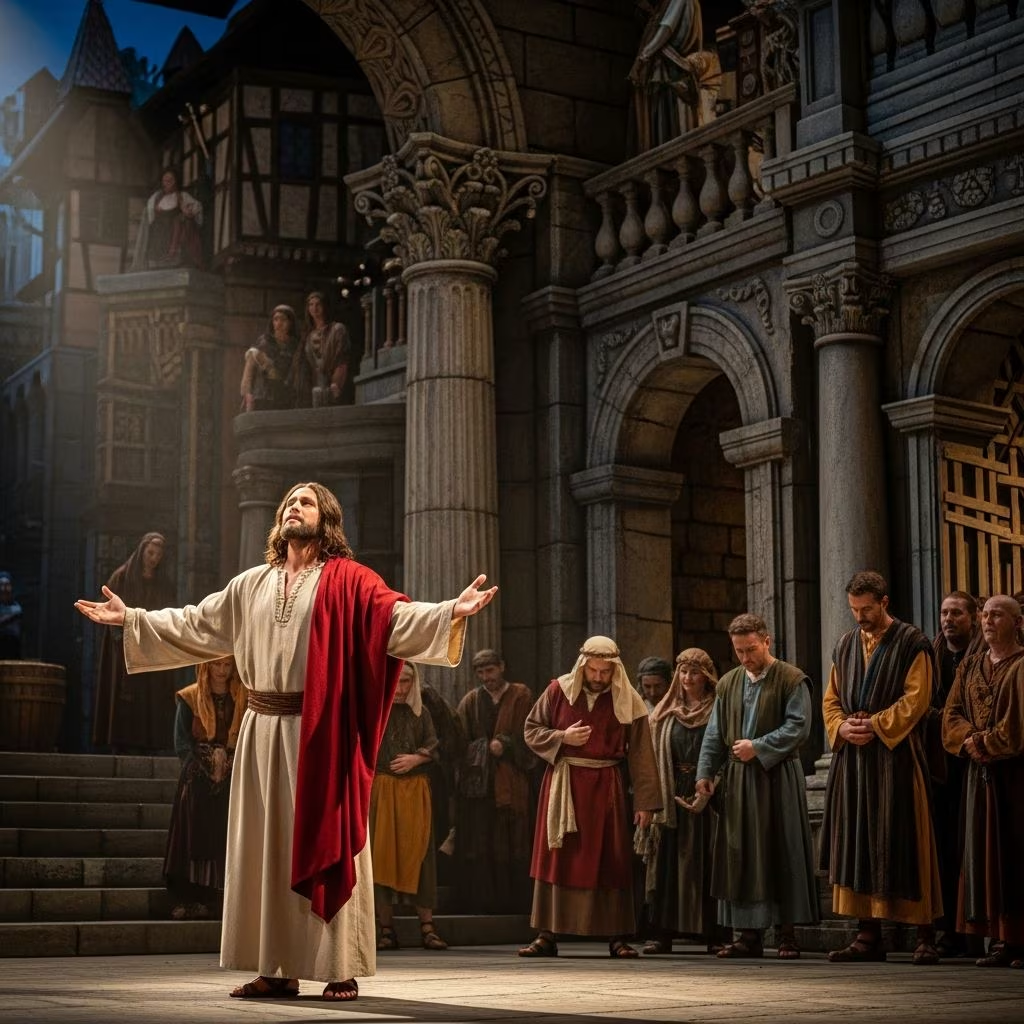
The Oberammergau Passion Play stands as one of the world’s most enduring cultural spectacles, where an entire Bavarian village transforms into a living theater every ten years. Nestled in the Ammergau Alps, this event draws hundreds of thousands of visitors to witness locals portray the final days of Jesus Christ, a commitment forged in the shadow of the 17th-century plague.
In 1633, the Bubonic Plague ravaged Europe, reaching the quiet village of Oberammergau in southern Germany. Over 33 days, 81 residents—nearly half the population—succumbed to the disease after a traveler unwittingly brought it to the community. In desperation, on October 28, 1633, the villagers gathered and swore a solemn oath: if God spared them from further deaths, they would stage a play depicting the suffering, death, and resurrection of Jesus Christ every decade thereafter.
Miraculously, no additional plague deaths occurred after the vow. By Pentecost 1634, the first performance took place on a makeshift stage in the church cemetery, atop the graves of those lost. This initial enactment, titled the “Play of the Suffering, Death and Resurrection of Our Lord Jesus Christ,” marked the birth of a tradition that has persisted for nearly four centuries. Pastor Joseph A. Daisenberger later noted that such passion plays may have existed in Oberammergau even before 1600, suggesting the vow formalized an ancient custom rather than inventing it anew.
Oberammergau, home to just over 5,000 people, is renowned not only for the Passion Play but also for its woodcarving heritage and vividly painted frescoed buildings (Lüftlmalerei). The Alps provide a dramatic backdrop, enhancing the open-air production’s immersive quality. The play’s continuity reflects the village’s identity; it’s financially vital, with tourism surging every decade.
Each rendition spans five to eight hours, split into two acts with a three-hour dinner intermission. It begins in the afternoon at the Passion Play Theatre, an open-air venue seating 4,700, and covers Jesus’ entry into Jerusalem through his crucifixion and resurrection. The script blends spoken dialogue, music, and tableau vivants—living pictures of Old Testament scenes paralleling Christ’s story.
Over 5,000 costumes and live animals like donkeys, camels, and sheep add realism. The production boasts 1,200 performers in recent cycles, supported by a 100-piece orchestra and choir. No microphones are used, relying on natural acoustics and the actors’ projection skills.
| Performance Aspect | Details |
|---|---|
| Duration | 5-8 hours, afternoon start |
| Acts | Two, with 3-hour break |
| Cast Size | ~2,000 villagers |
| Venue Capacity | 4,700 seats |
| Animals | Donkeys, camels, sheep |
The play has endured wars, bans, and pandemics. Performed every 10 years from 1634-1674, then decennially since 1680 (with exceptions like 2020’s COVID postponement to 2022), it faced a 1770 Bavarian ban by Elector Maximilian III, who deemed theaters unfit for sacred stories. Oberammergau petitioned successfully by 1780, issuing tickets for the first time to 11,000 visitors. Napoleonic Wars reduced crowds to 3,000.
Modern updates include a new stage and score in 1830, making it a pilgrimage site for Catholic and Protestant alike. The 2022 edition, the 42nd, adapted post-plague motifs amid global health crises. Scripts evolved from 1662 texts by Georg Kaiser, blending older plays predating 1634.
UNESCO recognizes it as Intangible Cultural Heritage. It attracts 500,000+ visitors per cycle, boosting the local economy. Woodcarvers craft props, and the village buzzes with rehearsals years in advance. Critics note historical antisemitic elements in early versions, like blaming Jewish figures, but revisions aim for sensitivity.
Performers grow beards and long hair a year prior, embodying roles fully. Families pass parts generationally, fostering community bonds.
Tickets sell out fast; book 18-24 months ahead via official sites. Prices range €100-€200. Shows run May-October, 102 performances. Stay in Oberammergau’s guesthouses or nearby Garmisch-Partenkirchen. Combine with hikes in the Alps, woodcarving workshops, or Wieskirche visits.
The play occurs every 10 years. The 2022 edition was the last; anticipate 2030, pending official announcements.
No, only eligible locals. Visitors watch as audience members.
First in 1634, making it nearly 400 years old.
Yes, though themes are religious; suitable for ages 8+.
Open-air but covered seating; performances proceed rain or shine.
Beyond theater, the Passion Play embodies faith, resilience, and communal spirit. Seeing bakers as disciples or teachers as Pharisees blurs lines between stage and life, offering a profound cultural immersion in Bavarian heritage.
