

 Travel Essentials
 Travel Essentials

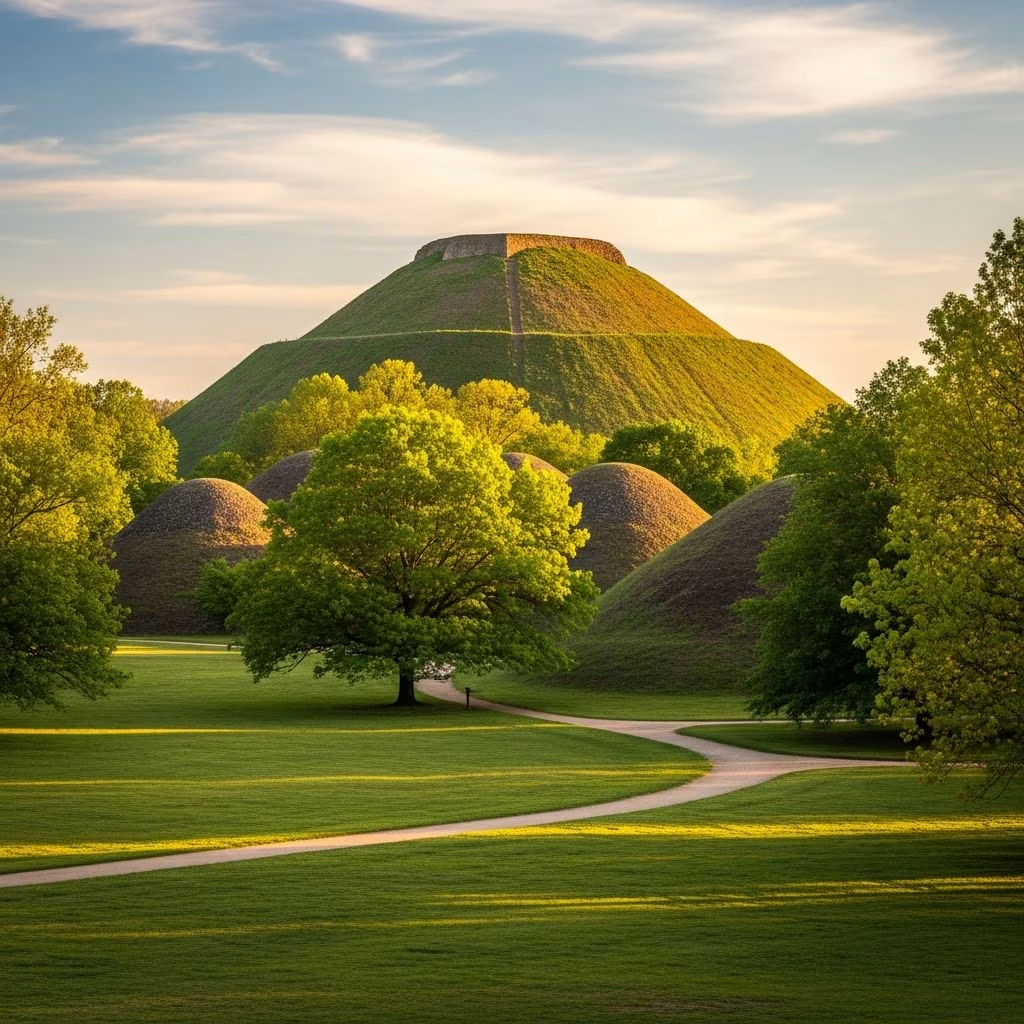
Explore Ocmulgee Mounds National Historical Park, preserving 12,000+ years of Indigenous history along Georgia's Ocmulgee River, featuring massive mounds and trails.
 Travel Essentials
Nestled along the winding Ocmulgee River in Macon, Georgia, Ocmulgee Mounds National Historical Park stands as a profound testament to the enduring presence of Indigenous peoples in the Southeastern United States. Spanning more than 3,300 acres, this protected area safeguards evidence of human activity stretching back over 12,000 years, from Ice Age hunters to sophisticated mound-building societies. Visitors today can wander through monumental earthworks, hike forested trails, and connect with the living traditions of the Muscogee (Creek) Nation, whose ancestors shaped this landscape.
The park’s significance begins with its unparalleled archaeological record. Artifacts and structural remains reveal continuous occupation since the Paleo-Indian period, when early inhabitants pursued megafauna like mammoths amid retreating glaciers. By around 900 CE, the Mississippian culture emerged, marked by hierarchical societies that engineered massive platform mounds for ceremonies, elite residences, and burials. These feats of engineering—constructed with layered soils and precise alignments—demonstrate advanced knowledge of hydrology, agriculture, and communal labor organization.
Key features include the towering Great Temple Mound, rising 17 meters high and covering nearly four acres at its base. Accessible via a short trail or park road, it offers panoramic views of the river valley that once sustained thriving communities. Nearby, a burial mound and defensive earthwork trenches highlight the site’s multifaceted use, from spiritual centers to fortified settlements. Excavations have uncovered pottery, tools, and even preserved wooden structures, painting a vivid picture of daily life, trade networks, and ritual practices.
European contact reshaped the region dramatically. In 1806, the U.S. government established Fort Benjamin Hawkins adjacent to the mounds to facilitate trade with Native Americans, catalyzing Macon’s growth as a river port. Despite forced removals in the 19th century, the site’s cultural value endured. Congress authorized its protection as a national monument in 1934, with formal establishment by the National Park Service (NPS) in 1936.
A pivotal expansion came in 2019 via the John D. Dingell Jr. Conservation, Management, and Recreation Act, redesignating it a national historical park and adding 2,100 acres, bringing NPS-managed land to 701 acres. This upgrade underscores growing recognition of its importance. Today, momentum builds through the Ocmulgee National Park and Preserve Initiative (ONPPI), a coalition of local residents, Muscogee citizens, and conservationists advocating for full national park status—potentially Georgia’s first.
Ocmulgee’s landscapes blend history with recreation. Over 10 miles of trails wind through hardwood forests, river bluffs, and mound complexes, suitable for all skill levels. The half-mile path to the Great Temple Mound introduces visitors to interpretive signs detailing construction techniques and cultural symbolism.
Beyond hiking, canoeing, fishing, and hunting (in designated areas) offer ways to engage with the 50-mile stretch of pristine riverfront under proposed preserve expansion. Seasonal events amplify the experience, like the annual Ocmulgee Indigenous Celebration in September, featuring dances, crafts, and storytelling by Southeastern tribes.
The push for national park designation addresses threats like urban sprawl and erosion while honoring Muscogee heritage. The Muscogee Nation, descendants of mound-builders, actively collaborates on stewardship, ensuring interpretations reflect Indigenous perspectives. ONPPI envisions a 45,000-acre preserve integrating cultural sites with wilderness, fostering education, ecotourism, and reconciliation.
| Era | Key Developments | Notable Features |
|---|---|---|
| Paleo-Indian (12,000+ years ago) | Hunting megafauna | Stone tools, campsites |
| Mississippian (900-1500 CE) | Mound construction, agriculture | Great Temple Mound, earth lodge |
| Modern (1934-present) | Protection and expansion | NPS management, cultural events |
The park operates daily from sunrise to sunset, with the visitor center open 9 AM-5 PM (extended in summer). Admission is free, though donations support preservation. Macon, just minutes away, provides lodging from historic inns to modern hotels, plus Southern cuisine like fried green tomatoes and peach cobbler.
Combine with Macon’s music trail or cherry blossom festival for a full itinerary. Pets are welcome on leashes outside buildings.
Over 12,000 years of habitation, peaking with Mississippian mound-builders around 900 CE.
No, entry is free.
Yes, multiple trails; camping in nearby state parks, with future preserve plans.
Indigenous Celebration in September, plus guided tours.
Located at 1207 Emery Hwy, Macon, GA; 90 minutes from Atlanta.
In an era of cultural rediscovery, Ocmulgee offers a bridge to America’s Indigenous roots. Its mounds, silent sentinels along the river, remind us of resilient societies that mastered their environment long before modern cities rose nearby. Whether seeking solitude on a bluff trail or joining a cultural festival, the park invites reflection on shared human heritage. As expansion efforts advance, Ocmulgee promises to evolve, safeguarding this legacy for generations while boosting Georgia’s tourism economy through authentic storytelling and outdoor adventure.
Plan your visit to witness engineering marvels that rival ancient wonders worldwide, all rooted in the Southeast’s fertile soils. From the intimate earth lodge to expansive river views, every step reveals layers of time, inviting you to become part of the story.
