

 Travel Essentials
 Travel Essentials

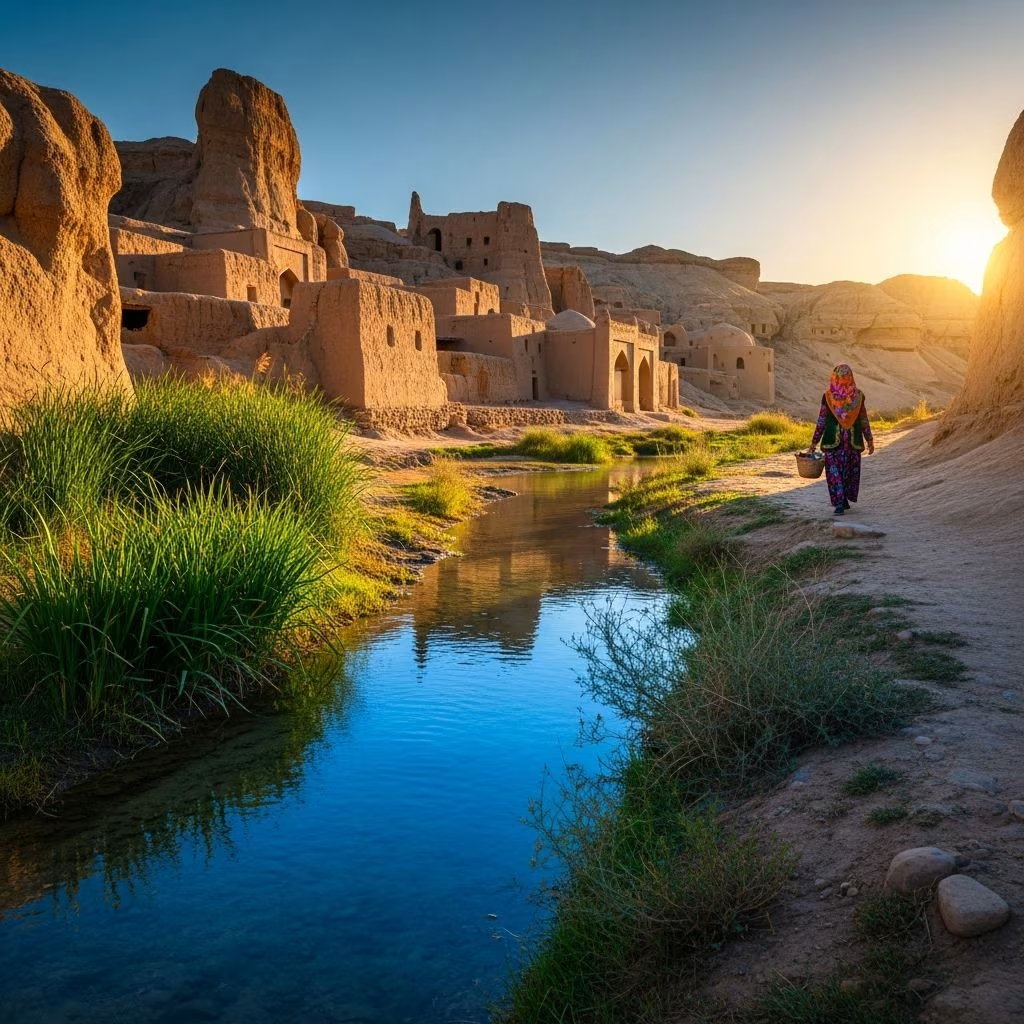
Venture beyond UNESCO sites to discover mountain homestays, ancient desert fortifications, traditional crafts, and authentic cultural experiences throughout Uzbekistan.
 Travel Essentials
While Uzbekistan’s renowned silk road cities attract millions of visitors annually, the country’s true appeal extends far beyond the ornate tilework of famous monuments and busy bazaar stalls. The landscape encompasses diverse ecosystems, centuries-old trade routes, vibrant regional cultures, and experiences that reveal how ordinary people maintain traditions in modern times. Strategic travel planning allows visitors to move past typical tourist routes and engage with the genuine character that defines Central Asia.
Uzbekistan presents remarkable geographic variety that surprises many travelers accustomed to thinking of the region as merely desert and ancient cities. The country stretches across multiple climate zones and terrain types, each contributing distinctive characteristics to regional culture and economy. Understanding this geographic complexity helps visitors appreciate why different areas developed distinct traditions and architectural styles.
The Amu-Darya plains in the southern reaches represent expansive arid landscapes that historically served as natural boundaries between empires. These baking plains contrast sharply with other regions, creating environmental challenges that shaped settlement patterns and trade route development. Moving northward and eastward, the terrain transitions dramatically.
The Ferghana Valley occupies a fertile basin surrounded by mountains, supporting dense populations and vibrant agricultural economies. This region’s importance transcends its current status, as it served as a crucial intersection point for merchants, armies, and ideas traveling between east and west. The valley’s geographic positioning creates a microclimate supporting fruit production that remains legendary throughout Central Asia.
The Karakalpakstan region encompasses stony desert landscapes that few travelers venture to explore, despite containing significant historical sites and unique cultural characteristics. Meanwhile, the alpine mountains near Tashkent rise dramatically within hours of the capital, offering cool refuges and recreational opportunities that contrast with lower elevations.
Beyond conventional city tourism, Uzbekistan offers immersive nature-based activities that connect visitors with both landscape and local communities. These experiences range from hiking expeditions to winter sports and cultural homestays that facilitate genuine interaction with residents living in remote areas.
The mountains accessible from Tashkent provide multiple recreational opportunities across different seasons. Big Chimgan peak reaches 3,309 meters in elevation, offering hiking trails that reward climbers with expansive views overlooking Charvak Reservoir. The challenging ascent attracts fitness-oriented travelers seeking more than passive sightseeing.
Water-based adventures appeal to different interest levels. The Ugam and Pskem rivers provide white-water rafting opportunities that range from moderate to extreme difficulty. Experienced rafters can navigate challenging sections while less experienced paddlers enjoy calmer stretches.
Winter transforms the mountain landscape into a snow sports destination. Amirsoy operates as the country’s premier ski resort, attracting winter athletes from throughout the region. For wealthy adventurers seeking exclusive experiences, Central Asian heli-skiing represents an extraordinary opportunity combining extreme terrain with spectacular backcountry wilderness.
The desert regions of Khorezm offer alternatives to conventional hotel-based tourism. Yurt camps positioned near ancient fortifications provide accommodation options that immerse visitors in traditional Central Asian lifestyles while maintaining modern comfort standards.
Ayaz Qala fortress sits dramatically on cliff tops, commanding views of surrounding desert plains. Spending nights in nearby yurt encampments allows visitors to experience sunset and sunrise from unique vantage points while exploring multiple nearby fortifications. Day excursions can encompass half a dozen historical sites within manageable distances.
The Zoroastrian platform at Chilpak represents an unusual historical monument reflecting religious and cultural practices predating Islamic Central Asia. Climbing to this ancient structure requires physical effort but rewards visitors with tangible connection to pre-Islamic history that shaped the region’s identity.
The roads connecting major cities contain layers of historical development that reveal how commerce, military strategy, and cultural exchange shaped Central Asia across millennia. These routes functioned as more than simple transportation corridors; they were lifelines connecting distant civilizations and enabling the spread of ideas, technologies, and belief systems.
The Rabat-i-Malik Caravanseri stands along the modern highway connecting Samarkand and Bukhara, though most drivers pass without noticing its historic gateway. Dating to the 11th century, this structure originally provided overnight shelter for merchants and their camel caravans traveling the silk road. The atmospheric remains evoke images of bustling commerce and cross-cultural encounters that characterized medieval trade networks.
Ancient Erkurgan sits directly in the path of the road between Bukhara and Karshi. Once a thriving 1,600-year-old Hepthalite settlement, its city walls remain partially visible, allowing travelers to walk through corridors abandoned for centuries. The psychological impact of exploring such sites, knowing few international visitors have investigated these ruins, creates memorable experiences distinct from crowded major cities.
The nearly-forgotten ruins of Paikend occupy the southwestern region near the Turkmenistan border. Once serving as the greatest trading city on the Amu-Darya’s western banks, Paikend represents a more challenging destination requiring dedicated effort to locate and explore. The genuine thrill of investigating sites that few foreigners have visited in over 1,000 years creates profound connections with history that typical guided tours cannot replicate.
The Ferghana Valley maintains Central Asia’s most vibrant craft production traditions, with multiple towns specializing in distinctive products developed through generations of accumulated knowledge. These crafts represent more than commercial products; they embody cultural values, aesthetic preferences, and technical innovations that define regional identity.
The town of Chust specializes in producing traditional Central Asian knives that balance functional design with decorative elements. These implements traditionally served practical purposes for slicing melons and other produce, but contemporary versions combine utility with artistic expression. Purchasing directly from producers or local merchants ensures authentic products while supporting communities dependent on craft traditions.
Rishton hosts multiple family workshops producing what many consider Central Asia’s finest ceramics. The ceramic tradition extends back centuries, with contemporary artisans maintaining techniques while adapting designs to reflect modern sensibilities. Family workshops operating across multiple generations demonstrate how cultural knowledge passes from parents to children through apprenticeship and daily practice.
The Gijduvan pottery tradition similarly maintains distinctive styles developed through centuries of refinement. Visiting family workshops reveals production processes from clay preparation through decorative techniques and firing. Conversations with artisans provide insights into how they balance traditional aesthetics with commercial demands and contemporary market realities.
While Samarkand, Bukhara, and Khiva dominate most guidebooks and tour itineraries, secondary cities offer authentic experiences with fewer international visitors and distinct architectural and cultural characteristics.
The regional capital of Nukus functions as both administrative center and cultural destination. The Savitsky Museum houses one of the world’s premier collections of avant-garde Soviet art, featuring works by artists whose styles diverged from official socialist realism during the Soviet era. The museum’s significance extends beyond art appreciation; it documents cultural resistance and creative expression during politically restrictive periods.
The Nuratau Mountains provide trekking opportunities through relatively undeveloped landscapes where visitors encounter communities maintaining traditional lifestyles. Walking trails connect settlements where residents continue pastoral and agricultural economies with minimal dependence on tourism revenue.
Camps in the Nuratau region and surrounding desert areas offer alternatives to hotel accommodation. Traditional yurt camps blend authentic architectural styles with guest facilities, allowing visitors to experience traditional Central Asian living arrangements while maintaining reasonable comfort standards. Evening gatherings around fires in yurt camps facilitate conversations with hosts and other travelers, creating social interactions that hotel stays rarely generate.
Meaningful cultural encounters require intentional effort and awareness of power dynamics inherent in tourism. Travelers visiting with genuine curiosity and respect, rather than viewing communities as backdrops for photographs, develop more substantial connections and support sustainable tourism practices.
The region’s bazaars function as vital commercial and social centers where locals conduct routine shopping and social interactions. Visiting markets outside peak tourist hours reveals how communities actually utilize these spaces. Morning hours typically feature fewer visitors and more active commerce as residents purchase supplies for daily use.
Central Asian cultures emphasize hospitality traditions extending back millennia. Visitors who reciprocate respect and genuine interest typically receive warmer welcomes than those treating interactions as transactional. Learning basic phrases in local languages, accepting offered tea and snacks, and demonstrating curiosity about daily lives builds more authentic relationships than remaining aloof.
Exploring less-visited areas requires additional planning compared to standard city tours. Transportation infrastructure may be less developed, guides may speak limited English, and services may operate inconsistently. However, these challenges contribute to authentic experiences by limiting tourist infrastructure that homogenizes experiences globally.
Private drivers with local knowledge provide more flexible transportation than group tours, allowing spontaneous detours and extended visits to sites that capture visitor interest. Hiring guides from smaller communities ensures economic benefits flow to local residents rather than centralized tourism companies.
Seasonal considerations significantly impact regional accessibility and comfort. Winter temperatures in higher elevations become prohibitively cold, while summer heat in lower desert regions can exceed human tolerance for extended outdoor exposure. Spring and autumn typically provide optimal conditions for diverse activities and varying elevation visits within single trips.
Spring (April-May) and autumn (September-October) offer ideal conditions with moderate temperatures suitable for hiking, desert camping, and extended outdoor activities. Summer allows access to high elevation areas but brings extreme heat to lower desert regions. Winter enables ski resort visits but restricts access to many mountain areas.
While experienced guides enhance understanding and provide necessary context, many sites remain accessible to independent travelers with basic research. However, guides from local communities improve experiences through detailed historical knowledge, translation services, and connections facilitating authentic interactions with residents.
Reputable yurt camps operated by established tourism companies maintain safety standards and provide bedding, heating, and basic amenities. Comfort levels vary by camp, but quality facilities offer experiences balancing authenticity with reasonable comfort. Researching reviews and operator backgrounds ensures selection of reliable accommodations.
Many family workshops welcome visitors, though calling ahead ensures owners are available and expect guests. Purchasing directly supports artisans while enabling conversations about techniques, materials, and creative processes. Prices typically remain lower than retail bazaar purchases when buying directly from producers.
Russian remains widely understood throughout former Soviet republics, including Uzbekistan. Uzbek language knowledge facilitates deeper connections with communities and demonstrates respect for local culture. English proficiency decreases significantly outside Tashkent and major tourist destinations.
