

 Travel Essentials
 Travel Essentials

Explore top activities in the Okavango Delta: from serene mokoro trips and game drives to scenic flights and walking safaris amid stunning waterways and wildlife.
 Travel Essentials
The Okavango Delta stands as one of Africa’s most extraordinary natural wonders, a vast inland delta where seasonal floods from Angola create a lush oasis amid the Kalahari Desert. Spanning nearly 19,000 square kilometers, this UNESCO World Heritage Site teems with diverse ecosystems, from papyrus-fringed channels to floodplains alive with wildlife. Visitors flock here for immersive experiences that blend adventure, luxury, and raw nature, making it a pinnacle destination for safari enthusiasts.
This unique wetland supports over 5,000 plant species, 164 mammals, and 480 birds, drawing elephants, lions, leopards, and rare species like the sitatunga antelope. Unlike typical river deltas emptying into oceans, the Okavango spreads into the desert, evaporating or absorbed by the sands, creating a dynamic landscape that shifts with the floods peaking June to August. Accessibility varies; remote northern areas require light aircraft transfers, while southern reaches near Moremi Game Reserve offer easier entry points.
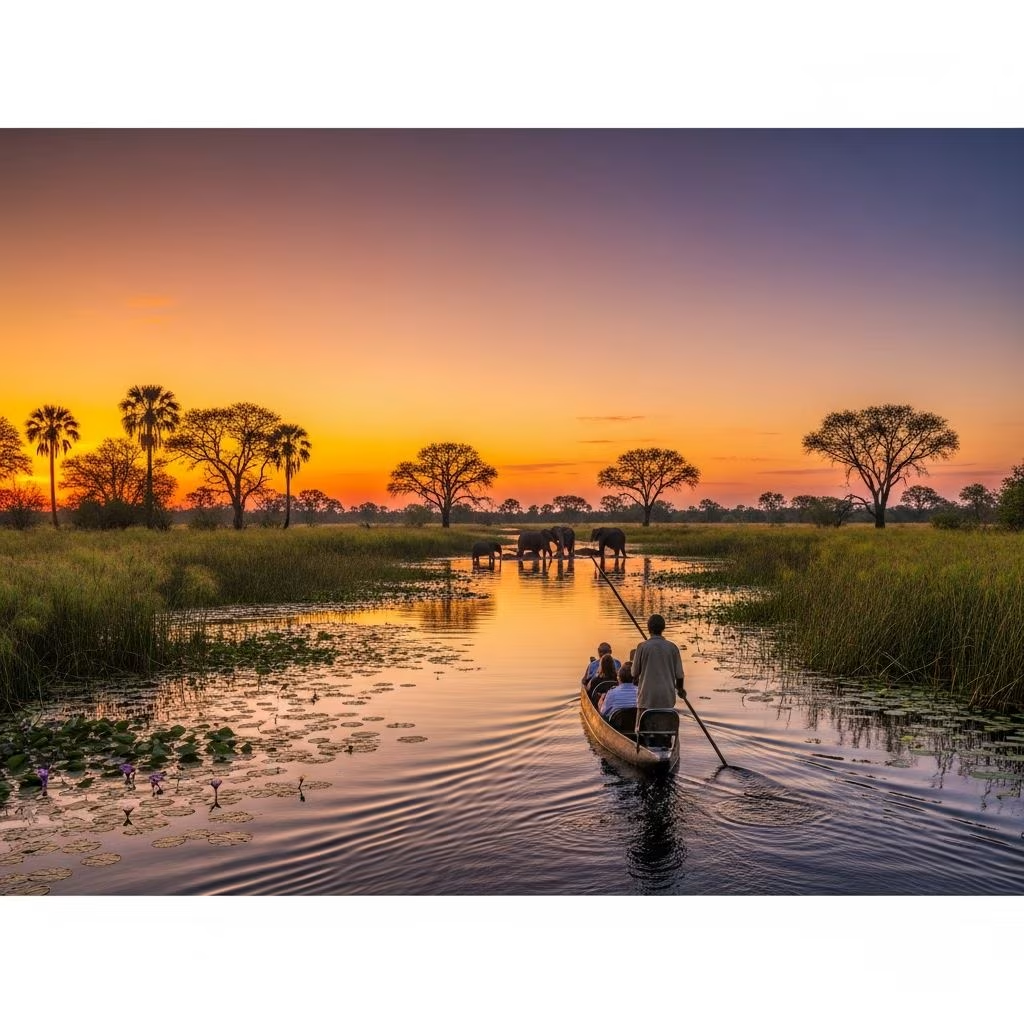
Nothing captures the Delta’s serenity like a mokoro trip, a traditional dugout canoe poled silently by expert local guides through narrow channels lined with reeds. These outings allow close encounters with hippos surfacing nearby or birds flitting overhead, all without engine noise startling the animals. Trips last 1-3 hours, often venturing into hidden lagoons where sitatungas graze on floating vegetation. Polers, trained in wildlife tracking, share insights into edible plants and animal behaviors, enhancing the cultural immersion.
For safety, guides assess water levels and wildlife proximity; deeper channels suit beginners, while shallower ones offer birdwatching hotspots. Many luxury camps include mokoros in packages, combining them with picnics on palm islands.
Day and night game drives in open-sided 4×4 vehicles provide pulse-racing wildlife sightings across savannas and woodlands. Guides navigate concession trails, spotting big cats on hunts or buffalo herds quenching thirst. Night drives reveal nocturnal creatures like genets and porcupines under spotlights, with leopards occasionally draping from trees. Southern Delta areas, including Moremi and Khwai Concession, boast dense populations of predators and prey, rivaling remote zones.
Drives typically run 2-4 hours at dawn or dusk, when animals are active. Off-road tracking is permitted in many concessions, adding excitement to pursuits of elusive predators.
For breathtaking overviews, scenic flights from Maun airstrip reveal the Delta’s mosaic of islands, channels, and herds from above. Fixed-wing planes offer 30-60 minute tours at economical rates, while helicopters provide door-off photography ops and extended ranges up to 90 minutes, soaring over Chief’s Island and distant floodplains. These flights highlight the Delta’s scale, spotting elephant migrations invisible from ground level.
Book via camp operators; mornings yield clearest visibility. Combine with ground activities for comprehensive exploration.
Guided bush walks unveil the Delta’s micro-worlds: tracking spoors, identifying insects, and observing small mammals in grassy floodplains. Armed expert guides lead small groups, stopping to examine dung beetles or medicinal herbs. Walks last 2 hours, covering islands reachable by mokoro, where ancient baobabs tower amid wild date palms. This low-impact activity fosters deep appreciation for the ecosystem’s intricacies, from termite mounds to predator-prey dynamics.
Ideal for photography enthusiasts seeking intimate portraits; hydration and sturdy boots are essentials.
Aluminum skiffs with quiet outboards access deeper waters during high floods, ferrying visitors past crocodile-infested lagoons and hippo pods. These trips complement mokoros, covering more ground to spot aquatic birds like African fish eagles. Sunset cruises often include sundowners, blending adventure with relaxation. In Chobe-adjacent areas, boating reveals riverine wildlife akin to Delta interiors.
Horseback safaris cater to riders, trotting silently past grazing zebras that mistake horses for kin. Cultural visits to nearby villages introduce mokoro crafting and basket weaving by Hambukushu communities, supporting local economies. Some camps host starlit bush dinners or tracking workshops, enriching stays.
Best visited May-October for dry conditions and peak game viewing; wet season (November-April) suits birders with fewer crowds. Most trips are fly-in packages from Maun, 4-7 nights at luxury tented camps like Little Vumbura or Duba Plains, costing $1,000-$2,000/night all-inclusive. Budget day trips exist from Maun, but overnights maximize immersion.
| Activity | Duration | Best Time | Highlights |
|---|---|---|---|
| Mokoro Trip | 1-3 hrs | Year-round | Silent wildlife viewing, birdlife |
| Game Drive | 2-4 hrs | Dawn/Dusk | Big Five, night predators |
| Scenic Flight | 30-90 min | Morning | Aerial landscapes, migrations |
| Walking Safari | 2 hrs | Morning | Tracks, plants, small game |
| Boat Safari | 2 hrs | High flood | Hippos, crocs, waterbirds |
May to September offers optimal wildlife viewing with high water levels and mild weather.
Yes, with family-friendly camps; children over 6-12 join most activities under supervision.
Fly to Maun, then light aircraft to camp airstrips; roads are rough.
Day trips from Maun or mobile camping; luxury dominates for remoteness.
Elephants, lions, hippos, 400+ birds; no guaranteed sightings but high densities.
Botswana’s government enforces strict quotas, banning hunting in many concessions. Community trusts like Okavango Community Trust fund anti-poaching via tourism revenue. Visitors contribute by choosing eco-camps using solar power and employing locals.
