


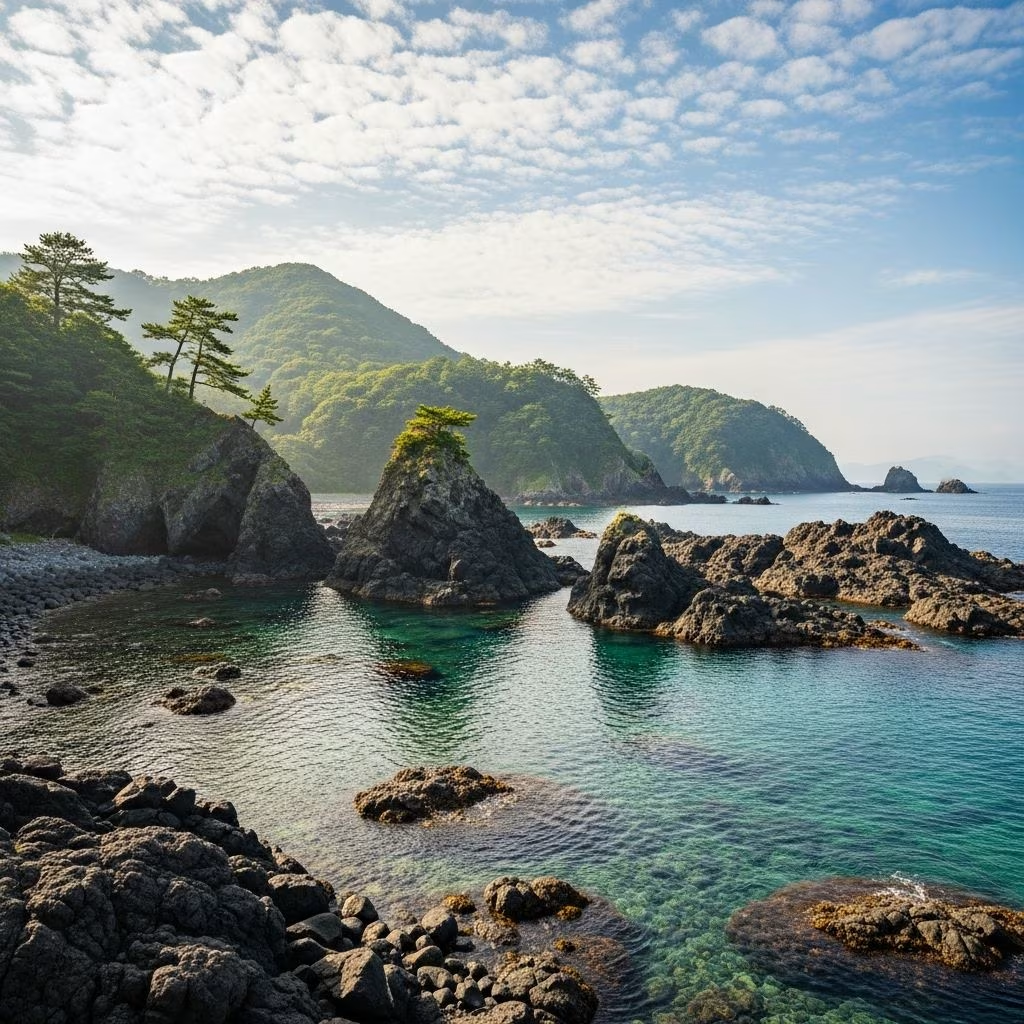
Nestled in the crystalline waters of the Sea of Japan off the coast of Shimane Prefecture, the Oki Islands represent one of Japan’s most pristine and underexplored destinations. This remote archipelago comprises approximately 180 islands, though only four remain permanently inhabited, making it an ideal retreat for travelers seeking authentic experiences far removed from Japan’s bustling urban landscape. The islands earned designation as a UNESCO Global Geopark in 2013, acknowledging their exceptional geological formations, ecological significance, and cultural heritage spanning centuries.
What distinguishes the Oki Islands from other Japanese destinations is their remarkable capacity to transport visitors to a different era. Traditional fishing villages with weathered wooden structures, expansive grasslands where cattle and horses graze freely, and dramatic coastal formations create an atmosphere of timelessness rarely encountered in contemporary Japan. For those seeking respite from modern life while maintaining access to comfortable amenities, these islands offer the perfect balance between adventure and relaxation.
Geographic Features and Natural Landscape
The Oki Islands occupy a unique position within Japan’s geography, situated approximately 40 to 80 kilometers offshore from the Shimane mainland. This isolation has preserved distinctive ecosystems and geological characteristics that distinguish the archipelago from both mainland Japan and other island regions. The islands experience a temperate maritime climate with clear waters that support diverse marine populations and enable excellent visibility for underwater activities throughout most of the year.
The landscape varies dramatically across different islands, ranging from gentle rolling hills to towering sea cliffs that rise hundreds of meters above the surf. The Kuniga Coast on Nishinoshima Island stretches for 13 kilometers, featuring some of Japan’s most dramatic coastal scenery. These cliffs, composed of ancient volcanic rock, display layers of geological history visible in their striated formations. Interspersed throughout the coastline are sea caves, natural archways, and isolated rock formations that create an ever-changing visual panorama as visitors explore by boat or foot.
Beyond the coastal features, the islands contain lush temperate forests dominated by ancient Japanese cedar trees, alongside diverse understory vegetation. These ecosystems support endemic species found nowhere else in Japan, including the rare Oki salamander, making the islands of significant ecological importance to biologists and conservation specialists.
Transportation and Accessibility
Reaching the Oki Islands requires commitment, as access is restricted entirely to sea and air transportation. Ferry services operate from two primary departure points on the Shimane mainland: Shichirui Port and Yonago. The journey typically requires 2 to 2.5 hours by ferry, providing ample time to acclimate to the transition from urban Japan to island life. Multiple ferry operators maintain regular schedules, though services may experience seasonal variations.
Ground transportation on the islands remains refreshingly simple. Visitors can arrange car rentals at ferry terminals, hire local taxis, or rent bicycles for leisurely exploration. Many travelers find bicycles ideal for discovering hidden villages and coastal viewpoints at a pace that permits genuine interaction with the landscape. Public bus services connect major settlements, though schedules require advance planning.
Cultural Heritage and Historical Significance
The Oki Islands possess a layered historical narrative stretching back centuries, with Shinto spirituality deeply woven into daily life and landscape. Numerous shrines and temples dot the islands, each representing distinct architectural styles and spiritual traditions. Among the most prominent is Tamawakasu-mikoto Shrine, which houses a sacred tree believed to exceed 2,000 years in age, serving as a living connection to Japan’s ancient past.
Traditional villages with thatched-roof structures and narrow winding streets preserve building techniques and spatial arrangements unchanged for generations. These settlements function as living museums where residents continue practices their ancestors maintained for centuries. Visitors observing locals air-drying squid—a regional delicacy—or tending fishing nets witness cultural continuity rather than performed tourism.
Outdoor Recreation and Adventure Activities
Water-Based Pursuits
The exceptionally clear waters surrounding the Oki Islands create ideal conditions for multiple water-based activities. Snorkeling and scuba diving enthusiasts encounter vibrant coral formations and diverse fish populations in shallow and moderate depths. Professional diving instruction is available for inexperienced participants, while equipment rentals serve certified divers seeking independent exploration.
Sea kayaking has emerged as a particularly popular activity, allowing participants to navigate hidden coves and investigate sea caves while paddling through pristine waters. Guided kayaking expeditions combine physical activity with interpretive commentary regarding geological features and historical significance. Fishing opportunities exist both from shore and aboard local fishing vessels, enabling visitors to participate directly in the islands’ primary economic activity.
Hiking and Coastal Walking
Extensive hiking networks traverse the islands’ forested interior and dramatic coastlines. The Kuniga Coast presents some of Japan’s most spectacular walking routes, combining manageable terrain with increasingly impressive vistas. Matengai Cliff rises 257 meters above the sea, offering panoramic views across the Sea of Japan from its grassy summit. The Akao Lookout provides breathtaking coastal vistas, including views of Matengai Cliff, Tsutenkyo Arch, and surrounding grasslands where livestock graze peacefully.
Sunset viewing at Candle Island (Dogo Island) has become iconic among visitors, with the setting sun casting dramatic light across the rock formation. Hiking trails accommodate various fitness levels, from gentle coastal strolls to challenging mountain ascents through dense forest.
Cycling Exploration
Bicycle touring represents an ideal means of experiencing the islands at moderate pace. Cycling routes connect picturesque villages, secluded beaches, and scenic overlooks, allowing spontaneous stops and unplanned discoveries. The relatively compact geography of inhabited islands makes cycling particularly practical, while road conditions generally accommodate standard touring bicycles.
Culinary Traditions and Local Gastronomy
Island isolation has cultivated distinctive culinary traditions reflecting the marine environment and agricultural heritage. Fresh seafood dominates local cuisine, with preparation methods refined across generations. Squid, both fresh and dried, appears prominently in local markets and restaurant menus, representing one of the region’s most characteristic products. Traditional cooking techniques emphasize ingredient quality and minimal preparation, allowing natural flavors to predominate.
Dining establishments in port towns and larger settlements offer opportunities to experience authentic island gastronomy prepared by local chefs. Many restaurants source ingredients directly from local fishermen and farmers, ensuring seasonal freshness and supporting traditional economic practices.
Seasonal Considerations and Climate Patterns
The Oki Islands remain accessible year-round, though seasonal variations influence visitor experiences and activity availability. Spring brings warming temperatures and cherry blossoms to lower elevations, while summer offers optimal conditions for water-based activities and coastal exploration. Autumn presents spectacular foliage in forested areas and generally stable weather conditions. Winter brings snow to higher elevations and occasionally affects ferry schedules, though conditions generally remain navigable.
Clear days provide the most rewarding experiences, particularly for photography and long-distance views across the Sea of Japan. Cloud cover occasionally obscures distant views but does not substantially diminish the coastal scenery’s drama and appeal.
Practical Travel Information
Accommodation Options
Lodging ranges from traditional family-operated inns to small hotels and guesthouses. Accommodations typically reflect local architecture and hospitality traditions, offering guests genuine cultural immersion rather than standardized corporate amenities. Many establishments provide evening meals featuring local specialties, enhancing the overall experience of island living.
Sample Three-Day Itinerary
Day One: Depart from Shichirui Port (40 minutes from Matsue Station via bus, ¥1,050). The 2.5-hour ferry journey permits observation of the approaching islands and transition from mainland perspective. Upon arrival at Saigō Port on Okinoshima, spend the afternoon exploring the port town and visiting nearby cultural sites.
Day Two: Travel to Nakanoshima Island via inter-island ferry. Morning visits to Oki Shrine can be arranged by local bus transportation. Spend afternoon exploring coastal villages and hiking scenic trails. Evening activities might include sunset viewing or relaxation in traditional accommodations.
Day Three: Early morning departure from Ama Town’s Hishiura Port for final explorations of Chiburijima Island. Visit Mt. Akahage viewpoint by rental car for expansive landscape photography. Afternoon return ferry to mainland Shichirui Port concludes the island experience.
Why the Oki Islands Merit Your Visit
In an era when tourism frequently transforms destinations into commercialized approximations of authenticity, the Oki Islands have somehow maintained genuineness. Here, cultural traditions persist not as attractions but as integral aspects of residents’ actual lives. Water remains genuinely pristine, landscapes appear untouched by mass development, and wildlife populations thrive in protected habitats.
The islands offer precisely what their natural isolation suggests: genuine escape from contemporary pressures. Whether pursuing active adventure through kayaking and hiking or seeking quiet contemplation amidst natural beauty, the Oki Islands accommodate diverse travel philosophies and interests. The combination of dramatic geological features, rich historical significance, diverse recreational opportunities, and authentic cultural experiences creates a comprehensive destination that rewards extended exploration.
Frequently Asked Questions
- What is the best time to visit the Oki Islands?
- Late spring through early autumn offers optimal weather conditions and maximum activity availability. Summer enables excellent water-based activities, while autumn provides spectacular foliage and stable conditions.
- Can I visit the Oki Islands on a day trip?
- While technically possible via early ferry departure and evening return, a day trip permits minimal exploration. Multi-day stays enable genuine cultural immersion and comprehensive island experience.
- What is the approximate cost of visiting?
- Ferry costs range from ¥890-¥1,050 from mainland departure points. Accommodation, meals, and activity costs vary based on choices, but island living generally proves economical compared to metropolitan Japan destinations.
- Are English language services readily available?
- English availability remains limited outside major port towns. Learning basic Japanese phrases or utilizing translation applications enhances communication with local residents.
- What wildlife or natural hazards should visitors anticipate?
- The islands pose minimal safety concerns for most visitors. Standard coastal precautions apply when kayaking or swimming. Weather can change rapidly; advance monitoring permits appropriate activity planning.
Conclusion
The Oki Islands represent a vanishing category of destination: places where modern tourism coexists with authentic cultural and natural preservation. The archipelago’s UNESCO Global Geopark status acknowledges its scientific and cultural importance while remaining relatively unknown to international travelers. This combination creates a rare opportunity to experience genuine Japan, unmediated by tourism infrastructure, while supporting local communities through respectful visitation and economic participation. For travelers seeking meaningful engagement with Japanese landscapes, history, and culture, the Oki Islands deserve prominent consideration in travel planning.
References
- Oki Islands Travel Guide — Japan Experience. Accessed 2026. https://www.japan-experience.com/all-about-japan/oki-islands
- Oki Islands, Chugoku | The Complete Guide — InsideJapan Tours. Accessed 2026. https://www.insidejapantours.com/us/japanese-destinations/oki-islands/
- Explore Oki Islands’ rich history and nature (2 nights/3 days) — Visit the Oki Islands Official Tourism Guide. Accessed 2026. https://visit-okiislands.e-oki.net/features/7073/
- Oki Islands | Shimane | Chugoku | Destinations — Japan National Tourism Organization. Accessed 2026. https://www.japan.travel/en/destinations/chugoku/shimane/oki/
- Driving around the Oki Islands — Japan Travel Reports, Japan Guide. Accessed 2026. https://www.japan-guide.com/community/okinicola/report-882
- Visit the Oki Islands (Shimane, Japan) Official Tourism Guide — Oki Islands Tourism Organization. Accessed 2026. https://visit-okiislands.e-oki.net

