

 Travel Essentials
 Travel Essentials

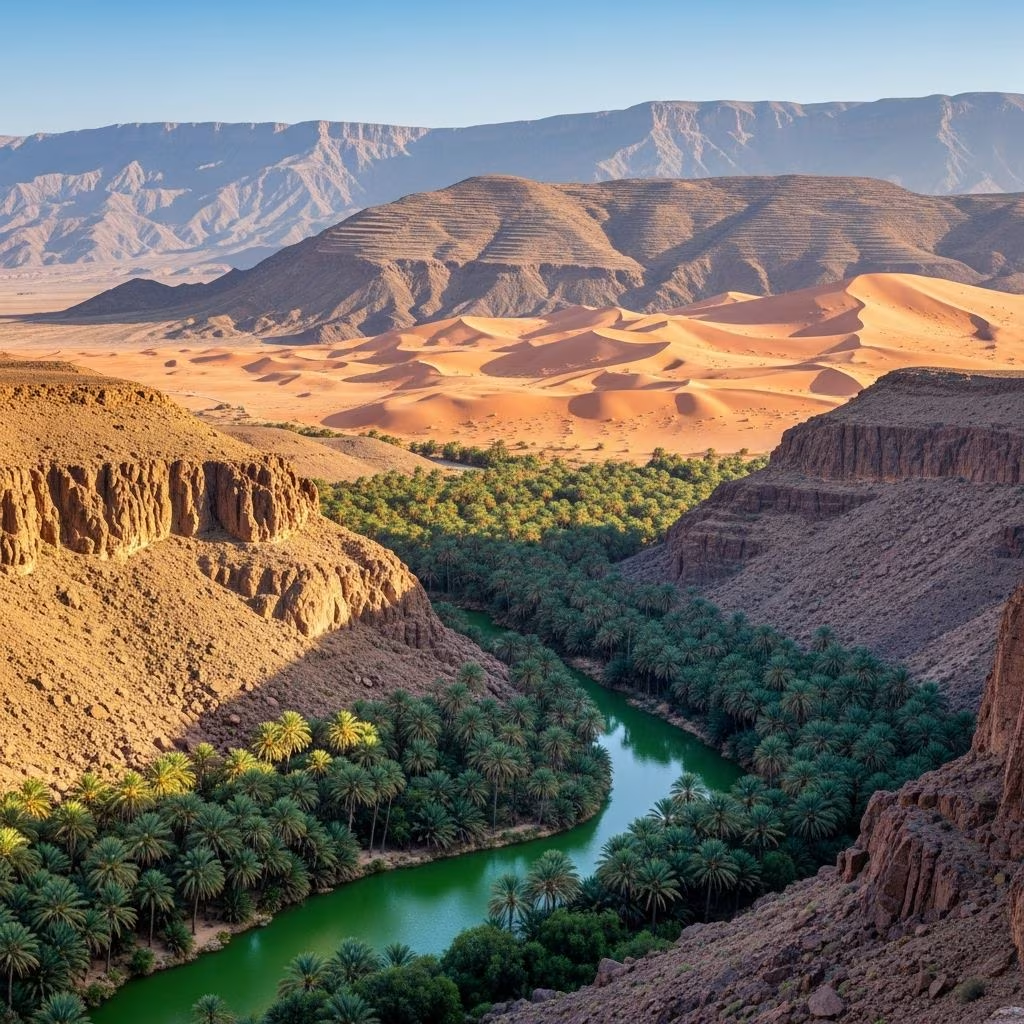
Explore Oman's stunning natural attractions from dramatic mountain canyons to pristine desert dunes and underground caves.
 Travel Essentials
Oman stands as one of the Arabian Peninsula’s most geologically diverse nations, offering visitors an extraordinary collection of landscapes shaped by millions of years of natural processes. From towering mountain ranges to expansive desert terrain, from underground limestone caverns to crystalline oasis pools, this sultanate presents an unparalleled array of natural attractions. Whether you seek adventure, tranquility, or geological education, Oman’s environment delivers unforgettable experiences across its varied ecosystems.
Jebel Shams, translating to “Mountain of the Sun,” represents Oman’s highest elevation at 3,009 meters and dominates the Hajar Mountains landscape. This massive formation earned its nickname “Grand Canyon of Arabia” due to the dramatic geological processes that created its distinctive 1,000-meter-deep canyon walls. The formation results from alternating bands of resistant limestone and softer shale deposits that have been carved by natural erosion over millennia.
The most accessible way to experience this natural marvel is through the Balcony Walk, a 6-kilometer round-trip hiking trail that departs from the Al Khateem area. This trek provides vertiginous perspectives into Wadi Ghul’s depths while concluding at a historically significant abandoned settlement dating to the 1970s. Visitors exploring this region discover traditional mountain villages such as Bilad Sayt, where mud-brick architecture and terraced agricultural fields remain integrated into the steep terrain. The summer climate at this elevation proves notably cooler than coastal areas, with temperatures typically ranging between 20-25°C, making it an ideal escape during peak heat seasons.
Located within the Hajar Mountains near Al Hamra, Al Hoota Cave represents one of Oman’s most significant geological sites, with geological estimates placing its formation at over 2 million years ago. This limestone cavern showcases elaborate stalactite and stalagmite formations throughout its illuminated passages, creating an otherworldly underground landscape. Perhaps most remarkably, the cave hosts an underground lake and contains populations of blind cave fish—a specialized species uniquely adapted to perpetual darkness.
Guided tours through the cave provide structured exploration of these formations while enabling visitors to observe the distinctive resident fauna. The combination of geological significance and biological uniqueness makes Al Hoota Cave an educational destination for those interested in natural history and subterranean environments.
Oman’s wadis—seasonal river valleys—transform into spectacular water-based ecosystems, particularly during periods of natural spring flow or seasonal rainfall. These features create striking contrasts between surrounding arid terrain and concentrated zones of lush vegetation.
Recognized as Oman’s most celebrated wadi system, Wadi Bani Khalid nestles within the Eastern Hajar Mountains and functions as a verdant sanctuary. Natural springs continuously feed crystal-clear turquoise pools surrounded by dense date palm groves and dramatic cliff formations. These waters provide refreshing swimming opportunities throughout the year, with summer temperatures making these cool pools particularly inviting. The wadi features numerous large water pools and cave systems along its course, creating multiple exploration points for visitors.
Positioned approximately 150 kilometers south of Muscat along the Al Sharqiyah coast, Wadi Shab presents one of Oman’s most famous natural gorges. This impressive canyon combines massive rock walls, crystal-clear swimming pools, and abundant vegetation to create an integrated ecosystem. A distinguishing feature involves hidden cave systems accessible through the hiking trail, including one containing an interior waterfall. The gorge’s emerald pools and dramatic cliff formations attract adventure enthusiasts seeking combined hiking and swimming experiences. Early morning visits prove advisable during summer months to avoid midday heat exposure.
Another significant wadi system, Wadi Tiwi offers visitors a more intimate canyon exploration compared to larger formations. Its narrow passages and concentrated water features create unique geological interest.
Located near Muscat along the route toward Sur, Bimmah Sinkhole represents a geological formation created through limestone erosion processes. This natural phenomenon creates a stunning turquoise pool surrounded by smooth cliff walls, forming one of the world’s most visually striking natural swimming locations. Local cultural narratives attribute the sinkhole’s creation to meteorite impact, contributing a mystical dimension to its scientific origins. The formation’s accessibility and proximity to other attractions like Wadi Shab establish it as a popular day-trip destination, particularly appealing to photographers and families.
Extending across approximately 12,500 square kilometers, the Wahiba Sands (also designated as Sharqiya Sands or Rumlat Al Wahiba) constitute one of Oman’s most significant desert regions. This vast expanse features characteristic sand formations reaching heights up to 100 meters, creating a surreal landscape of golden dunes. Beyond its geological significance, the region supports traditional Bedouin communities who maintain ancestral ways of life within this arid environment.
Adventure-oriented visitors can engage in dune bashing and sandboarding activities, while culturally-interested travelers can visit Bedouin family settlements to observe traditional practices. Summer nights within the desert present particularly favorable conditions for stargazing and Bedouin-style camping experiences.
Dhofar province in southern Oman experiences a dramatic seasonal transformation during the Khareef monsoon season spanning June through September. During this period, cool rains convert typically arid landscapes into lush, verdant environments. Waterfalls cascade down cliff faces, mists envelope mountain formations, and wadis overflow with flowing water, creating a striking contrast to Oman’s characteristic desert scenery.
Key sites within this transformed region include Wadi Darbat, featuring emerald pools and cascading waters, and Mughsail Beach’s dramatic cliff formations with their notable blowholes that spray water forcefully into the air. This seasonal phenomenon makes Dhofar a compelling destination during specific months when visitors can witness Oman’s environmental extremes.
Beyond purely geological attractions, Oman’s natural wonders frequently incorporate archaeological significance. The Salmah Plateau within the Eastern Hajar Mountains presents a lunar-like rocky terrain dotted with ancient ‘beehive tombs’ that offer glimpses into prehistoric settlement patterns. The plateau’s elevated position provides cooler summer temperatures suitable for hiking and off-road adventures while enabling historical investigation.
Certain natural attractions in Oman focus on biological rather than purely geological interests. The Ras Al Jinz Turtle Reserve provides opportunities to observe nesting sea turtles, integrating natural history with conservation efforts. These specialized destinations attract visitors interested in wildlife observation and ecological education.
The recommended travel period for most of Oman’s natural wonders extends from October through April, when temperatures remain moderate and rainfall patterns prove predictable. However, the Khareef season (June-September) offers unique advantages for Dhofar exploration despite elevated heat in other regions.
Most natural wonder exploration in Oman benefits from professional guide services. Reputable operators in Muscat organize technical adventures requiring specialized equipment such as rope systems for abseiling activities and water safety gear for swimming and water-based cave exploration. Multi-activity experiences like the 3-kilometer Snake Gorge require participants to swim, leap, abseil, and navigate large boulders within narrow limestone passages, necessitating professional supervision and comprehensive safety equipment.
Oman’s natural wonders hold substantial scientific importance beyond their recreational value. Rock formations throughout the region date back millions of years, providing geological records of ancient environmental conditions. The diversity of geological processes evident across Oman’s landscapes—from limestone erosion creating sinkholes to tectonic activity shaping mountain ranges to monsoon-driven water features—creates an open-air geological classroom for educators and researchers.
Oman presents an exceptional concentration of natural wonders within a relatively compact geographical area. Whether visitors prioritize extreme adventure through technical gorge traversals, peaceful contemplation beside crystalline pools, geological education through ancient rock formations, or cultural integration with traditional communities, Oman’s natural environment accommodates diverse interests and experience levels. The combination of dramatic mountain scenery, expansive desert landscapes, water-filled oases, and underground caverns creates a destination offering multiple layers of natural appreciation.
