

 Travel Essentials
 Travel Essentials

A comprehensive guide to experiencing Dresden's most iconic landmarks, museums, and riverside beauty within 24 hours, optimized for first-time visitors.
 Travel Essentials
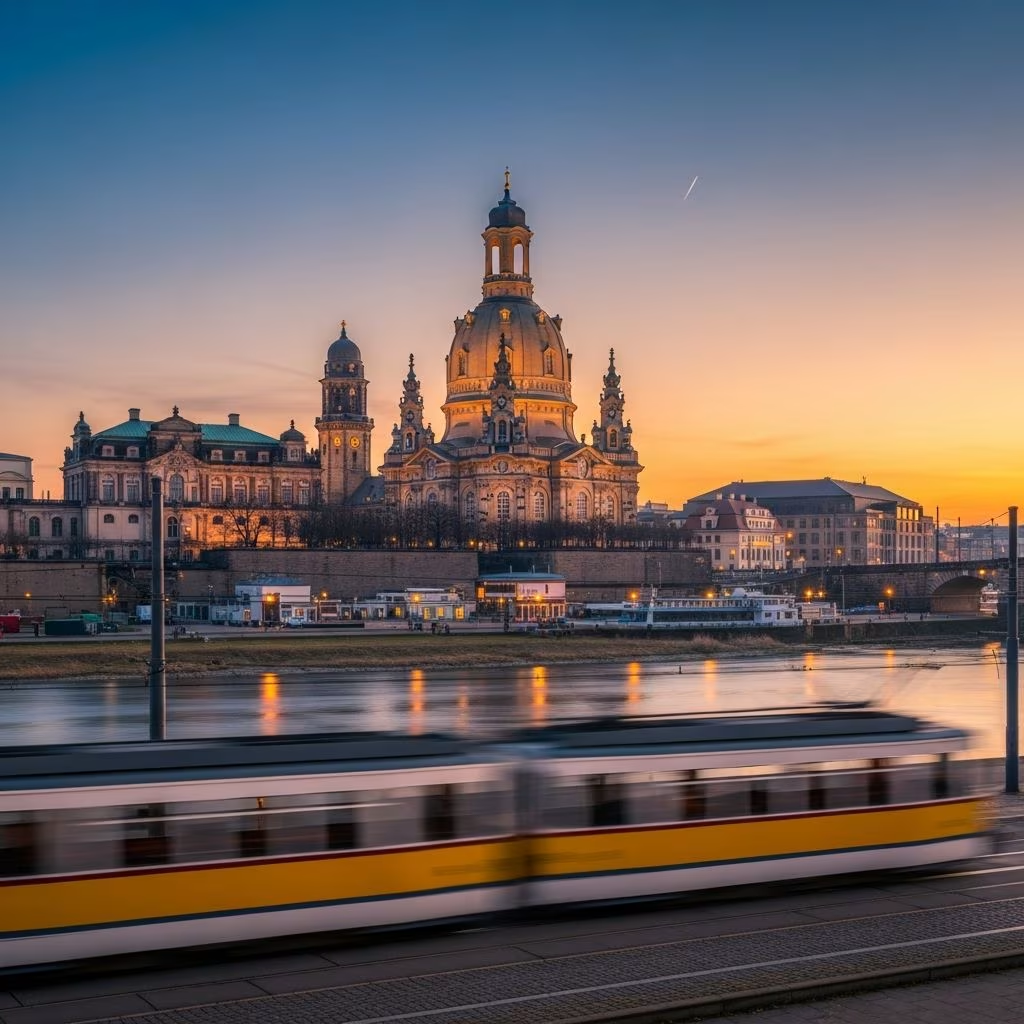
Dresden, the capital of Saxony, represents one of Europe’s most captivating destinations for travelers seeking architectural splendor combined with rich cultural heritage. While ideally this baroque jewel deserves multiple days of exploration, a well-planned 24-hour itinerary can introduce you to its most significant attractions and provide a meaningful taste of what makes this city exceptional. This guide outlines a strategic approach to experiencing Dresden’s highlights, from riverside promenades to world-class museums and reconstructed historical monuments.
The optimal starting point for a Dresden day trip begins at the Elbe River, specifically along the section known as Brühl’s Terrace. This promenade, locally celebrated as the ‘Balcony of Europe’, offers unobstructed views of the river and serves as an ideal introduction to the city’s geographical layout and visual character. The terrace was named after Count Heinrich von Brühl, an influential advisor to King Augustus III of Saxony, and it remains one of Dresden’s most photographed locations.
A leisurely two-hour morning walk along this riverside pathway accomplishes several objectives simultaneously. First, it allows your body to acclimate to the city after travel. Second, it provides excellent photography opportunities and atmospheric moments that capture Dresden’s essence. Third, it naturally guides you toward the Old Town district where most major attractions concentrate. The walk combines physical activity with environmental appreciation, setting an energetic yet relaxed tone for your remaining hours.
After your Elbe River walk, locate a nearby café or restaurant for breakfast or brunch. Local establishments near the riverfront typically serve traditional Saxon fare, including regional specialties worth sampling during your visit.
From Brühl’s Terrace, gradually make your way toward Schlossplatz, a historic plaza that functions as an architectural showpiece. This natural progression keeps your route efficient and allows you to appreciate the city’s streetscape transitions. Schlossplatz hosts several significant structures that represent different periods and styles of German architectural development.
The Dresden Cathedral stands as your first major attraction in this plaza. This religious structure exemplifies Rococo and Baroque architectural principles, featuring ornate interior designs including elaborate altars, impressive stained glass windows, and a monumental Silbermann organ that remains a technological achievement of its era. The cathedral also serves as a burial site for numerous Saxon rulers, and visitors can observe various tombs and historical markers throughout the interior. Entry is complimentary, though donations support ongoing preservation efforts.
Immediately adjacent to the cathedral lies Schlossplatz itself, where you’ll encounter the Semper Opera House. Built during the 19th century by architect Gottfried Semper, this structure represents Italian High Renaissance design principles adapted to Germanic cultural contexts. The opera house’s intricate facade and commanding presence within the plaza make it one of Europe’s most architecturally significant performance venues. While attending a performance requires advance booking and ticket purchase, simply observing the exterior and plaza area costs nothing and provides substantial aesthetic and historical value.
The Zwinger Palace complex occupies a prime location immediately adjacent to the Semper Opera House, creating a concentrated zone of monumental architecture. This baroque palace represents one of Dresden’s crown jewels and merits at least 45 minutes to an hour of your time. The palace showcases Dresden’s architectural uniqueness through its grand design, intricate courtyards, and comprehensive demonstration of Rococo styling principles.
The Zwinger originally served as an orangery and ceremonial space for the Saxon royal court. Today, it functions as a museum complex housing several world-class art collections. However, even visitors without museum admission can appreciate the exterior architecture, courtyard spaces, and fountain installations that characterize the palace grounds. The fountain displays and sculptural elements throughout the complex provide excellent photographic opportunities and demonstrate the wealth and artistic patronage of historical Saxony.
If your budget permits and your interests align with visual arts, consider purchasing admission to view the Old Masters Gallery located within the Zwinger complex. This collection includes works by renowned artists such as Vermeer and other significant European painters, though this experience requires additional time and financial commitment beyond basic sightseeing.
By approximately 1:00 PM, hunger typically becomes a factor in your itinerary. The Market Square in Dresden’s Old Town provides an ideal location for lunch while positioning you for afternoon activities. This historic plaza hosts various food vendors, traditional restaurants, and casual eateries offering both Saxon specialties and international cuisine.
The Market Square itself holds cultural significance beyond its dining options. During December months, this location transforms into the setting for famous Christmas markets that attract visitors from across Europe. Even outside the holiday season, the plaza maintains its historical character and serves as a gathering point for both tourists and locals. The imposing Frauenkirche dominates the plaza’s visual landscape, and eating lunch here allows you to rest while absorbing the architectural environment surrounding you.
After lunch, immediately approach the Frauenkirche, which dominates the Market Square. This church represents one of Dresden’s most emotionally resonant structures due to its complicated historical narrative. The Frauenkirche was severely damaged during World War II bombing campaigns and subsequently lay in ruins for decades as a memorial to war’s destructive capacity. Beginning in the 1990s, an international reconstruction effort culminated in the church’s rededication in 2005, transforming it into a symbol of Dresden’s rebirth and reconciliation.
Entry to the church itself is complimentary, allowing you to observe the interior reconstruction efforts and appreciate the architectural details of this baroque religious structure. For €7.50 per adult, you can climb the church tower, which provides panoramic views across Dresden and the surrounding Saxonian landscape. The tower climb is moderately strenuous but offers unparalleled photographic vantage points and a perspective on the city’s geographic relationship to the Elbe River and surrounding regions.
The Dresden Royal Palace, also known as the Residenzschloss, represents another essential stop during your 24-hour visit. Admission costs €14 per adult and provides access to multiple museum collections housed within this former residence of Saxony’s electors and kings. The palace building itself exemplifies Germanic Renaissance and Baroque architectural evolution, with its exterior renovation completed in recent years.
Within the palace complex, the Green Vault collection deserves particular attention. This exhibition showcases fabulous jewels, decorative arts, and treasures belonging to the Saxon royal family across centuries. The collection’s magnitude and quality rival similar European royal collections, offering insights into historical wealth accumulation, artistic patronage, and craftsmanship standards maintained by royal courts.
Adjacent to the palace stands the Albertinum Museum, which houses additional art collections and contemporary works. Depending on your artistic interests and remaining energy levels, you might allocate time to this institution or simply appreciate the architectural envelope from the exterior.
As evening approaches during your Dresden day, several options present themselves based on your remaining energy and interests. The Kunsthofpassage represents a contemporary cultural district featuring street art, independent galleries, and creative courtyards designed by local artists. This location provides a marked contrast to the baroque formality characterizing the Old Town, offering modern urban creativity alongside historical preservation.
The Panometer Dresden presents another unique cultural offering. This venue features massive panoramic paintings displayed within a cylindrical architectural structure, creating immersive visual experiences depicting historical scenes or artistic visions. This attraction appeals particularly to visitors seeking contemporary interpretive approaches to cultural and historical themes.
For those interested in local beverages and social atmosphere, numerous beer gardens and breweries operate throughout Dresden. The Watzke Brewery offers opportunities to sample Saxon beer traditions while observing local social customs. Several establishments provide outdoor seating with views toward the river or historic districts, creating pleasant evening experiences before concluding your visit.
Several specialized experiences merit consideration if your schedule and interests permit. Paddle steamer excursions along the Elbe River provide alternative perspectives on the city’s relationship to its natural environment. The Stadtrundfahrt represents a shorter route extending to Blasewitz, a historically significant suburb known for early-20th-century architectural development and recreational amenities. The Castle Tour extends further to Pillnitz, featuring a baroque palace with extensive gardens.
Night watchman tours operate during evening hours, providing guided historical narratives delivered by costumed interpreters. These experiences combine entertainment with historical education, offering perspectives on medieval Dresden life and urban development patterns.
Transportation throughout Dresden operates efficiently through tram and bus systems, though most central attractions remain within walking distance for those with moderate mobility. The city’s compactness facilitates movement between major sites without requiring extensive transit time.
Several logistical factors enhance the effectiveness of your 24-hour Dresden visit. Purchasing a day pass for public transportation provides unlimited transit access and occasionally includes discounts for museum admissions. Beginning your day early maximizes daylight hours for sightseeing and photography, particularly during winter months when daylight extends only briefly.
Comfortable walking shoes prove essential given the distances involved and the historical cobblestone surfaces characterizing many streets. Weather-appropriate clothing ensures comfort during extended outdoor exploration, particularly during inclement seasons.
Budget allocation significantly impacts your experience depth. A minimal-budget approach focusing on exterior architecture and free public spaces costs nothing beyond meals. Mid-range options including two or three museum admissions cost approximately €30-40 per person. Comprehensive experiences accessing all major museums and cultural attractions exceed €60 per person.
A 24-hour Dresden itinerary presents achievable opportunities to engage with one of Central Europe’s most architecturally significant cities. The combination of riverside promenades, baroque palaces, reconstructed historical monuments, and cultural institutions creates a multifaceted experience within temporal constraints. Success depends on realistic expectations, strategic route planning, and balance between active sightseeing and reflective observation of the city’s character. Whether this represents your sole exposure to Dresden or merely your introduction to its charms, a well-executed day visit provides lasting impressions and comprehensive understanding of why this Saxon capital continues attracting visitors across generations.
