

 Travel Essentials
 Travel Essentials

Explore Japan's geothermal hot spring culture, from sacred healing traditions to modern relaxation destinations, including etiquette and wellness benefits.
 Travel Essentials
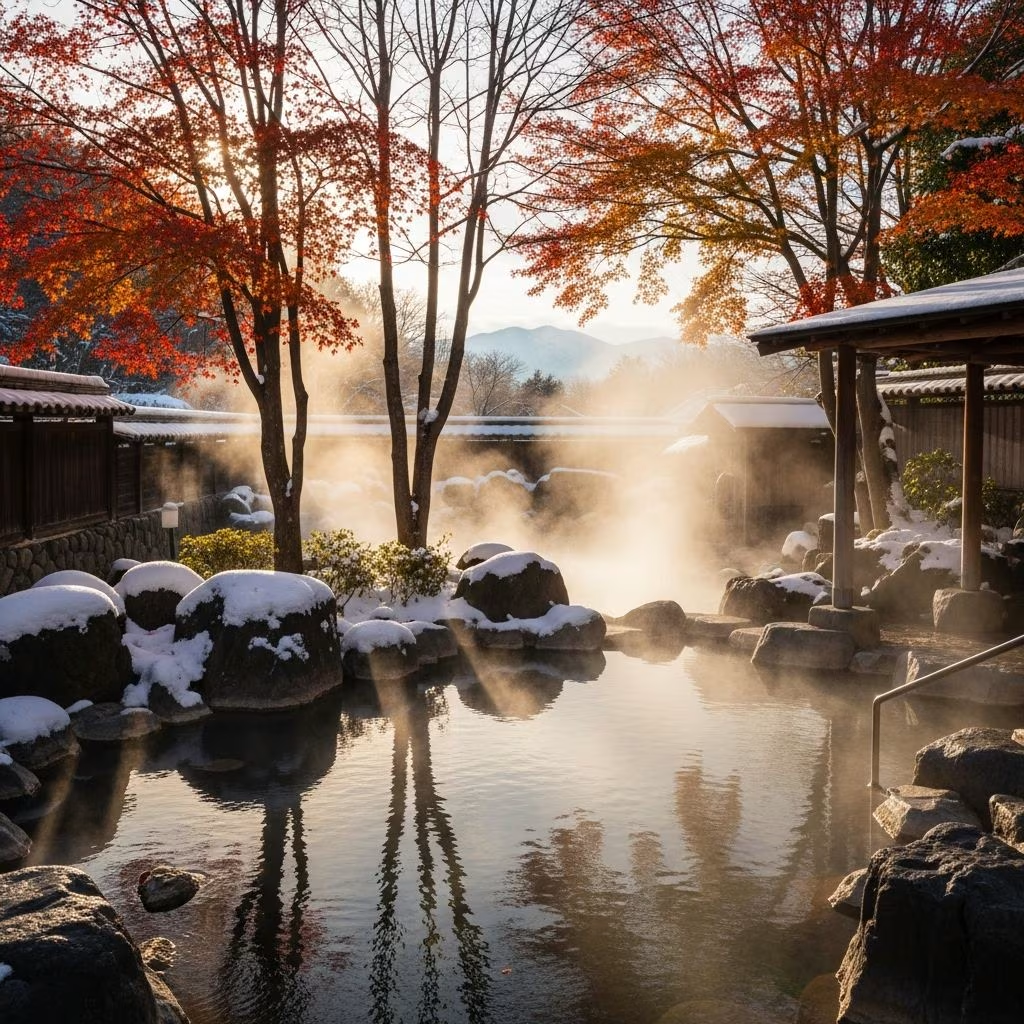
Japan’s relationship with naturally heated geothermal water spans over a millennium, representing one of the world’s most enduring wellness practices. The nation sits atop extensive geothermal reserves, with approximately 25,000 hot spring sources distributed across its landscape, creating a unique cultural phenomenon centered on communal bathing and rejuvenation. These thermal waters have evolved from being solely regarded as sacred healing sanctuaries into comprehensive leisure destinations that blend ancient philosophy with contemporary hospitality.
An **onsen** refers to both the natural hot spring itself and the bathing facilities, traditional accommodations, and surrounding communities built around these geothermal resources. Unlike public bathhouses that use heated water, onsen specifically utilize naturally occurring thermal waters rich in minerals derived from the earth’s internal heat. Approximately 3,000 onsen establishments throughout Japan draw from these naturally heated springs, offering visitors access to waters with varying mineral compositions and therapeutic characteristics.
The communal nature of onsen bathing distinguishes it from private bathing practices found in many Western cultures. These are shared spaces where community members, families, and visitors immerse themselves in the same thermal waters, following specific cultural protocols and etiquette that have been refined across centuries. The experience transcends simple hygiene or recreation—it embodies a philosophical approach to wellness that integrates physical health, spiritual purification, and social connection.
The origins of onsen bathing in Japan remain partially obscured by time, though historical documentation confirms that thermal water bathing has been practiced for at least 1,300 years, with some evidence suggesting origins dating to the Jomon period, thousands of years earlier. Early written references appear in eighth-century texts, including the Nihon Shoki, where these springs were already recognized not merely as bathing locations but as places of profound healing significance.
During Japan’s feudal periods, onsen evolved from being exclusively associated with spiritual and medicinal purposes into social and leisure destinations. Buddhist monks incorporated thermal springs into purification rituals, while samurai utilized the mineral-rich waters to recover from battle wounds and physical exhaustion. This therapeutic application became formalized in a practice known as **tōji**, where individuals would spend extended periods—sometimes a week or longer—bathing in onsen waters to cure illnesses and restore depleted vitality.
The transformation of onsen accelerated significantly during the Edo period (1603-1868), when improved transportation networks made thermal spring destinations increasingly accessible to the broader population. Initially, onsen visits coincided with agricultural rhythms, serving as recovery retreats following the harvest. However, as travel became more feasible, onsen towns flourished into bustling destinations where inns, bathhouses, entertainment venues, and commercial enterprises grew around popular springs. This period established the template for modern onsen tourism, where communities oriented their entire economies around the thermal waters.
By the Meiji era, as Japan modernized and opened to international influence, thermal springs were deliberately promoted as wellness tourist attractions and symbols of Japanese cultural identity. This strategic positioning helped preserve ancient bathing traditions while adapting them to contemporary leisure and health-conscious markets. The practice transformed from being primarily medicinal and spiritual into a balanced integration of health benefits, cultural preservation, and recreational enjoyment.
Onsen culture rests upon three fundamental principles that have guided the practice across generations: purification, respect, and community. These interconnected values create a framework that extends far beyond the physical act of bathing into a comprehensive worldview about wellness and human connection.
Purification operates on both physical and ritual levels within onsen tradition. Before entering the thermal bath, visitors undergo deliberate cleansing at small seated washing stations, removing all dirt and impurities from their bodies. This preparatory washing is not hurried or casual but represents an intentional transition from ordinary life into sacred bathing space. Only after thorough cleansing does one enter the shared thermal pool, treating the water itself as something worthy of honor and protection. The belief that water recalibrates both body and mind originates from Shinto and Buddhist philosophies deeply embedded in Japanese spiritual consciousness.
Respect manifests through behavioral codes and environmental sensitivity within onsen spaces. Visitors maintain quiet voices, practice restrained movement, and ensure that towels never contact the communal water. The emphasis on stillness and awareness transforms the bathing experience into a meditative practice rather than frivolous recreation. Traditional onsen architecture reinforces this philosophical orientation, typically incorporating timber, stone, and open-air designs with carefully framed views of mountains or forests, allowing the natural landscape to remain the dominant presence rather than being overwhelmed by human construction.
Community forms the third pillar, acknowledging that onsen remain fundamentally shared experiences where social hierarchies temporarily dissolve. Within the thermal waters, titles, professional status, and external markers of distinction become irrelevant. The body becomes the common denominator, and individuals from different social strata immerse together in equality. This democratizing aspect of onsen bathing—where a corporate executive might soak alongside a farmer or laborer—reflects deeper Japanese values about human interdependence and shared humanity.
The mineral composition of different onsen varies considerably based on their geothermal source and geological environment, creating waters with distinct therapeutic properties. Visitors have traditionally sought onsen specifically for remedial purposes, believing that particular springs could address specific health conditions. Modern understanding recognizes that mineral-rich thermal waters do provide measurable physiological benefits, including improved circulation, stress reduction, skin condition relief, and alleviation of muscular tension.
These health attributions have deep historical roots. Samurai recovered from battle wounds in onsen waters, while farmers eased physically demanding labor from their tired muscles. Monks sought spiritual purification, and emperors traveled considerable distances to access springs believed to possess extraordinary restorative properties. Some legendary springs became famous for specific claimed benefits—for instance, Tamatsukuri Onsen carries the nickname “The Bath of the Gods,” with ancient beliefs suggesting that a single bath would enhance beauty, while two consecutive bathing sessions would cure virtually any ailment.
Visiting an onsen as a cultural outsider requires understanding and respecting established behavioral expectations. These protocols exist to maintain the sanctity of the shared space and demonstrate reverence for the thermal waters.
Several celebrated onsen communities have maintained their historical significance while adapting to contemporary tourism. These destinations offer visitors immersive experiences combining thermal bathing with cultural exploration, local cuisine, and historical engagement.
Dogo Onsen in Ehime Prefecture stands among Japan’s oldest continuously operating hot springs, with documented history spanning over 3,000 years. The iconic Dogo Onsen Honkan bathhouse, constructed from beautifully designed timber and designated as an Important Cultural Property, serves as the town’s symbolic centerpiece. The architectural excellence and historical prestige of this establishment influenced filmmaker Hayao Miyazaki’s aesthetic vision for his acclaimed film “Spirited Away,” demonstrating how onsen culture permeates Japanese artistic imagination.
Beyond individual springs, entire regions have developed reputations as premier onsen destinations. Kusatsu, Hakone, Beppu, and Kinosaki represent towns that evolved specifically around thermal springs, with ryokan inns hosting travelers, bathhouses serving the local community and visitors, and cultural attractions complementing the core thermal bathing experience. These towns preserve centuries-old customs while maintaining contemporary hospitality standards.
Modern onsen function as destinations combining wellness, cultural immersion, and leisure in ways that appeal to domestic travelers and international visitors alike. Families, couples, and friend groups frequently plan weekend retreats to onsen towns, seeking respite from urban stress through immersion in healing waters and natural settings.
Beyond thermal bathing itself, onsen towns offer visitors opportunities to engage with traditional Japanese cultural practices. Many ryokan accommodations and associated workshops provide tea ceremony participation, calligraphy instruction, and crafting experiences. Some onsen communities serve as gateways to important cultural heritage sites, including ancient temples, shrines, and castles, enriching visits with historical and spiritual dimensions.
The accessibility of onsen experiences has expanded considerably in recent decades. While luxury experiences remain available at high-end ryokan, more affordable public bathing facilities and budget-conscious accommodations have democratized access to thermal bathing traditions. This affordability allows students, budget-conscious travelers, and local residents to regularly enjoy onsen experiences that might otherwise remain luxury activities.
Onsen culture represents a fascinating intersection of historical preservation and modern evolution. While fundamental principles established over centuries remain central to authentic onsen experiences, establishments increasingly accommodate contemporary sensibilities and international visitors unfamiliar with traditional practices.
Private bathing options have become more prevalent, allowing individuals uncomfortable with communal nudity to participate in onsen culture while maintaining personal boundaries. Some facilities have relaxed tattoo restrictions or created designated tattoo-friendly bathing periods. Signage in multiple languages now explains etiquette requirements, and staff members increasingly understand that cultural education supports rather than compromises authentic experience.
This adaptive capacity—the ability to maintain core philosophical principles while accommodating modern realities—has ensured onsen traditions remain vital rather than becoming museum exhibits. Contemporary onsen continue to function as authentic community spaces, wellness destinations, and cultural ambassadors, preserving heritage while remaining relevant to evolving Japanese society and international tourism.
Onsen bathing is generally safe for most individuals. However, those with certain medical conditions, including heart problems, high blood pressure, or pregnancy-related complications, should consult healthcare providers before immersion. The high temperatures of some onsen can pose risks for vulnerable populations, and excessive time in extremely hot water should be avoided.
Absolutely. Most onsen communities welcome international visitors and provide instructional materials explaining etiquette requirements. Starting with less formal public facilities or renting private baths allows visitors to acclimate to practices before engaging in communal bathing spaces.
While many countries possess geothermal hot springs, onsen specifically incorporate centuries-old cultural practices, philosophical frameworks, and social rituals unique to Japan. The integration of spiritual principles, architectural traditions, and communal values distinguishes onsen from recreational hot springs in other nations.
When not actively bathing, standard casual clothing is appropriate. Many visitors wear yukata robes provided by ryokan accommodations while moving between rooms and bathing facilities, as this traditional garment fits the cultural aesthetic of onsen towns.
Onsen represent far more than geothermally heated water or bathing facilities. They embody a comprehensive worldview about human wellness that integrates physical health, spiritual purification, social connection, and environmental respect. From their earliest documented uses through contemporary manifestations, onsen have maintained core philosophical principles while adapting to social changes and modern contexts.
The continued vitality of onsen traditions demonstrates how cultural practices can preserve historical authenticity while remaining relevant to contemporary life. Whether visitors seek therapeutic benefits, cultural immersion, or simple relaxation, onsen experiences offer windows into distinctly Japanese approaches to wellness and community that have endured for more than a thousand years.
