

 Travel Essentials
 Travel Essentials

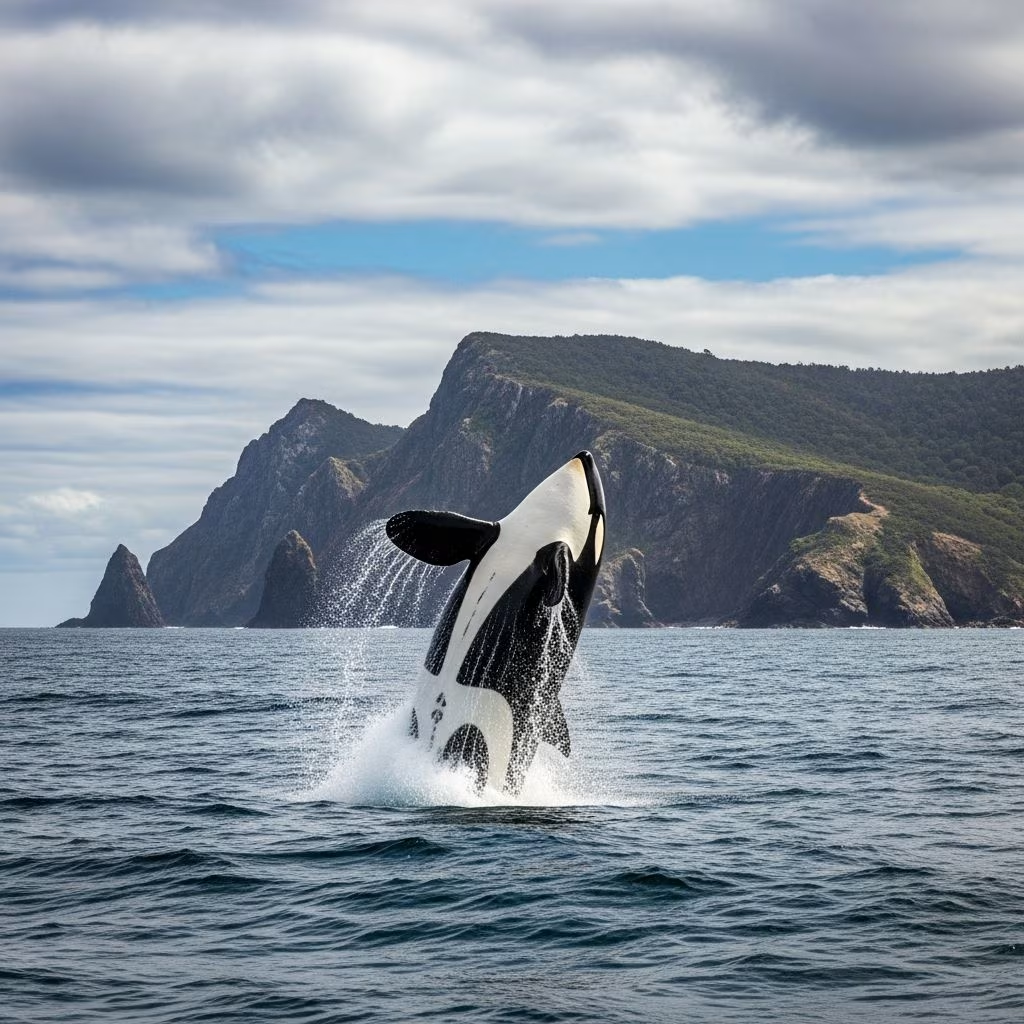
Explore the exceptional sighting of killer whales near Bruny Island, Tasmania, delving into their behavior, habitat, and tips for ethical wildlife viewing in this pristine region.
 Travel Essentials
Killer whales, known scientifically as orcas, made a remarkable appearance near Tasmania’s Bruny Island, captivating observers with their powerful presence in rarely visited waters. These intelligent marine mammals, often traveling in tight-knit family groups, offer a glimpse into the dynamic ecosystems of southern Australia’s coastal regions.
Tasmania stands out as a biodiversity haven, particularly around Bruny Island, where cold subantarctic currents collide with warmer eastern flows. This unique oceanographic mix fosters rich feeding grounds teeming with seals, fish, and seabirds—prime attractions for transient orcas seeking substantial meals. The island’s rugged cliffs and sheltered bays create natural amphitheaters for wildlife spotting, drawing adventurers year-round.
Bruny Island itself is a narrow strip separated from the mainland by the D’Entrecasteaux Channel, renowned for its pristine beaches, eucalyptus forests, and abundant marine life. Visitors often combine whale watching with explorations of cheese factories, oyster farms, and penguin colonies, making it a multifaceted destination.
Orcas are the ocean’s apex predators, exhibiting complex social structures unmatched by most animals. Resident pods maintain defined territories for salmon hunting, while transient groups roam vast distances targeting marine mammals. Off Tasmania, sightings typically involve transients pursuing seals or dolphins, showcasing hunting strategies passed down through generations.
These behaviors highlight orcas’ cognitive sophistication, with some researchers noting tool use and cultural traditions rivaling those of primates.
November marked an extraordinary period for marine observations along Tasmania’s southeast coast, with multiple orca pods documented by fishers, tour operators, and citizen scientists. One notable event involved a group maneuvering near the Derwent River’s mouth, close to Bruny Island, thrilling onlookers with breaches and synchronized surfacing.
Complementing these were humpback whale families pausing to feed with newborns, adding to the spectacle. Gelatinous blooms, including salps—barrel-shaped planktonic organisms—further enriched the seascape, signaling nutrient upwellings that sustain the food web.
| Date Range | Species Observed | Location | Key Notes |
|---|---|---|---|
| Early November | Orcas | Southeast Coast | Multiple pods reported by boaters |
| Mid-November | Humpback Whales | Bruny Island vicinity | Families with calves feeding actively |
| Late November | Salps & Jellies | East Coast Waters | Massive blooms resembling jellyfish |
Such convergences underscore Tasmania’s role as a seasonal hotspot, influenced by ocean currents and prey availability.
Despite their prowess, orcas confront escalating threats from human activities. Ship strikes, entanglement in fishing gear, and noise pollution disrupt their echolocation and communication. In Australian waters, prey depletion from overfishing exacerbates pressures on transient populations.
Tasmania’s government has implemented marine parks around Bruny Island, enforcing speed limits and exclusion zones during peak seasons. International efforts, like those by the International Whaling Commission, advocate for broader protections, emphasizing the species’ vulnerability despite its ‘Least Concern’ global status—localized populations fare worse.
To witness orcas ethically, opt for accredited tour operators adhering to guidelines: maintain 100-meter distances, avoid drones, and follow vessel speed restrictions. Peak viewing spans October to December, when migrations peak.
Weather apps and local forums offer real-time sighting updates, enhancing success rates.
Beyond orcas, Bruny Island hosts southern right whales, dolphins, and albatrosses. Humpback migrations feature acrobatic displays, while salp chains form iridescent veils across the surface—harbingers of productive waters.
These phenomena interconnect: orca presence often correlates with abundant prey, benefiting the entire ecosystem. Climate shifts may alter patterns, prompting ongoing monitoring by researchers.
Spring through early summer (October-December) offers prime opportunities, aligning with prey migrations and favorable seas.
No verified attacks on humans in the wild exist; orcas are cautious around boats and people when undisturbed.
Report sightings to databases like Wild Ocean Tasmania, support marine protected areas, and choose sustainable seafood.
Its position at current convergences concentrates marine life, providing reliable sightings from shore or sea.
No; regulations prohibit close approaches to protect both wildlife and visitors.
Tasmania’s unspoiled wilderness, coupled with accessible wildlife experiences, positions it as a premier ecotourism gem. Orcas off Bruny Island symbolize nature’s resilience and the urgent need for stewardship. By visiting responsibly, travelers support local economies while preserving these majestic encounters for future generations.
From kayaking calm inlets to scanning horizons from clifftops, each outing reveals layers of this subantarctic paradise. Dive deeper into Tasmania’s offerings, where every wave whispers stories of the deep.
