

 Travel Essentials
 Travel Essentials

Discover the true original piña colada recipe from Caribe Hilton, its fascinating 1954 origins, perfect preparation tips, and modern twists for home bartenders.
 Travel Essentials
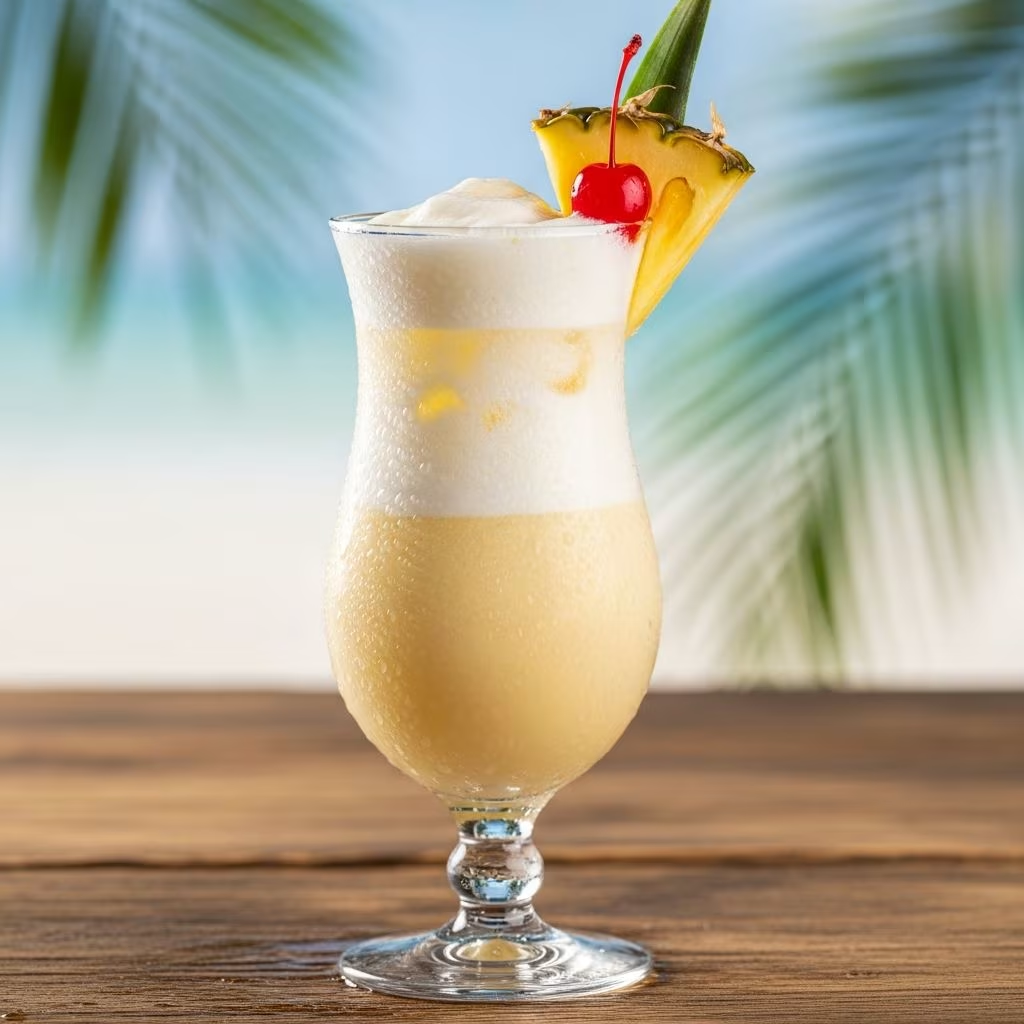
The piña colada stands as one of the world’s most beloved cocktails, evoking sun-soaked beaches and Caribbean breezes with every sip. This creamy blend of rum, pineapple, and coconut originated at the Caribe Hilton in San Juan, Puerto Rico, where bartender Ramón “Monchito” Marrero perfected it in 1954. Tasked with crafting a drink that captured the island’s vibrant essence, Marrero spent months experimenting to create a welcoming elixir for hotel guests. Today, this recipe remains unchanged, offering a taste of history in a glass.
In the mid-20th century, the Caribe Hilton opened as a luxurious beachfront escape, drawing visitors eager for authentic Puerto Rican hospitality. Marrero, a dedicated bartender, aimed to blend local flavors into something extraordinary. He started with non-alcoholic versions using fresh pineapple, shredded coconut, and cream, prepared laboriously by hand. The addition of rum transformed it into the boozy sensation we know, skyrocketing its fame. By 1954, after refining the balance, the piña colada debuted—named for its pineapple (piña) and cream (colada) components.
The resort’s oceanfront setting amplified its allure, with guests savoring it while gazing at the Atlantic. In 1978, Puerto Rico declared it the official island drink, cementing its status. National Piña Colada Day on July 10 celebrates this legacy annually, 71 years after its birth. Visitors still flock to Caribe Hilton’s Bar del Plaza to sip the original where it began.
Precision defines the classic recipe, serving one in a 12-ounce glass. Fresh elements ensure creaminess and tropical punch.
| Ingredient | Amount | Role |
|---|---|---|
| Rum (white or gold) | 2 ounces | Provides backbone warmth and spirit |
| Coconut cream (e.g., Coco López) | 1 ounce | Delivers rich, sweet coconut base—thicker than milk |
| Heavy cream | 1 ounce | Adds luxurious smoothness and balances sweetness |
| Fresh pineapple juice | 6 ounces | Infuses bright acidity and natural fruitiness |
| Crushed ice | 1/2 cup | Chills and dilutes for perfect texture |
Garnishes (optional): Pineapple wedge and maraschino cherry for visual flair. Use high-quality, fresh pineapple juice—canned lacks vibrancy. Silver or gold rum works best; avoid dark varieties that overpower fruit notes. Coconut cream’s thickness is key; dilute if too dense.
Recreating this at home is straightforward, yielding a frothy delight in minutes. No blender needed for the purest method, honoring Marrero’s original shaken style.
Pro tip: Chill glassware beforehand for extra refreshment. Yields one generous serving; scale up for parties by multiplying ingredients.
Puerto Rican like Don Q honors origins.
Common pitfalls: Over-blending warms the drink; skimping on heavy cream dulls creaminess. Test ratios to suit taste—authenticity allows slight personalization.
The piña colada inspires endless creativity while nodding to roots. Hilton properties offer riffs like the Espuma Colada, a frothy lime-infused mocktail base.
| Variation | Key Changes | Flavor Profile |
|---|---|---|
| Virgin Piña Colada | Omit rum; add more pineapple juice | Family-friendly tropical refresh |
| Coconut Lime Cream | Blend with lime cream, walnut bitters, dual rums | Zesty, nutty depth |
| Frozen Piña Colada | Full blender with extra ice | Slushy beach vibe |
| Spiced Piña Colada | Infuse rum with cinnamon or bitters | Warm island twist |
Experiment with flavored rums or pineapple syrup for nuance. Mocktail versions echo Marrero’s initial alcohol-free trials, blending coconut lime cream with pineapple.
Beyond the glass, it symbolizes Puerto Rico’s spirit—blending indigenous pineapple, colonial rum, and creamy indulgence. Annual festivals and bar competitions keep it alive. Caribe Hilton preserves Marrero’s legacy via a dedicated plaque and unchanged recipe. Globally, it influences tiki culture and summer menus, but nothing rivals sipping it poolside in San Juan.
This cocktail shines solo but pairs with grilled seafood, coconut shrimp, or tropical salads. Its sweetness cuts spice in jerk chicken or empanadas. Ideal for beach parties, luaus, or sunset happy hours—serves as a crowd-pleaser.
Its 1954 Caribe Hilton origin uses fresh pineapple juice, coconut cream, and heavy cream for unmatched creaminess and balance.
Yes—shake ingredients and pour over ice for the classic method.
Puerto Rican white rum like Bacardi or Don Q captures island essence.
It provides signature silkiness; substitute half-and-half if lighter needed.
Best fresh; refrigerate mix up to 24 hours, but flavors peak immediate.
Skip rum, boost juice—tastes like Marrero’s first mocktails.
| Nutrient | Amount |
|---|---|
| Calories | ~450 |
| Sugar | 35g (from juices/creams) |
| Fat | 20g (creamy profile) |
| Alcohol | ~2 standard drinks |
Indulgent treat; enjoy responsibly.
