

 Travel Essentials
 Travel Essentials

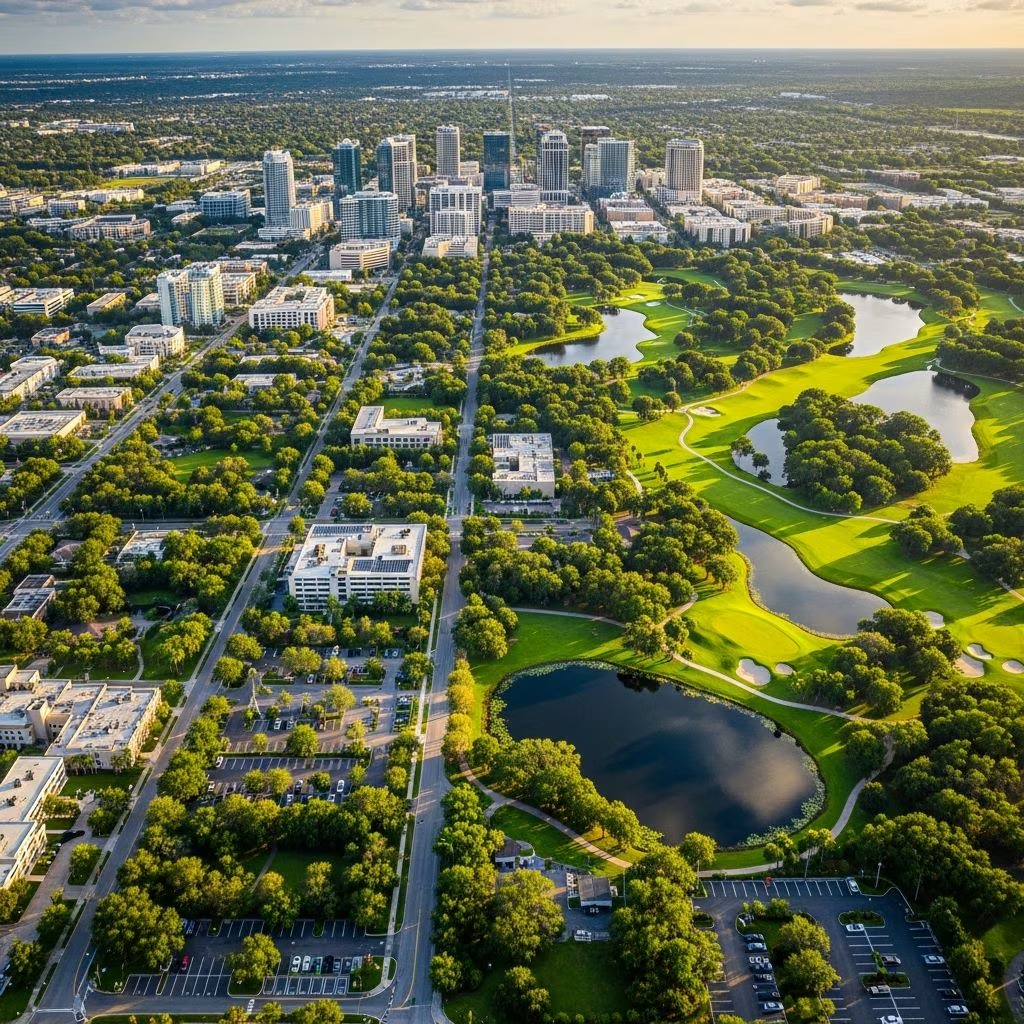
Orlando secures a top spot among U.S. cities for green space per capita at 10,654 sq. ft., highlighting its parks, trails, and commitment to outdoor living amid theme park fame.
 Travel Essentials
Orlando, renowned for its world-class theme parks, has emerged as a leader in providing expansive green spaces to its residents. With **10,654 square feet of green space per capita**, it ranks among the top 50 U.S. cities, specifically at #28 in a comprehensive analysis by Stacker using OECD data via UN OCHA. This impressive figure underscores Orlando’s dedication to integrating nature into urban life, offering residents and visitors alike ample opportunities for recreation and relaxation.
Urban green spaces serve as vital lungs for cities, improving air quality, reducing urban heat, and fostering community health. Orlando’s high per capita ranking highlights a strategic approach to city planning that prioritizes parks, forests, and open areas. Unlike denser metropolises, Orlando benefits from Florida’s natural landscape, but its position reflects intentional investments in public lands.
Green spaces per capita measure the square footage of parks, urban forests, and recreational areas divided by population. Orlando’s 10,654 sq. ft. dwarfs national averages, positioning it ahead of cities like Miami (#31 with 8,805 sq. ft.) and Tampa (#39 with 6,112 sq. ft.), all while Florida claims four spots in the top 50. This metric reveals not just quantity but equitable distribution, crucial for resident well-being.
Orlando’s success stems from data-driven urban development. The Stacker study evaluated 70 major U.S. cities, ranking the top 50 based on OECD green space data. Here’s how Orlando stacks up:
| City | Rank | Green Space per Capita (sq. ft.) | Population |
|---|---|---|---|
| Minneapolis, MN | #1 | 105,843 | – |
| Kansas City, MO | #2 | 93,349 | – |
| Orlando, FL | #28 | 10,654 | 262,507 |
| Miami, FL | #31 | 8,805 | 32,105 |
| Tampa, FL | #39 | 6,112 | 358,754 |
This table illustrates Orlando’s competitive edge within Florida and nationally. Factors include preserved wetlands, expansive city parks, and trail networks that multiply effective green coverage.
Orlando’s green reputation is anchored in diverse parks and natural reserves. Lake Eola Park, a 43-acre downtown gem, features a swan-shaped boat dock, fountain shows, and walking paths encircling its namesake lake. It’s a hub for farmers’ markets, yoga sessions, and holiday events, blending urban vibrancy with serenity.
These sites contribute significantly to the per capita total, offering varied experiences from manicured gardens to wild preserves.
While Orlando excels in per capita green space, the Trust for Public Land’s 2025 ParkScore ranks it 64th out of 100 major cities with a score of 46.5/100. This index evaluates access, investment, amenities, acreage, and equity. Orlando’s acreage score lags at 24/100, with only 5.5% of city land as public parkland versus the 10% national median.
Equity metrics show neighborhoods of color have 48% less park access compared to white areas, aligning with national trends. Despite this, per capita figures shine due to broader definitions including non-park greens like urban forests and trails. Investment and amenities bolster scores, with modern playgrounds and splash pads widespread.
Florida boasts four cities in the top 50: Jacksonville (#49, 2,341 sq. ft.), Tampa (#39), Miami (#31), and Orlando (#28). The state’s subtropical climate supports year-round outdoor use, while flat terrain aids park development. Jacksonville leverages riverside greens, Tampa emphasizes tree canopies for health benefits per EPA data, and Miami integrates coastal mangroves.
Orlando’s edge comes from post-2000s growth planning, converting developments into multi-use greenspaces. Initiatives like the Orlando Green Works plan target 20% tree canopy cover by 2040, enhancing per capita metrics.
Generous green spaces yield measurable benefits. EPA research links Tampa’s 872 sq. meters (about 9,385 sq. ft.) per resident to improved physiological, cognitive, and emotional health via tree access—benefits amplified in Orlando. Studies show proximity to parks reduces stress, boosts immunity, and cuts obesity rates.
Economically, greenspaces drive tourism beyond theme parks. Events at Lake Eola draw millions annually, while trails support eco-tourism. Property values near parks rise 15-20%, per urban planning data, fueling city revenue for further expansions.
Orlando aims higher with projects like the 2025 West Orlando Greenway, a 10-mile trail linking neighborhoods, and expansions at Maceo May Park with inclusive playgrounds. The city targets ParkScore improvements via equity-focused acquisitions in underserved areas.
Conservation partnerships preserve 11,000+ acres in the Orlando Wetlands Reserve, buffering urban sprawl. Tech integrations, like park apps for real-time event info, enhance accessibility.
| Category | Orlando | Top City (e.g., Minneapolis) | National Median |
|---|---|---|---|
| Green Space per Capita (sq. ft.) | 10,654 | 105,843 | ~5,000 |
| Parkland % of City Area | 5.5% | 15%+ | 10% |
| ParkScore Rank | 64th | Top 10 | – |
| Equity Gap | 48% less in POC areas | Minimal | Similar |
Orlando trails in density but leads in personalized space allocation.
Orlando offers 10,654 square feet per resident, ranking #28 nationally.
It outperforms Miami (8,805 sq. ft.), Tampa (6,112 sq. ft.), and Jacksonville (2,341 sq. ft.).
ParkScore emphasizes city-dedicated parkland (5.5% vs. 10% median), while per capita includes broader urban greens.
Yes, mild weather supports constant use, with amenities like shaded trails.
Use Lynx buses, rideshares, or rent bikes; many parks are walkable from hotels.
Climate change poses risks like intensified hurricanes, prompting resilient designs like elevated boardwalks. Rapid population growth demands vigilant land preservation. Orlando’s trajectory, blending per capita abundance with targeted upgrades, positions it as a green urban model.
