

 Travel Essentials
 Travel Essentials

Explore how Orthodox Christians in Ukraine, Serbia, Armenia, Macedonia and beyond mark Christmas with unique customs like holy suppers, yule logs and caroling, rooted in the Julian calendar.
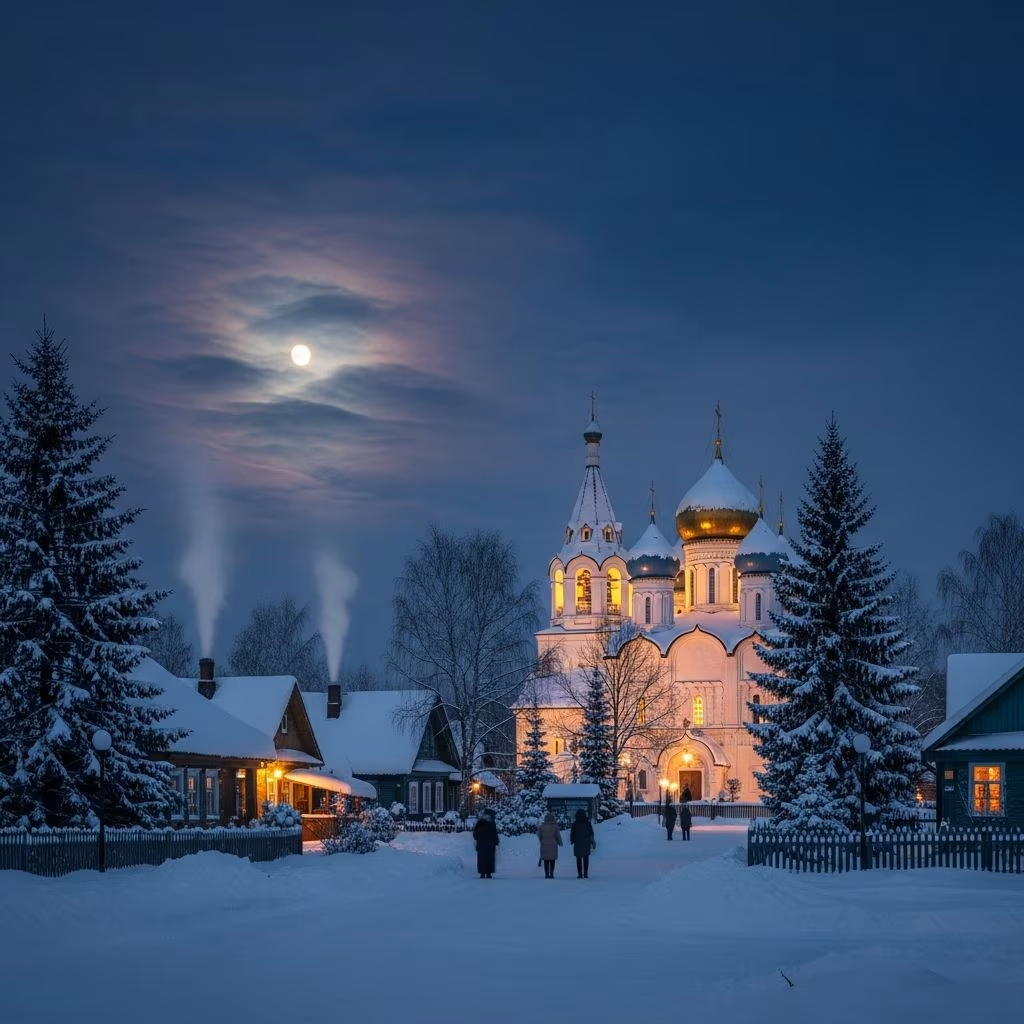 Travel Essentials
Orthodox Christians in Eastern Europe observe Christmas on January 7, following the Julian calendar, which lags 13 days behind the Gregorian one used widely elsewhere. This timing creates a distinct holiday season filled with fasting periods, solemn church services, and vibrant family gatherings that emphasize spiritual reflection and communal joy.
The preference for the Julian calendar stems from historical ties to early Christian practices. Eastern Orthodox churches, including those in Russia, Serbia, Ukraine, and others, maintain this tradition to preserve liturgical continuity. The Christmas season kicks off on November 15 with Nativity Lent, a 40-day fast abstaining from meat, dairy, and often fish, fostering repentance before the celebration.
While most adhere to January 7, some churches like Greek, Romanian, and Bulgarian have shifted to December 25 on the Gregorian calendar. Ukraine recognizes both dates officially since 2017 legislation.
In Ukraine, Christmas Eve, or Sviata Vechera, centers on a strict fast broken only after sighting the first evening star, evoking the Star of Bethlehem guiding the Magi. Families prepare 12 meatless dishes symbolizing Christ’s apostles, starting with kutia—a wheat berry porridge blended with poppy seeds, honey, and nuts for sweetness and prosperity.
The table features hay under the cloth to recall Jesus’ manger birth. Common dishes include borscht, varenyky (dumplings), and holubtsi (cabbage rolls), all vegetarian. Post-meal, carolers known as koliadky roam neighborhoods singing hymns for treats, perpetuating folklore tied to pagan winter rites blended with Christian themes.
Serbian Orthodox Christmas intertwines national identity with faith, peaking on January 7. Christmas Eve involves church visits where families receive straw for the manger and a badnjak—an oak branch ceremonially felled at dawn. This yule log, symbolizing Christ’s warming light, is lit in the hearth amid prayers.
The log burns through the holy supper of fish, bread, and walnuts, avoiding meat until Christmas Day. Festivities extend with česnica bread hiding a coin; the finder gains luck for the year. Christmas Day brings feasts of roast pork, ore hnjača (walnut roll), and makovnjača (poppy seed roll).
| Ritual | Symbolism | Practice |
|---|---|---|
| Badnjak lighting | Christ’s light and warmth | Father carries log pieces into home, family prays as it burns |
| Česnica coin | Good fortune | Baked into bread, shared at supper; finder leads next year’s rites |
| Straw blessing | Manger humility | Sprinkled in home after church |
Though on the edge of Eastern Europe, Armenia’s January 6 Christmas influences regional customs. Eve bonfires blaze in yards, representing the divine light of incarnation. Church masses culminate in midnight liturgy, followed by feasts of fish, rice pilaf with dried fruits and nuts, and lavash flatbread.
Toasts proclaim “Kristos dzenav yev haytnetsav” (Christ is born and revealed), echoing joy. Families emphasize quiet reverence, contrasting more raucous neighbors.
Macedonian celebrations launch January 5 with kolede, as children carol door-to-door for fruits and nuts. Adults light district bonfires honoring the Holy Fire miracle. A bannock bread conceals a coin; its finder lights the next bonfire and hosts kolede.
Christmas Eve brings the badnik oak log, cut into Trinity-symbolizing pieces and burned during posna vecera—a Lenten supper. Daytime feasts follow with music and dance.
Russian Orthodox Christmas features long Eve services and Holy Supper with beet salad, borscht, potatoes, and pirozhki. January 7 emphasizes church, then meat-heavy feasts like goose with apples, though New Year’s often steals secular spotlight.
In Egypt’s Coptic communities, it’s a national holiday with stuffed vine leaves and fattah. Palestine sees Bethlehem processions.
Vigils on January 6 feature all-night liturgies with chants and incense. Icon veneration, candle lighting for saints and ancestors, and Holy Communion unite believers. Sites like Bethlehem’s Nativity Church draw pilgrims globally.
Urbanization blends traditions: Kyiv sees Epiphany dives into icy Dnipro pre-Christmas, while Bulgaria’s cross-retrievals promise health. Three-day spans include Eve fasts, Day feasts, and Theophany (January 19 Julian).
Visit Ukraine for kutia feasts, Serbia for badnjak ceremonies, or Armenia for bonfire glows. Book early; holidays swell churches and inns. Respect fasts—opt for Lenten menus—and join carols for immersion.
The Julian calendar sets the date, 13 days behind Gregorian, honoring ancient computations.
A ritual porridge of wheat, poppy, honey, nuts—first dish of 12 on Holy Eve.
A sacred oak log burned in Serbia and Macedonia, symbolizing divine warmth.
Most on January 7 Julian; some Gregorian December 25.
Yes, modestly dressed; stand during long liturgies, follow congregation.
These rituals weave faith, history, and community, offering travelers profound cultural depth amid winter’s hush. From star waits to log flames, Orthodox Christmas radiates enduring light.
