

 Travel Essentials
 Travel Essentials

Learn which conventional Italy travel tips are outdated and what modern travelers should focus on instead for a better experience.
 Travel Essentials
Italy remains one of the world’s most captivating destinations, drawing millions of visitors annually who seek authentic experiences, world-class art, culinary excellence, and historic charm. However, the travel landscape has evolved significantly in recent years, and much of the conventional wisdom passed down through guidebooks and tourism websites may no longer serve travelers as effectively as it once did. Those who have made Italy their home—expatriates, long-term residents, and cultural observers—have gained invaluable perspective on what actually works for visitors today versus what represents outdated thinking that can undermine an otherwise memorable journey.
For decades, travel guides have emphasized the importance of visiting Italy’s major attractions during specific seasons or times of day. While there was merit to this advice when crowds were more manageable, the explosion of international tourism has fundamentally altered the calculus. Long-term residents now recognize that the traditional approach of visiting during “shoulder seasons” or arriving at famous sites at dawn has become less effective as word spreads and travelers adopt similar strategies simultaneously.
Rather than rigidly adhering to timing recommendations, contemporary visitors benefit more from flexibility and willingness to explore beyond the most publicized attractions. The emphasis should shift toward understanding how attractions actually function on a daily basis and being prepared for crowds regardless of when you visit. This might mean purchasing skip-the-line tickets in advance, considering visits during traditionally “off-peak” weekdays regardless of season, or frankly acknowledging that experiencing certain iconic sites will involve crowds and planning accordingly rather than expecting to find them empty.
One of the most persistent pieces of outdated advice encourages visitors to cover as much geographic ground as possible. The romanticized notion of experiencing Rome, Florence, Venice, and the Amalfi Coast within a two-week timeframe reflects earlier travel patterns when infrastructure was different and cultural expectations around sightseeing were less intensive. Modern long-term residents in Italy consistently advise against this approach, noting that it creates exhaustion rather than enrichment.
Contemporary travel philosophy emphasizes depth over breadth. Rather than treating Italy as a checklist of destinations, visitors gain substantially more from spending extended periods in fewer locations. This allows for genuine cultural immersion, the discovery of neighborhood gems, spontaneous encounters with local life, and a more sustainable travel pace. The stress of constant movement and logistics often eclipses the joy of discovery when travelers try to accomplish too much in too brief a timeframe.
Historical travel advice often treats individual cities as discrete entities to be consumed independently, without sufficient consideration for how attractions relate spatially to one another. Many visitors arrive at a destination with a list of “must-sees” without understanding the actual distances involved or the neighborhoods where sites are clustered. This frequently results in inefficient routing that wastes considerable time and energy on transit rather than genuine experience.
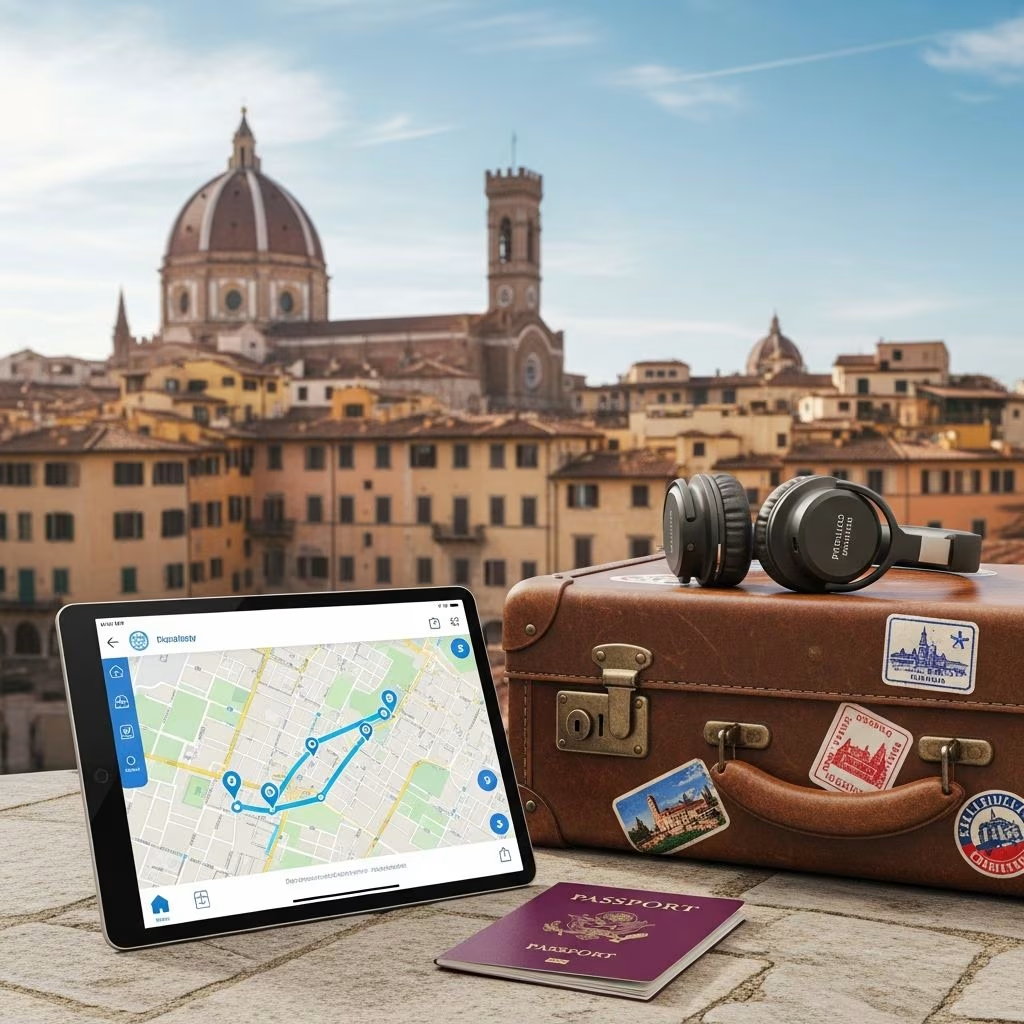
Modern travelers should approach city exploration with genuine geographic literacy. Understanding that certain museums, churches, and monuments cluster in specific neighborhoods allows for intentional exploration of particular areas rather than random wandering or constant backtracking. Using digital tools to map attractions, considering walking routes that make sense geographically, and even planning meals in proximity to sites of interest makes logistics serve your experience rather than dictate it. Residents emphasize that some of Italy’s greatest discoveries happen in the spaces between famous attractions, yet these often remain invisible to travelers fixed on predetermined routes.
Traditional travel wisdom frequently emphasizes purchasing comprehensive transit passes or relying heavily on public transportation for city exploration. While public transit certainly has value, particularly for regional travel between cities, newer thinking recognizes that modern Italy offers additional options that travelers should evaluate individually.
Walking remains underrated as a primary exploration method, particularly in historic city centers where streets are designed for pedestrian movement. Rideshare services and app-based taxis now provide alternatives to transit passes in many regions. Regional train travel has improved substantially but doesn’t suit every traveler’s preferences or timeline. Rather than defaulting to any single transportation mode, current advice emphasizes evaluating what works for your specific itinerary, comfort level, and travel style. Residents note that the most enjoyable experiences often come when travelers slow down enough to navigate neighborhoods on foot rather than rushing between destinations via transit.
Longstanding advice warned travelers away from restaurants near major tourist attractions, suggesting that “authentic” dining required seeking out establishments several blocks away in residential neighborhoods. While this held truth in an earlier era, the restaurant landscape has shifted considerably. Today’s long-term residents observe that this advice can lead travelers to miss excellent dining options or spend excessive energy searching for restaurant experiences that may be comparable to what’s available nearby.
The focus should instead shift toward understanding regional cuisine and seasonal specialties, reading contemporary reviews from reliable sources, making reservations when appropriate, and being willing to dine at various times and locations depending on genuine interest rather than following a predetermined script. Some exceptional restaurants do indeed operate near famous sites; others genuinely don’t. The key difference between travelers who eat well and those who don’t typically involves understanding what they’re looking for, being willing to try unfamiliar dishes, and maintaining reasonable expectations about pricing rather than rigidly adhering to proximity-based assumptions.
Historical travel advice often emphasized purchasing printed guidebooks, studying maps in advance, and planning detailed daily itineraries before arrival. While foundational research remains valuable, the digital transformation has created possibilities that older guidance didn’t anticipate. Modern travelers have access to real-time information about attractions, crowds, reviews, transit schedules, and restaurant recommendations that can inform decisions throughout their journey.
However, residents caution that technology can also encourage constant connectivity and planning anxiety. The sweet spot involves doing sufficient advance research to understand your destination’s structure and major offerings, while remaining sufficiently flexible to adjust plans based on weather, energy levels, unexpected discoveries, or simply changing preferences. The goal should be using technology to enhance spontaneity rather than replace it with rigid pre-planning.
Numerous travel guides emphasize packing comprehensive wardrobes anticipating every possible weather scenario or social situation. Residents now recognize that over-packing remains one of the most common mistakes visitors make. Italian cities require substantial walking, often on cobblestone streets and through narrow passages not conducive to wheeling large luggage. Comfortable, well-fitted walking shoes matter infinitely more than a diverse shoe collection.
Contemporary advice emphasizes packing lighter than instinct suggests, bringing versatile clothing pieces that work in multiple combinations, and accepting that you’ll need fewer items than you anticipate. This practical shift dramatically improves the physical experience of travel, allowing easier navigation of transit systems, stairs, and narrow streets. The energy saved by traveling with minimal luggage substantially exceeds any convenience gained by having more clothing options.
Older guidebooks often included extensive sections about “do’s and don’ts,” frequently presenting stereotypical versions of Italian culture or emphasizing formality requirements that no longer reflect contemporary reality. Modern Italy is simultaneously traditional and cosmopolitan, with varying cultural expectations depending on context and location. Rural areas may maintain different social expectations than urban centers; family restaurants may differ significantly from upscale establishments.
Rather than approaching Italian culture with rigid preconceptions, contemporary travelers benefit from observing local behavior in context, showing respect for regional differences, and maintaining genuine curiosity about how people actually live rather than conforming to tourist-oriented cultural caricatures. Residents emphasize that Italians generally respond positively to visitors who make authentic efforts to engage respectfully, even if language abilities are limited.
Traditional advice often portrayed Italy as an affordable European destination. While certain aspects remain reasonably priced, the overall cost structure has changed substantially. Popular destinations in particular have experienced inflation that affects accommodation, dining, and attraction entry fees. Tourists who arrive with outdated expectations about pricing frequently experience sticker shock or make poor financial decisions based on assumptions about what things should cost.
Contemporary planning should involve realistic budgeting based on current conditions rather than historical data. Understanding where costs concentrate allows for informed choices about where to splurge and where to economize based on your actual priorities. Long-term residents often recommend allocating budget for fewer destinations visited more thoroughly rather than spreading limited funds across numerous locations.
The rise of short-term rental platforms has created alternatives to traditional hotel accommodations, but this shift also changed the accommodation landscape in ways that deserve thoughtful consideration. While rental apartments can provide authentic residential experiences, they also carry different expectations and responsibilities than hotels. The choice between accommodation types should reflect genuine preferences and travel style rather than following trends or seeking perceived budget advantages that may not materialize.
