

 Travel Essentials
 Travel Essentials

Discover how to organize a seamless overnight rafting trip in the US, from selecting beginner-friendly rivers to packing essentials and securing permits for a safe, thrilling getaway.
 Travel Essentials
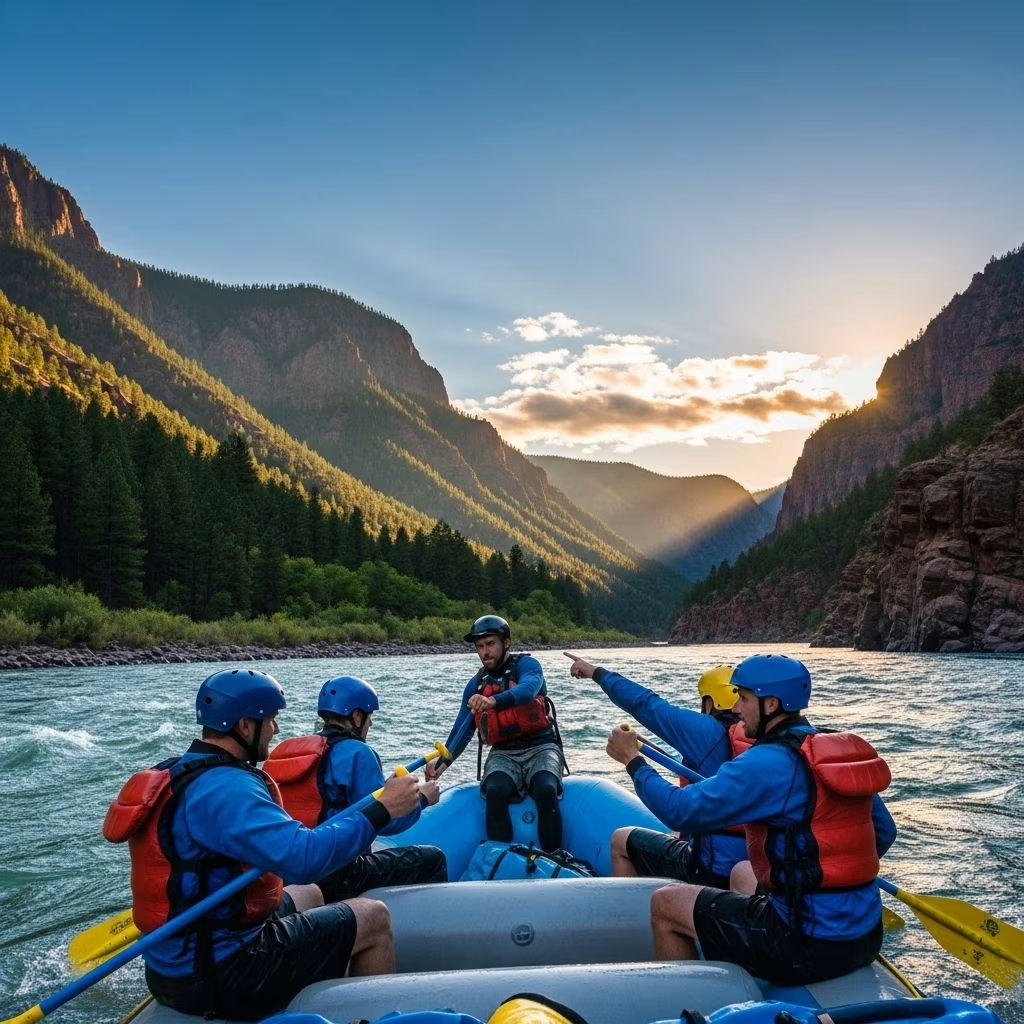
Embark on a multi-day journey down America’s wild rivers with this comprehensive planning blueprint. Overnight rafting combines the rush of paddling with the serenity of riverside camping, offering accessible thrills for novices and veterans alike.
Choosing the right waterway sets the foundation for success. Focus on sections with **Class I-II rapids** for leisurely floats or **Class III** for moderate excitement, ensuring suitability for DIY overnighters.
Popular beginner-friendly options include the **Green River in Utah**, known for calm waters and stunning canyon views, or the **Tuolumne River in California**, with gentle stretches ideal for first-timers. For more adventure, consider the **Salmon River** in Idaho, but verify current conditions via official reports.
Research access points via recreation.gov for put-in and take-out coordinates, prioritizing runs with straightforward shuttles under an hour.
Transportation is the trickiest element. Secure a shuttle service early, as they dictate your itinerary.
| Shuttle Type | Description | Pros | Cons |
|---|---|---|---|
| Vehicle Drop-Off | Park at take-out; shuttled to put-in | Ends at your car | Requires secure parking |
| Bus Service | Company buses to/from sites | Hassle-free | Fixed schedules |
| Full Vehicle Relocation | Outfitter moves your car | Convenient | Potential fees |
Permits are mandatory in federal areas like BLM lands or national forests. Apply via recreation.gov at least 2-4 weeks ahead for designated sites; dispersed camping often operates first-come, first-served but requires Leave No Trace compliance.
Plan 4-6 weeks out for peak season, but off-peak allows last-minute bookings. Confirm outfitters via phone for parking policies and shuttle frequency.
Gear must be durable, lightweight, and waterproof. Prioritize items that float or lash securely to rafts.
For fishing enthusiasts, pack collapsible rods and check state licenses via wildlife agency sites.
Minimize bulk to maximize enjoyment. Dehydrated meals save space and reduce spoilage risks.
Avoid glass, cans, or heavy grills. Opt for a compact kitchen kit: pot, utensils, biodegradable soap.
A typical itinerary unfolds predictably for smooth execution.
Expect 4-6 hours daily paddling, with flexibility for hikes or swims. Guides (if used) handle meals; DIY groups rotate duties.
Prioritize prevention: Wear PFDs always, scout rapids, maintain group cohesion. Carry a PLB or satellite communicator in remote areas.
Practice self-rescue: Swim techniques, throw ropes. Review river beta from American Whitewater Association.
| River | Location | Difficulty | Highlights | Permit Info |
|---|---|---|---|---|
| Green River | Utah | Class I-II | Desert canyons, arches | BLM lottery |
| Tuolumne | California | Class II-III | Waterfalls, forests | First-come |
| Deschutes | Oregon | Class II | Wildlife, hot springs | Recreation.gov |
| Lower Salmon | Idaho | Class III | Remote wilderness | USFS permit |
Costs vary: $200-500 per person for DIY (gear rental $100-200, shuttle $50-100, permits $20-50). Outfitters add $300-600 including meals/guides.
Adhere to **Leave No Trace** principles: Pack out all waste, camp 200 ft from water, minimize fires. Support conservation via River Alliance donations.
No, many trips suit beginners with proper gear and planning. Practice on day floats first.
May-September, depending on region; check snowmelt for optimal flows.
Select pet-friendly outfitters; ensure life jacket and tether.
Use cathole method 200 ft from camp; pack out solids where required.
Have bailout plans; monitor forecasts and tie down gear securely.
