

 Travel Essentials
 Travel Essentials

Some cities and countries host far more tourists than locals. Explore the data behind overtourism, its causes, and its impact on residents.
 Travel Essentials
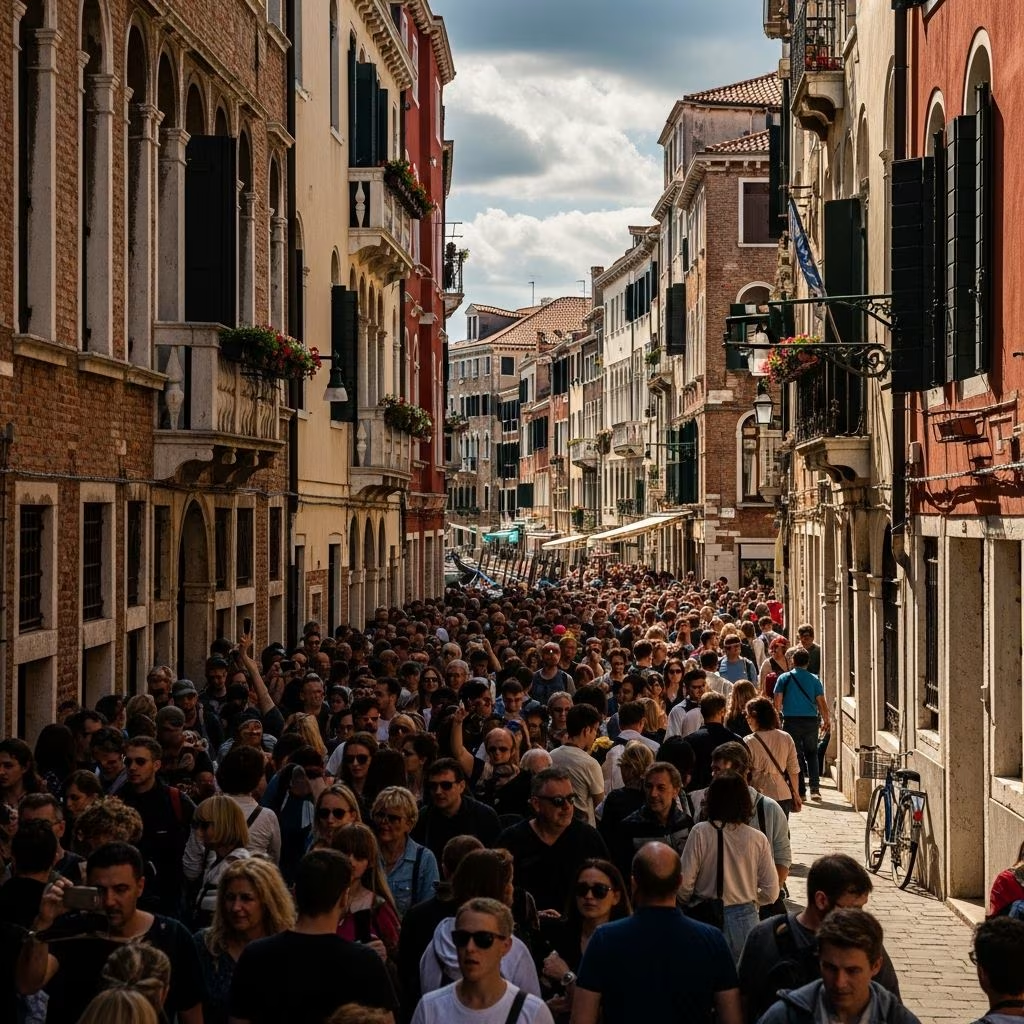
In an era of unprecedented global mobility, certain destinations have become magnets for travelers, leading to scenarios where tourists significantly outnumber permanent residents. This phenomenon, often termed overtourism, transforms urban landscapes, economies, and social dynamics. Drawing from recent analyses, places like Vatican City boast ratios exceeding 7,000 visitors per local, while cities such as Orlando and Dubrovnik face 30+ tourists per resident annually. This article delves into the data, causes, consequences, and potential remedies for these imbalanced hotspots.
Microstates and compact destinations dominate the top rankings for annual tourists per resident. Vatican City stands unparalleled, with approximately 7,709 tourists for every permanent resident, driven by its religious significance and limited living space. Andorra follows at 117:1, attracting skiers and shoppers to its Pyrenean haven, while San Marino clocks 59.6:1 amid its medieval hilltop allure.
Island nations also feature prominently. The Bahamas records 28 visitors per local, fueled by cruise ships and beaches, and Saint Kitts and Nevis hits 18.7:1. These figures highlight how geography and niche appeals amplify visitor influxes relative to small populations.
| Rank | Destination | Tourists per Resident |
|---|---|---|
| 1 | Vatican City | 7,709.8 |
| 2 | Andorra | 117.2 |
| 3 | San Marino | 59.6 |
| 4 | Bahamas | 28 |
| 5 | Saint Kitts and Nevis | 18.7 |
| 6 | Antigua and Barbuda | 12.3 |
Other notables include Bahrain and Monaco tying at around 9:1 and 8.7:1, respectively, where luxury, tax perks, and casinos draw elite crowds. Malta (6.3:1) and Hong Kong (6:1) round out higher urban entries, blending history, finance, and coastal vibes.
Beyond nations, cities exhibit stark disparities. Orlando leads with 36 tourists per resident, thanks to theme parks drawing 67 million visitors yearly. Macau follows at 26:1, its casinos packing 547,000 tourists per square kilometer—the highest density globally. European gems like Dubrovnik (32:1) and Amsterdam (29:1) struggle with cruise deluges and canal throngs.
In 2025 data, Istanbul topped city lists at 127 visitors per 100 locals, outpacing London (232:100), Berlin (295:100), Rome (326:100), and Madrid (360:100). U.S. icons shine too: New York City at 191:100, Las Vegas 163:100, and San Francisco 87:100. Reykjavik’s 5,286 per 100 locals underscores Iceland’s northern lights boom.
Within the United States, states vary wildly in visitor burdens. West Virginia tops at 42.4 tourists per resident, its 75 million visitors dwarfing 1.77 million locals—likely from outdoor adventures. North Dakota (32.7), Delaware (28.4), and Rhode Island (25.9) follow, often via niche appeals like history or nature.
Surprisingly, Nevada ranks 13th at 16.3 despite Vegas fame, while Florida (37th, 6.1) and Hawaii (35th, 6.7) lag due to larger bases. Texas bottoms at 2:1, its vast scale diluting impacts.
| Rank | State | Ratio |
|---|---|---|
| 1 | West Virginia | 42.4 |
| 2 | North Dakota | 32.7 |
| 3 | Delaware | 28.4 |
| 4 | Rhode Island | 25.9 |
| 5 | Vermont | 24.4 |
| 46 | Arizona | 3 |
| 47 | Texas | 2 |
These patterns reveal how population density and attraction types dictate ratios, with smaller, scenic states leading.
Several factors converge to inflate ratios. Compact size limits residents, as in Monaco’s 0.78 square miles housing 38,400 amid luxury seekers. Iconic draws—Vatican’s St. Peter’s, Orlando’s Disney—pull millions predictably. Cruise ports amplify spikes: Kotor, Montenegro, sees surges from ships.
Post-pandemic rebounds and social media hype exacerbate trends. Estonia’s 3:1 ratio stems from Tallinn’s medieval old town, drawing 3.43 million to 1.32 million locals. Economic perks like Andorra’s duty-free shopping sustain high volumes.
Overtourism strains resources. Housing prices soar, displacing residents—Barcelona and Amsterdam report rental crises. Traffic gridlock and waste mount, eroding quality of life. In Venice-like Dubrovnik, daily crowds choke alleys.
Cultural dilution emerges: Locals feel like museum extras, fostering resentment. Environmental tolls include coastal erosion in the Maldives (2.9:1) and trail wear in Iceland. Yet, economies thrive—tourism funds 25%+ of Malta’s GDP. Balancing acts are crucial.
Travelers can mitigate impacts:
Destinations innovate too. Amsterdam caps cruise ships; Bhutan levies daily fees. Data-driven caps, like Orlando’s event limits, help.
Rising stars like Shanghai (396M visitors) face volume pressures, while U.S. Virgin Islands hit 24:1. Montenegro’s coast and Cyprus (2:1) climb lists. Climate-resilient spots may shift patterns, but social media ensures viral fame.
Orlando leads cities at 36:1, though Vatican City dominates globally at over 7,700:1.
It boosts jobs and revenue but risks inflation and seasonality, as in Monaco’s casino-driven model.
West Virginia, with 42.4 per resident, tops due to natural attractions.
Yes, including visitor caps, fees, and off-season promotions, implemented in places like Dubrovnik.
Limited populations and concentrated appeals, like Andorra’s ski resorts, create extremes.
