

 Travel Essentials
 Travel Essentials

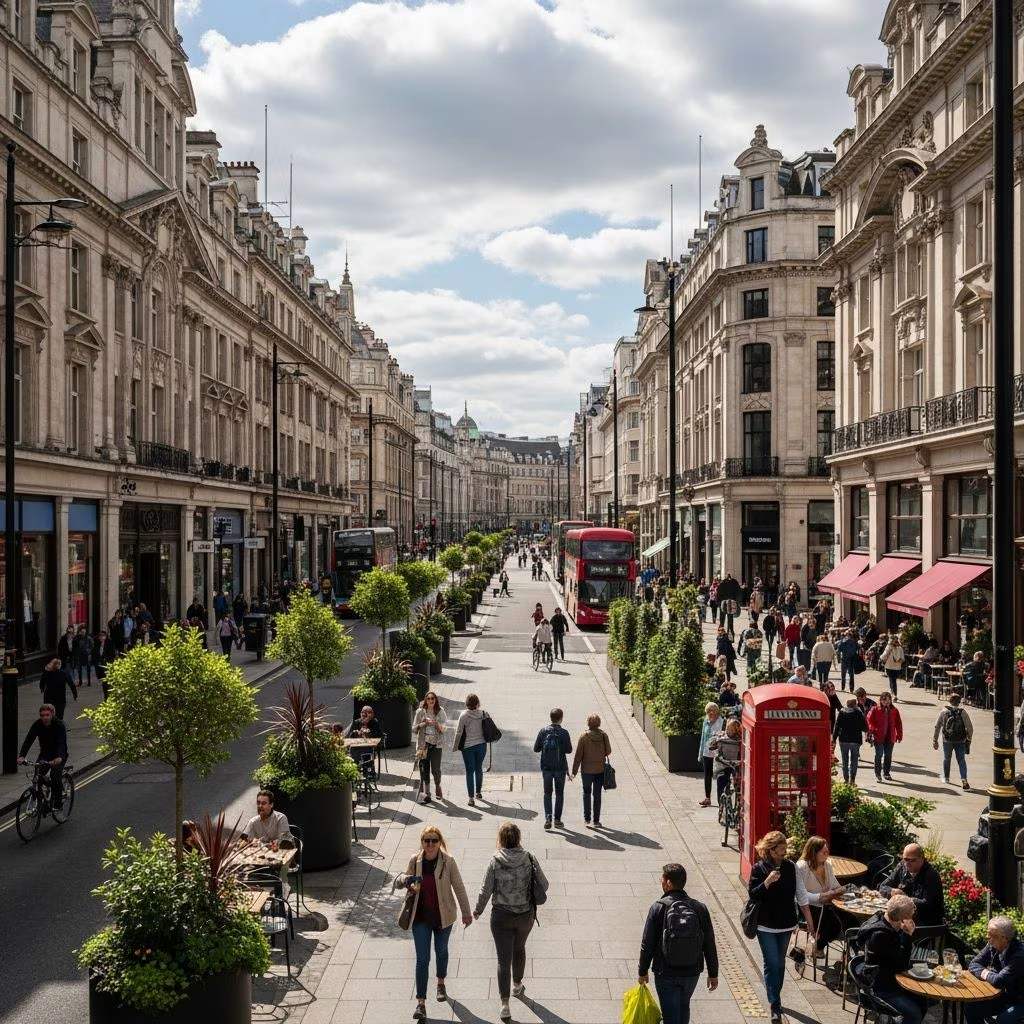
Plans approved to pedestrianize Oxford Street between Orchard Street and Great Portland Street, creating a greener, safer space for shopping and events amid strong public support.
 Travel Essentials
London’s bustling Oxford Street, long synonymous with retail frenzy and heavy traffic, is on the cusp of a dramatic overhaul. Official approval has paved the way for pedestrianisation between Orchard Street and Great Portland Street, with implementation targeted for summer 2026. This move, championed by Mayor Sadiq Khan, aims to reclaim the thoroughfare for people, fostering a greener, safer environment for shopping, leisure, and events.
Oxford Street has faced declining footfall and a tarnished reputation due to congestion and pollution. Years of debate culminated in decisive action through a Mayoral Development Corporation (MDC), established after a consultation from February to May 2025 that garnered over 6,000 responses. Nearly 70% of respondents backed the MDC, with two-thirds specifically favoring the traffic ban.
A second consultation on traffic diversions in early 2026 drew 2,700 responses, the majority supportive. Mayor Khan instructed Transport for London (TfL) to proceed, signaling the end of vehicles on this stretch.
The transformation unfolds in phases to minimize disruption:
TfL’s modeling indicates manageable impacts on nearby traffic, with commitments to collaborate with Westminster Council for adjustments.
Proponents highlight enhanced safety through reduced vehicle presence. Evidence from similar projects shows well-designed pedestrian streets lower crime and improve lighting usability. The plan includes new cycle routes and accessible pathways, making the area welcoming for all.
| Aspect | Before Pedestrianisation | After Pedestrianisation |
|---|---|---|
| Traffic Volume | High congestion, buses, taxis | Car-free zone |
| Safety | Vehicle-pedestrian conflicts | Improved via bollards, lighting |
| Accessibility | Limited for mobility-impaired | Enhanced paths, green spaces |
| Economic Impact | Declining retail footfall | Boosted shopping/events |
The initiative positions Oxford Street as a ‘world-leading urban space’ for shopping and leisure. Stores from IKEA to Selfridges stand to benefit from increased dwell time and events like outdoor markets. The Oxford Street Development Corporation (OSDC), with CEO Nabeel Hamdi appointed and board active since January 2026, drives this vision.
Despite past delays, the MDC streamlines planning, ensuring momentum.
Eliminating traffic slashes emissions, aligning with London’s green goals. Greener designs incorporate trees and benches, creating a ‘vibrant, green destination’. Cycle integrations promote active travel.
Success stories like New York’s Times Square and Paris’s Champs-Élysées inform the approach. These car-free conversions boosted economies by 20-30% via pedestrian focus, per urban studies. Oxford Street could follow suit, enhancing its global draw. (Note: Broader urban planning data supports this; specific citations drawn from official strategies.)
Potential hurdles include delivery timelines and bus rerouting impacts. TfL commits to phased rollout and monitoring, with flexibility for issues. Recruitment for OSDC continues to build expertise.
Closure to traffic starts summer 2026, with full enhancements by late 2026 or early 2027.
From Orchard Street to Great Portland Street, covering key retailers.
Diverted to neighboring streets with new routes planned.
Expected to boost them via higher footfall and events.
Two consultations with thousands of responses showed majority approval.
This pedestrianisation marks a bold step in urban renewal, promising a cleaner, livelier artery in London’s heart. Visitors can anticipate a transformed space blending retail heritage with modern leisure by 2027.
