

 Travel Essentials
 Travel Essentials

Explore the ultimate resource for tackling the PCT: permits, training, gear lists, section highlights, resupply strategies, and expert safety tips for an epic journey.
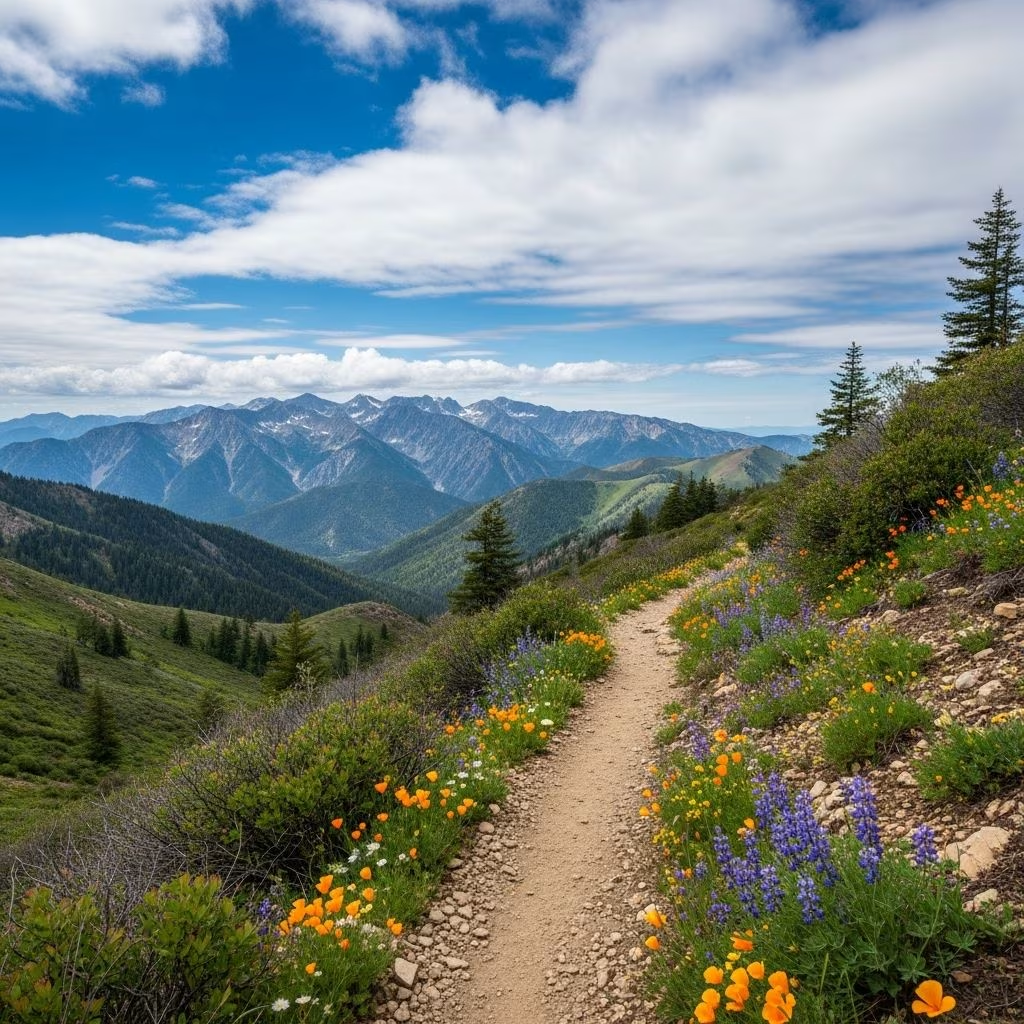 Travel Essentials
The Pacific Crest Trail (PCT) stretches 2,650 miles from the U.S.-Mexico border near Campo, California, to the Canadian border in Washington, traversing deserts, Sierra Nevada mountains, volcanic landscapes, and lush forests.
This legendary path challenges hikers with diverse terrain, including arid desert stretches up to 30 miles without water, high-altitude passes over 11,000 feet like Forester Pass at 13,153 feet, and the lowest point in the Columbia River Gorge at 140 feet. Thru-hikers typically take 4-6 months, averaging 20-30 miles per day, facing six of North America’s seven ecozones.
Key highlights include side trips to Mount Whitney (14,505 feet), the highest peak in the contiguous U.S., and Crater Lake, America’s deepest lake at 1,932 feet. Snow in the High Sierras demands preparation with bear canisters for at least five days of food, microspikes, and ice axes—practice using the latter to avoid injury.
A PCT long-distance permit from the Pacific Crest Trail Association (PCTA) is mandatory for thru-hikes. Applications open in late fall or early winter for specific start dates between mid-March and mid-April at Campo to align with snowmelt. Popular dates fill quickly, so apply early via the PCTA.
Optimal timing avoids early desert heat and late Sierra snow. Fast hikers may finish in under 100 days at 28.5 miles daily, but most plan 5 months.
| Section | Typical Duration | Key Challenges |
|---|---|---|
| Desert (Southern CA) | 20-30 days | Water scarcity, heat |
| Sierras (CA) | 20-25 days | Snow, high passes, bears |
| Northern CA/OR | 30-40 days | Volcanic terrain, mosquitoes |
| Washington | 20-30 days | Rain, blowdowns |
Build fitness progressively: start with packless hikes, add weight and distance until comfortable with 20+ miles daily carrying 20-30 lbs. Incorporate elevation gain training, as the PCT features relentless climbs.
Mental preparation is crucial—expect highs and lows over months of isolation and exertion.
Keep base weight under 10 lbs for speed and comfort. Prioritize lightweight, durable items suited to multi-season use.
Avoid cotton; use synthetics and merino for quick drying.
Stay on trail using PCT markers on trees/poles, junction signs, and apps like FarOut for GPS topo maps, water sources, resupply points, and waypoints. Yogi’s PCT Handbook offers thru-hike prep tips from veteran hikers.
Other tools: Halfmile maps/apps, Water Report, Craig’s PCT Planner for pacing.
Deserts require caching water; carry 6-8L capacity. Filter all sources; monitor reports via apps. Resupply via post offices, hostels; plan bounces around Kennedy Meadows (desert/Sierras divide).
Aim for 4,000-6,000 calories daily: dehydrated meals, bars, nuts.nero/zero days in towns like Tehachapi or post-Kearsarge Pass.
From Campo, ease into heat; reach Kennedy Meadows South (~700 miles) in 3-4 weeks.
Bear-proof food; cross passes like Muir and Forester. Side hike Mt. Whitney, swim alpine lakes.
Volcanic fields, Crater Lake detour, rainy north—microspikes for lingering snow.
The PCT is remote; go with partners, carry survival gear (emergency shelter, firestarter). If lost, stay on trail, hug a tree. Watch for rattlesnakes, lightning, hypothermia.
Practice LNT: camp 200 ft from water, minimize campfire use.
Train intensely, start fast but sustainable, low base weight, precise resupplies. Average 28+ miles/day; monitor snowpack for start.
Yes, a PCTA long-distance permit is required for thru-hikes starting at Campo.
FarOut (Guthook) for maps, water, campsites.
Budget $500-1,500 for ultralight setup excluding clothing.
With rigorous training and planning, yes—but it’s demanding.
Mid-March to mid-April for southbound snowmelt timing.
Use PCTA for permits, Yogi’s Handbook for prep, FarOut for on-trail. Join communities for trail magic and advice.
