

 Travel Essentials
 Travel Essentials

An abandoned rammed-earth house in rural Fujian is reborn as a bookstore and café, reviving village life through books, culture, and design.
 Travel Essentials
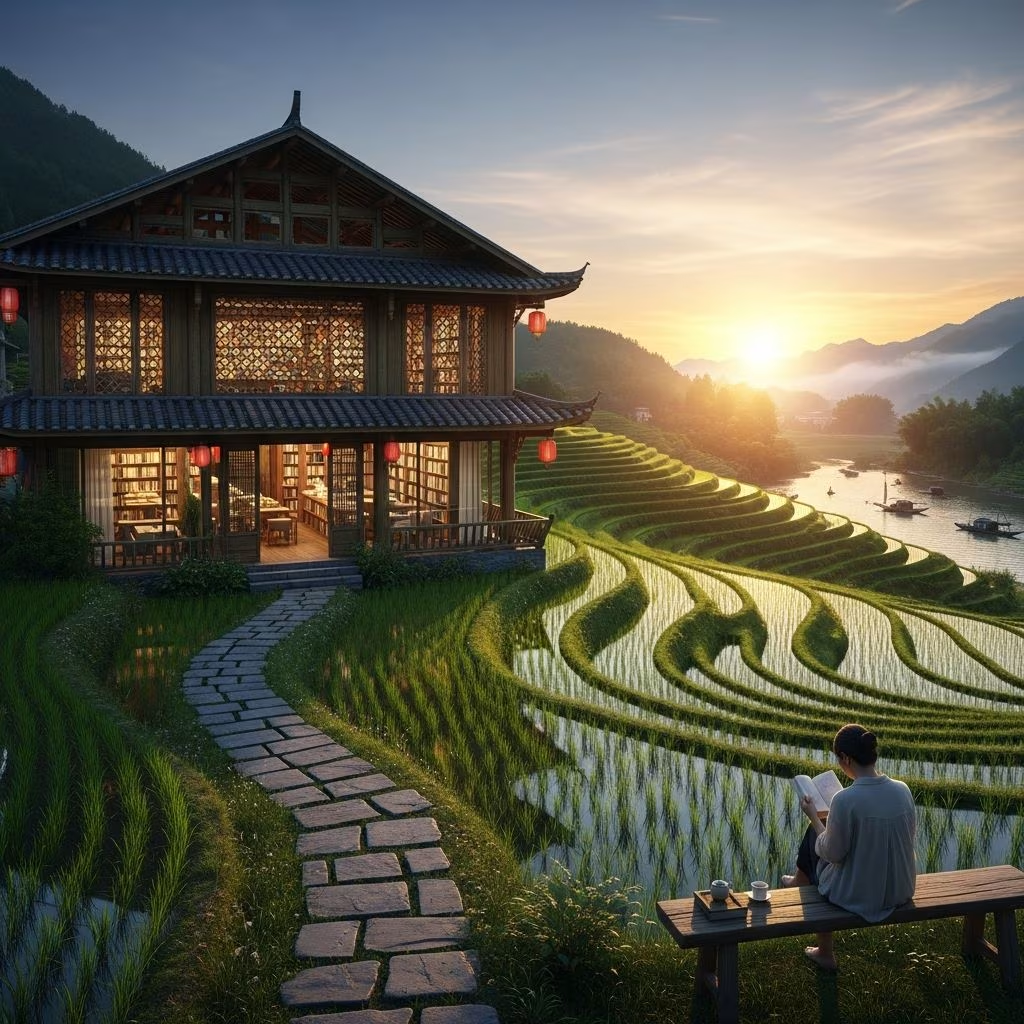
In the serene landscapes of rural Fujian Province, where golden paddy fields stretch endlessly under the vast sky, lies a remarkable transformation story. An long-forgotten house, its rammed earth walls standing as silent witnesses to centuries of village life, has been reborn as the Paddy Field Bookstore. This innovative project not only preserves architectural heritage but also breathes new life into isolated communities by promoting reading and cultural exchange.
Xiadi Village, perched on the northern edge of Pingnan County in Fujian Province, boasts over 800 years of history. Its traditional dwellings, constructed from rammed earth—a technique dating back to the Ming and Qing dynasties—evoke a sense of timeless authenticity. These sturdy walls, made by compacting earth between wooden forms, offer natural insulation and blend seamlessly with the surrounding terraced rice fields.
The village’s location near Taiwan adds to its strategic and cultural significance, serving as a bridge between mainland traditions and island influences. Surrounded by lush paddy fields that shimmer in seasonal changes—from vibrant greens in summer to harvest golds in autumn—Xiadi provides an idyllic setting for contemplation and discovery. Visitors often describe the area as a living painting, where the rhythm of rural life harmonizes with natural beauty.
The Paddy Field Bookstore emerged from the shells of an abandoned residence, its iconic gable walls left intact by architect Hua Li of Trace Architecture Office (TAO). Rather than demolishing the structure, the design cleverly inserts a modern bookstore and café into the existing framework, making the interior a hidden sanctuary invisible from outside.
A standout feature is the umbrella-style roof, which lifts slightly to frame panoramic views of the village and fields while honoring the original form. This intervention minimizes environmental impact, using local materials and sustainable practices. Rammed earth, celebrated for its thermal mass, keeps interiors cool in humid summers and warm in cooler months, embodying eco-friendly architecture.
| Design Element | Description | Benefit |
|---|---|---|
| Rammed Earth Walls | Preserved original gables | Heritage preservation, natural insulation |
| Umbrella Roof | Elevated for views | Ventilation, scenic integration |
| Minimal Intervention | Inserted bookstore/café | Sustainability, cost-efficiency |
This approach contrasts with typical urban developments, prioritizing harmony with nature and history.
Operating the Paddy Field Bookstore is Librairie Avant-Garde, a renowned independent chain famous for placing bookstores in extraordinary locations. From a Nanjing bomb shelter to other rural outposts, the brand targets forgotten spaces to ignite literary passion.
In Xiadi, this outpost continues the chain’s mission to bring books to underserved areas, stocking titles on local history, poetry, architecture, and global literature. The café complements reading with locally sourced teas and snacks, creating a communal hub. Librairie Avant-Garde’s strategy has spurred similar projects, like Yunxi Library in Zhejiang’s Daijiashan Village and Chenjiapu Bookstore, boosting tourism and economies.
Rural China faces depopulation and economic stagnation, with many ancient villages fading into obscurity. The Paddy Field Bookstore exemplifies how cultural initiatives can reverse this trend. Since opening in 2019, it has drawn book enthusiasts, architects, and tourists, fostering pride among locals.
Events such as reading circles, author talks, and art workshops animate the space, encouraging intergenerational exchange. Property values have risen, hostels have sprouted, and traditional crafts see renewed interest—all without eroding authenticity. This model echoes broader efforts, like Bohexiang Library in Shanghai’s countryside, where urban escapees repurpose homes into cultural centers.
“It’s a very traditional style of mutual assistance,” notes architect Hua Li, highlighting community-driven progress.
Reaching Xiadi requires planning, as it’s off major routes. From Fuzhou (provincial capital), drive about 3-4 hours via expressways to Pingnan County, then follow signs to the village’s northern edge. Public buses from Ningde City connect, though rideshares are advisable for flexibility.
Best Times to Visit:
Stay in village guesthouses for immersion, or nearby Ningde for comforts. Entry is free; café purchases support operations. Combine with hikes through paddies or explorations of rammed earth homes.
Its seamless integration into abandoned rammed earth ruins, offering a secret, nature-immersed reading escape amid paddy fields.
Librairie Avant-Garde, known for innovative locations like bomb shelters and villages.
Yes, but peak seasons are spring and autumn for optimal weather and scenery.
Regular readings, workshops, and cultural exchanges to engage visitors and locals.
Boosted tourism, property values, and cultural preservation, revitalizing the community.
The project’s success underscores sustainable tourism’s potential in rural China. By leveraging heritage and literature, it avoids mass commercialization, promoting low-impact visits. Future expansions may include more Librairie Avant-Garde branches, inspiring global architects to rethink rural reuse.
Challenges remain, such as balancing growth with preservation and ensuring benefits reach locals. Yet, initiatives like this signal a hopeful shift toward culturally rich, economically viable countrysides.
