

 Travel Essentials
 Travel Essentials

Palermo stands as Sicily's dynamic capital, blending Phoenician, Greek, Roman, Arab-Norman, and Spanish legacies into a city of stunning architecture, lively markets, and welcoming spirit.
 Travel Essentials
Nestled in the lush Conca d’Oro valley between jagged mountains and the sparkling Tyrrhenian Sea, Palermo emerges as one of the Mediterranean’s most enthralling destinations. This Sicilian powerhouse has absorbed waves of civilizations over nearly three thousand years, each leaving indelible imprints on its skyline, streets, and soul. From Phoenician traders to Greek colonists, Roman engineers, Arab emirs, Norman kings, Spanish viceroys, and beyond, Palermo’s story is one of relentless fusion, creating a city where East meets West in harmonious chaos.
Palermo’s origins trace back to the Phoenicians around 8th century BCE, who established the port of Zyz as a vital trading hub. These seafaring merchants from modern-day Lebanon introduced sophisticated urban planning and maritime commerce that would underpin the city’s growth. Soon after, Greeks arrived, erecting Doric temples that outnumbered those in mainland Greece. The Museo Archeologico Regionale Antonio Salinas houses treasures like the Punic stelae and Greek metopes from Selinunte, evidencing this era’s profound artistic legacy.
Romans followed, fortifying the city with aqueducts and amphitheaters. Yet, it was the Arab conquest in the 9th century that truly redefined Palermo. Under the Aghlabid Emirate, the population swelled to 300,000, rivaling Europe’s largest cities. Agrigento’s water systems and lush gardens transformed the arid landscape into paradises of citrus groves and fountains, remnants of which persist in the city’s verdant orchards.
The Norman arrival in 1072 marked Palermo’s pinnacle of multicultural splendor. King Roger II, crowned in the reconsecrated cathedral—formerly the Great Mosque—fostered a court where Muslims, Christians, Jews, and Byzantines collaborated. This era birthed architectural marvels blending styles seamlessly.
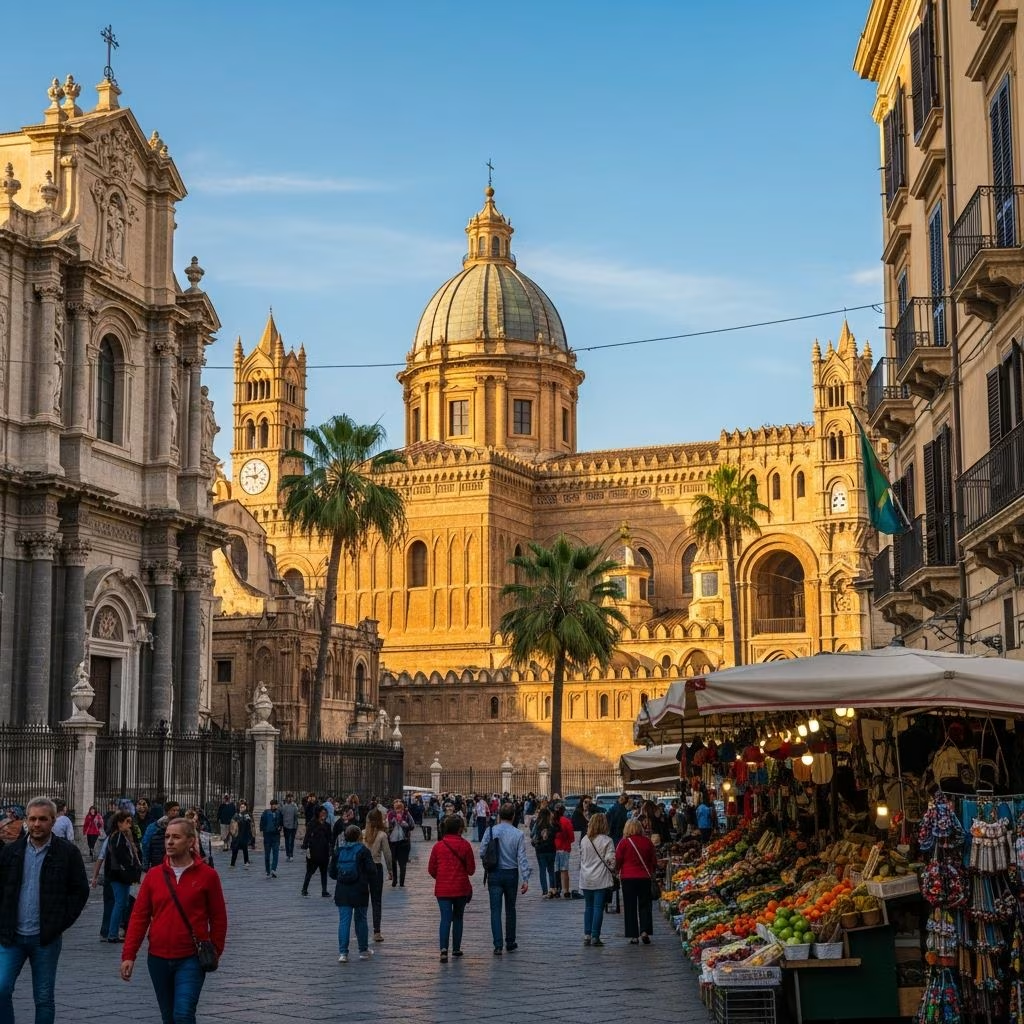
The Palatine Chapel exemplifies this: gold mosaics depict Christ in Byzantine fashion alongside Arabic inscriptions and muqarnas ceilings. Commissioned by Roger II, it symbolizes convivenza—harmonious coexistence—a term echoed in modern Palermitan rhetoric. The cathedral itself layers Arab domes over Norman basilica forms, topped with Spanish Gothic spires and baroque facade, a testament to evolving dominions.
Norman kings patronized scholars translating Greek texts into Arabic and Latin, positioning Palermo as Europe’s intellectual crossroads. Markets like Ballarò pulsed with spices from North Africa, silks from the East, and local seafood, traditions thriving today.
| Era | Key Monument | Cultural Fusion Elements |
|---|---|---|
| Arab-Norman | Palatine Chapel | Byzantine mosaics, Arab honeycombed vaults, Latin inscriptions |
| Norman | Cathedral of Palermo | Islamic domes, Gothic arches, Baroque additions |
| Norman-Byzantine | La Martorana | Mosaics of Roger II in Arab robes, Greek icons |
Post-Norman decline brought Spanish rule via the House of Aragon, infusing Renaissance and then exuberant Baroque aesthetics. Earthquakes in 1693 prompted rebuilding, birthing Palermo’s theatrical core: the Quattro Canti, a symmetrical piazza with fountains honoring Spanish monarchs, framed by curvaceous facades.
Churches like San Giuseppe dei Teatini dazzle with swirling marble inlays and frescoed ceilings, while palaces such as the Normans’ Palazzo dei Normanni hide Arab-Norman gems within. Spanish influence lingers in festivals, cuisine—like arancini—and the ornate puppets of the Opera dei Pupi tradition, narrating chivalric epics with Sicilian twists.
Palermo’s beating heart lies in its chaotic, aromatic markets. Ballarò, rooted in Arab souks, spills over with stalls hawking olives, sardines, cheeses, and panelle—chickpea fritters of North African descent. Vendors shout in a dialect laced with Arabic words, haggling amid vespas and laundry lines.
La Vucciria, once immortalized by painter Renato Guttuso, offers tripe and spleen sandwiches (stigghiole), while Mercato del Capo buzzes with pistachios, cannoli, and sfincione pizza. These aren’t mere markets; they’re living museums of migration, where Tunisian harissa mingles with Greek olives and Spanish garbanzos.
Cuisine reflects this blend: couscous al pesce from Trapani’s Arab legacy, caponata with eggplant and capers echoing Sephardic Jews, and cassata ice cream layered with marzipan arabesques. Street food tours reveal how invasions birthed Palermo’s UNESCO-recognized gastronomy.
Today, Palermo champions its mosaic identity amid migration waves. Mayor Leoluca Orlando (1985-1990, 2000-2017, 2022) popularized the ‘Palermo is a mosaic’ narrative, invoking historic tolerance to welcome African and Middle Eastern arrivals. He hailed migrants as restorers of harmony between monuments and people, promoting convivenza against xenophobia.
Projects like urban gardens and intercultural festivals integrate newcomers, with neighborhoods like Ballarò hosting African shops and halal butchers alongside traditional forni. Pope Benedict XVI’s 2015 visit to beatify a slave-born martyr underscored this ethos. Demonstrations for migrant sea rescues highlight Palermo’s humanitarian stance, defying stereotypes of the impoverished South.
Yet challenges persist: organized crime shadows progress, though anti-mafia efforts thrive. Youth programs combat integration fears, ensuring the city’s ancient hospitality endures.
Its Arab-Norman-Byzantine fusion, seen in domes, mosaics, and baroque overlays, sets it apart as a UNESCO World Heritage ensemble.
Yes, with standard precautions; lively areas are welcoming, especially during day.
3-5 days for core sites, markets, and day trips like Monreale.
Street foods like arancini, pane con la milza, and fresh seafood in markets.
Strongly, via policies promoting historical convivenza and integration initiatives.
