

 Travel Essentials
 Travel Essentials

Explore Pamukkale's stunning white terraces, thermal pools, and Hierapolis ruins. This UNESCO site offers breathtaking views and healing waters for unforgettable adventures.
 Travel Essentials
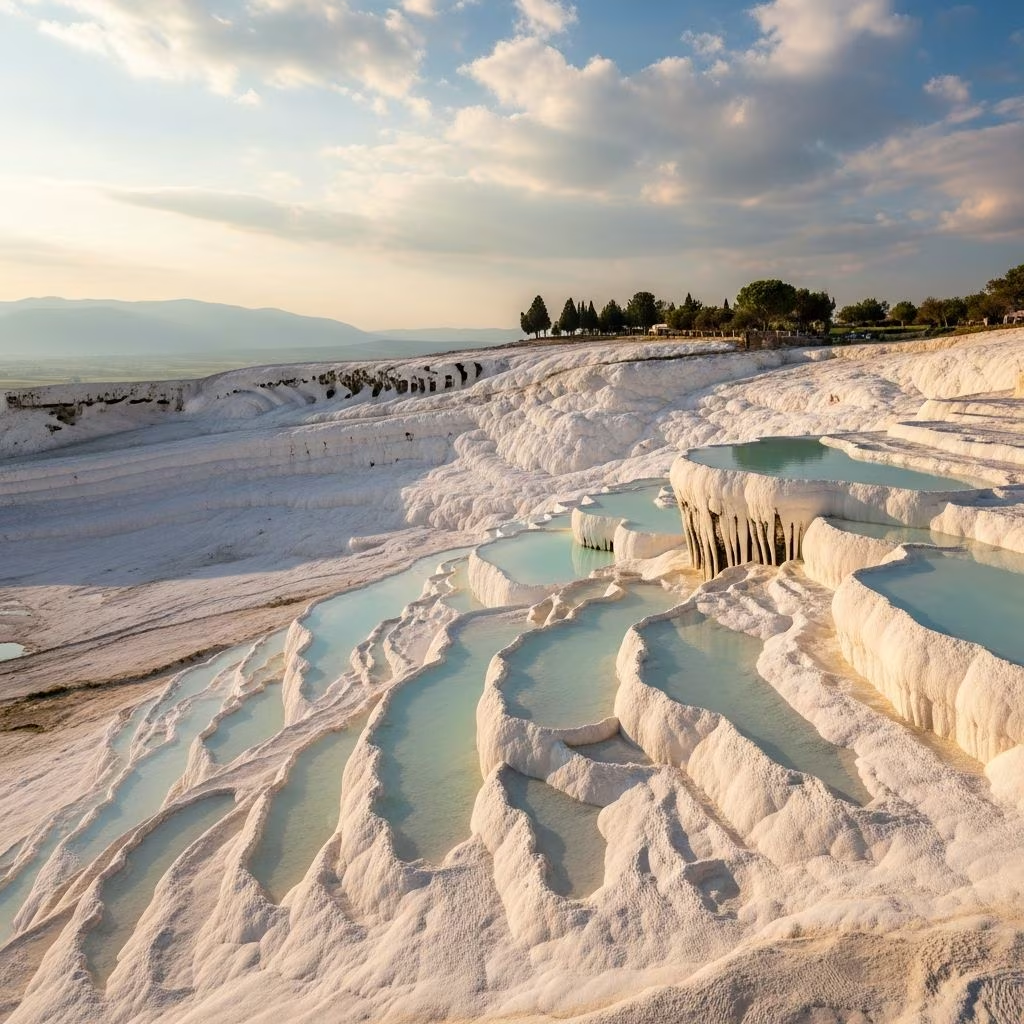
Pamukkale, known as the “Cotton Castle” in Turkish, stands as one of Earth’s most extraordinary natural formations. This site in southwestern Turkey features cascading white travertine terraces formed by mineral-rich thermal springs, creating a landscape that appears otherworldly against the green valleys.
The mesmerizing white cliffs of Pamukkale result from thousands of years of calcium carbonate deposition from hot springs emerging from a 200-meter-high cliff. These springs carry dissolved calcite, which precipitates as the water cools and evaporates, building layered terraces and petrified waterfalls.
Some terraces reach heights of six meters, while others are mere steps filled with turquoise pools. The fresh calcium deposits give the formations their signature dazzling white hue, resembling piles of cotton or freshly fallen snow, hence the name Pamukkale.
This process has created a visually stunning environment recognized under UNESCO criterion (vii) for its superlative natural phenomena.
Overlooking the terraces is Hierapolis, an ancient Greco-Roman city founded in the 2nd century B.C. by the Attalid dynasty of Pergamon. Developed as a thermal spa, it attracted visitors for its healing waters, much like today.
Visitors can explore well-preserved ruins including a grand theater seating 12,000, intricate gates, a necropolis with thousands of sarcophagi, and bath complexes. The site’s location on the cliff provided natural defenses and exploited the springs for public baths and plumbing.
| Ruin | Description | Historical Significance |
|---|---|---|
| Hierapolis Theater | Hellenistic structure with excellent acoustics | Hosted plays, gladiatorial contests; dates to 1st century A.D. |
| North Gate (Domitian Gate) | Monumental archway with inscriptions | Entry to the sacred city; built under Emperor Domitian |
| Necropolis | Largest ancient cemetery in Anatolia | Over 1,200 tombs; reflects diverse burial practices |
| Pluto Gate | Linked to ancient oracle of underworld | Site of mystical rituals and prophecies |
Pamukkale’s thermal springs have long been prized for therapeutic properties, rich in minerals like calcium and magnesium. Public pools allow visitors to wade through warm cascades, easing joint pain and skin conditions.
The star attraction is Cleopatra’s Pool, a sacred ancient bath fed by hot springs amid submerged Roman columns. Legend claims Cleopatra bathed here during her visits to Mark Antony, though historical evidence points to Roman elite usage. Entry requires a fee, but the 36°C waters offer a relaxing soak surrounded by antiquity.
To preserve the delicate travertines, visitors must enter barefoot, avoiding soaps or sunscreens that could stain the formations. Designated paths guide flows to regenerate terraces.
Designated a UNESCO World Heritage Site in 1988, Pamukkale-Hierapolis protects its unique blend of natural and cultural heritage. The organization highlights the site’s “unreal landscape” of mineral forests and terraced basins.
Challenges include overtourism, with over two million annual visitors. Measures include periodic closures for regeneration, regulated water diversion, and barefoot policies. These sustainable practices balance preservation with economic benefits for Denizli Province.
Spring (April-June) and autumn (September-October) offer mild weather (15-25°C) and fewer crowds, with terraces fullest from spring rains. Summers are hot (up to 40°C), best for early mornings; winters mild but some pools drained.
Getting There:
Tickets and Costs:
Essentials:
A full day covers terraces, Hierapolis ruins, and a pool dip. Start at lower terraces, ascend to the ancient city, lunch at site cafes, then relax in Cleopatra’s Pool.
Sample 1-Day Plan:
Nearby: Aphrodisias (1-hour drive) for Roman ruins; Laodicea for Hellenistic theater; or Kaklık Cave for underground travertines.
Its surreal contrast—white cascades against verdant plains—evokes lunar landscapes or fairy-tale realms. Combined with history and wellness, it offers multisensory immersion. Travelers rave about transformative soaks amid ruins, calling it a bucket-list essential.
Sustainable tourism ensures its allure endures, inviting generations to witness nature’s artistry.
Absolutely—its unique terraces and ruins make it a top Turkey highlight, blending nature and history.
Yes, in designated areas like public terraces and Cleopatra’s Pool; barefoot entry required.
4-6 hours for essentials; overnight for best light and fewer crowds.
Very safe; well-patrolled UNESCO site with clear paths.
Panoramic views from Hierapolis entrance, terrace cascades at golden hour.
