

 Travel Essentials
 Travel Essentials

Explore the Panama Canal region's tropical ecosystems, indigenous communities, and adventure activities beyond its engineering marvel.
 Travel Essentials
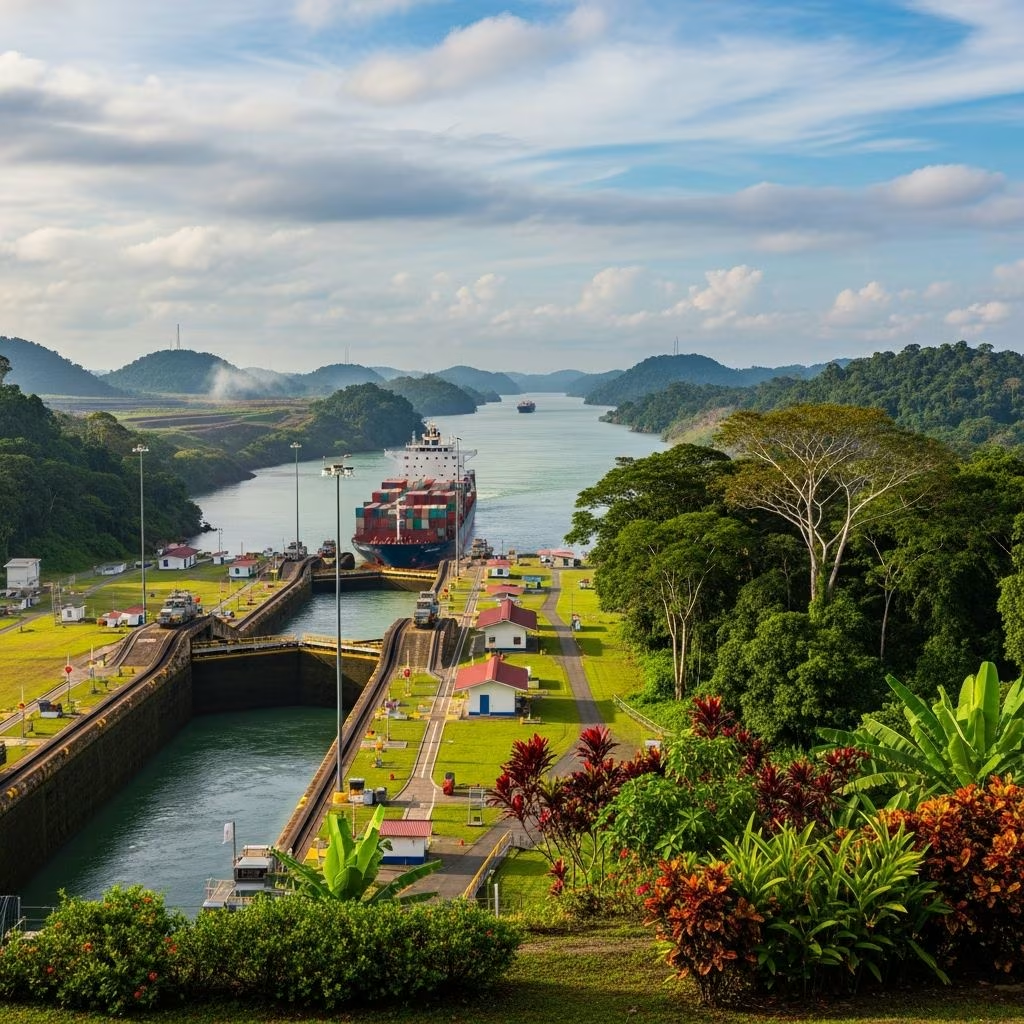
The Panama Canal stands as one of the world’s most remarkable engineering achievements, connecting the Atlantic and Pacific Oceans and fundamentally transforming global commerce since its completion in 1914. However, beyond the container ships and commercial vessels, the canal region harbors a different kind of treasure—a landscape rich with biodiversity, vibrant indigenous traditions, and thrilling outdoor opportunities that remain relatively undiscovered by many travelers.
The waterway’s transformation of Central America extended far beyond concrete and steel. The creation of the canal system reshaped not only the physical landscape but also established unique ecosystems and preserved remarkable natural areas that today offer visitors an unparalleled combination of human history and environmental wonder.
Your journey through the canal region logically begins at the Miraflores Locks Visitor Center, positioned near the canal’s Atlantic entrance. This facility serves as both an educational hub and launching point for deeper exploration of the entire region.
The locks museum provides essential historical context, chronicling the canal’s turbulent past—including the French construction effort that claimed 22,000 lives before being abandoned, followed by the American achievement and eventual handover to Panama in 1999. Understanding this backstory enriches every subsequent experience in the region.
The open-air observation deck at Miraflores offers spectacular vantage points for witnessing massive ocean-going vessels, some exceeding 1,000 feet in length, navigate through the locks system. Watching these enormous ships squeeze through the waterway provides perspective on both human engineering capability and the geographic constraints that made this project so critical to global trade.
The canal transitions northward along the Chagres River before expanding into Gatún Lake, a vast freshwater reservoir created specifically to facilitate canal operations. This body of water has become an unlikely ecological sanctuary, supporting populations of wildlife that thrive in the protected environment.
Rather than experiencing the canal through a massive cruise ship, adventurous travelers can opt for kayaking expeditions that provide intimate engagement with the aquatic landscape. Paddling through these waters puts you at eye level with the ecosystem, dramatically increasing wildlife observation opportunities.
Wildlife to observe during kayaking:
Gatún Lake presents an interesting ecological paradox. Peacock bass, introduced to the lake during the 1950s as a sport fishing attraction, have proliferated beyond initial expectations, now dominating the ecosystem and outcompeting native species. This invasion has created an opportunity where recreational fishing actually supports conservation goals.
Anglers visiting Gatún Lake participate in ecosystem management by targeting these invasive peacock bass, simultaneously enjoying sport fishing and contributing to environmental balance. Guided fishing excursions combine the thrill of sport angling with the satisfaction of supporting ecological restoration.
The Panama Rainforest Discovery Center represents a premier destination for nature enthusiasts seeking comprehensive rainforest immersion. Located within protected forest lands, this facility combines educational programming, sustainable architecture, and exceptional wildlife viewing opportunities.
The centerpiece 32-meter observation tower provides elevated perspectives of the canopy layer, dramatically improving visibility of elusive bird species like the electric blue cotinga and various toucan varieties. Early morning visits—ideally at the 6 AM opening time—reward dedicated birdwatchers with peak activity periods when forest inhabitants are most vocal and active.
The hiking trails throughout the discovery center’s grounds offer ground-level rainforest exploration, allowing visitors to experience the forest’s vertical stratification from understory to canopy.
Barro Colorado Island, encompassing 1,500 hectares within the canal watershed, represents one of the world’s most intensively studied tropical forests. Historically restricted to scientific researchers, the island now permits limited daily visitation through guided tours that prioritize conservation and educational objectives.
Access to Barro Colorado requires advance reservations, as daily visitor capacity remains intentionally restricted to protect the fragile ecosystem. Tours typically include boat transportation from Gamboa and provided meals, offering full-day immersion in one of the tropics’ most pristine environments.
The island’s extensive research infrastructure has documented extraordinary biodiversity, making it invaluable for understanding tropical ecology and witnessing undisturbed forest systems.
The BioMuseo Panama celebrates the Isthmus of Panama’s exceptional position as one of Earth’s most biodiverse regions. This museum, designed by renowned architect Frank Gehry—known for Spain’s iconic Guggenheim structure—manifests innovative architecture that echoes both rainforest canopy forms and local architectural traditions.
The facility encompasses far more than traditional museum exhibits. A six-acre botanical garden showcases native plant species, while integrated aquariums highlight freshwater and marine fauna indigenous to Panamanian waters. Together, these components create a comprehensive biodiversity narrative that contextualizes the region’s ecological significance.
The Emberá and Wounaan peoples represent living connections to Panama’s pre-Columbian heritage. These communities, originating from the Darién region, relocated to the Chagres River banks during the 1950s and maintain cultural practices despite modern pressures.
Both groups have selectively embraced modernization while preserving distinctive cultural traditions. Their renowned weaving handicrafts represent exceptional artisanal skills passed through generations, with each piece reflecting deep knowledge of natural materials and aesthetic principles.
Experiencing indigenous culture requires thoughtful tour selection. Mass group tours often create superficial, exploitative interactions that diminish authentic cultural exchange. Smaller, community-focused operators emphasizing genuine interaction provide substantially more meaningful experiences.
Embera Village Tours exemplifies responsible cultural tourism by employing local guides with deep community connections—including guides who married into the culture—ensuring nuanced cultural interpretation and equitable economic benefit distribution.
While the canal region accommodates excellent day trips from Panama City, overnight stays transform the experience fundamentally. Extended timeframes permit exploration during quieter periods and enable nocturnal wildlife observation when many rainforest inhabitants become active.
Jungle Land Panama operates a distinctive multi-story wooden houseboat floating on Gatún Lake, providing an unusual perspective on canal geography. Guests simultaneously experience the novelty of water-based jungle accommodation while observing massive commercial vessels passing in the distance and witnessing nocturnal wildlife including caiman populations.
Houseboat proprietors share local knowledge through interpretive storytelling, while structured activities—swimming, mango-picking, and guided rainforest safaris—provide varied engagement with the environment.
Panama’s distinctive character emerges through celebrating both traditional practices and contemporary innovation. This cultural fusion manifests annually in the Cayucos Race, where teams race traditional wooden canoes carved from single tree trunks the entire length of the canal over a three-day period in late August.
This event transcends recreational competition, positioning conservation awareness at its central focus. Participants range from elite athletes to amateur enthusiasts, democratizing participation while raising regional conservation consciousness.
Panama’s geographical position as a narrow land bridge connecting North and South America created unique evolutionary conditions. This geography resulted in a fascinating mixture of fauna and flora from both continental regions, producing exceptional biodiversity density.
The region supports over 900 bird species, 1,500 tree varieties, and more than 7,000 plant species distributed across its protected areas. The Panama Canal Watershed functions as an extensive biodiverse reserve, protecting creatures including hundreds of reptile and amphibian species within its managed boundaries.
The West Indian Manatee represents one of the rarest canal-region wildlife species, with intensive conservation efforts spanning multiple decades. Originally introduced to Gatún Lake in 1964 to facilitate vegetation management, manatee populations remain vulnerable despite protection measures. Jungle boat expeditions provide the most reliable opportunities for observing these elusive marine mammals.
| Experience Type | Best Timing | Key Considerations |
|---|---|---|
| Miraflores Locks Museum | Any time; morning for fewer crowds | Plan 2-3 hours; observation deck provides ongoing views |
| Kayaking Gatún Lake | Early morning for wildlife activity | Bring sun protection; skilled kayaking experience helpful |
| Rainforest Discovery Center | 6 AM opening for peak bird activity | Admission US$30 adults; bring binoculars |
| Barro Colorado Island | Full-day commitment required | Reserve months in advance; limited daily capacity |
| Indigenous Village Tours | Morning preferred for cultural activities | Select small-group operators emphasizing interaction |
| Overnight Houseboat | Any season; dry season July-August optimal | Includes meals and activities; wildlife viewing excellent |
The canal region accommodates visitors with varying interests and physical capabilities. Some travelers prefer structured educational experiences like museum visits and guided tours, while others seek active immersion through kayaking and hiking. Most optimal itineraries combine multiple experience types over several days.
Day trips from Panama City prove practical for time-limited visitors, with most attractions accessible within 1-2 hours from the capital. However, dedicating 2-3 days to the region permits deeper exploration and increased wildlife observation opportunities.
The dry season, typically spanning December through April, offers superior conditions for outdoor activities and wildlife spotting. However, the region’s tropical climate supports year-round visitation, with wet season months bringing increased bird activity and lush vegetation.
The Panama Canal’s popular image centers on engineering triumph and commercial significance. Yet this perspective captures only part of the region’s complete story. The canal’s creation inadvertently preserved and protected extraordinary natural spaces, indigenous cultures, and wildlife populations that would otherwise face pressures from development.
Modern visitors possess unprecedented opportunities to experience this multifaceted landscape—simultaneously witnessing one of humanity’s greatest engineering accomplishments while immersing themselves in pristine rainforest ecosystems, observing remarkable wildlife, and engaging respectfully with indigenous communities maintaining ancestral traditions. This combination of experiences distinguishes the canal region as a destination of uncommon depth and significance.
