


 Food & Culture
Food & Culture
Panama Geisha Coffee: The World’s Most Expensive Specialty Bean
Explore Panama's Geisha coffee phenomenon—the world's most expensive and sought-after bean, grown near Baru volcano with auction prices reaching record highs.
 Food & Culture
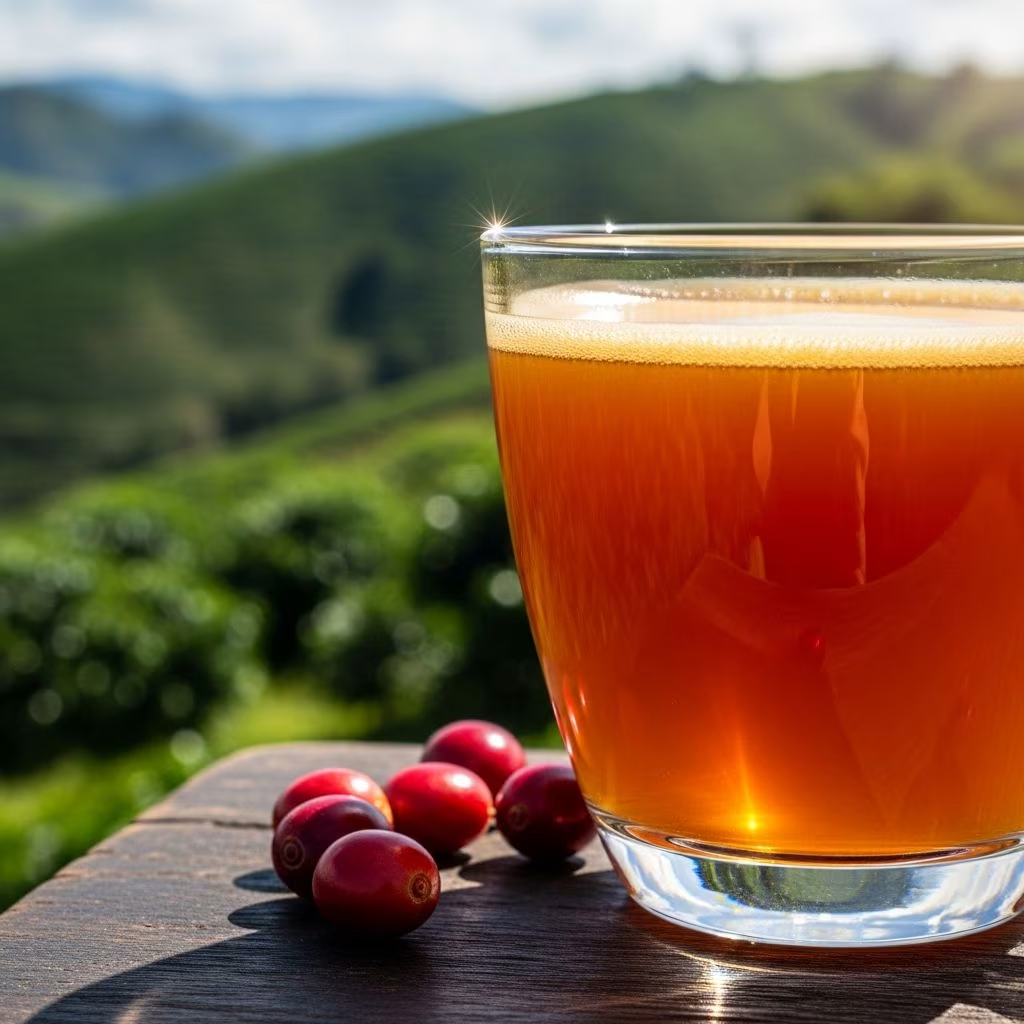
In the landscape of global luxury goods, few commodities command attention quite like Panama’s Geisha coffee. This exceptional varietal has transformed the specialty coffee industry, establishing itself as a symbol of exclusivity and craftsmanship. What began as a regional agricultural product has evolved into an international phenomenon, with enthusiasts and collectors willing to invest substantial sums to experience its distinctive flavor profile and heritage. The story of Geisha coffee represents far more than simply a beverage—it encapsulates the intersection of geography, climate, agricultural innovation, and global commerce.
The Origins of Panama’s Premium Coffee Culture
Panama’s coffee heritage extends back generations, yet the elevation of specific varietal beans to world-class status is a more recent phenomenon. The nation’s geographic positioning, combined with its volcanic soil composition and optimal altitude conditions, created ideal circumstances for cultivating exceptional coffee. The mountains surrounding Baru volcano, in particular, provide the precise environmental factors necessary for producing beans with complex flavor characteristics and superior quality metrics.
The introduction of the Geisha varietal to Panamanian farms marked a turning point in the country’s coffee narrative. This Ethiopian heirloom variety, when transplanted to Panama’s unique terroir, developed distinctive properties that set it apart from other global coffee varieties. The altitude, volcanic mineral content, and microclimate conditions near Baru volcano contribute to the bean’s distinctive characteristics that specialists identify through rigorous quality assessments.
Understanding the Geisha Varietal’s Unique Properties
The Geisha bean distinguishes itself through several measurable factors that coffee professionals evaluate systematically. When subjected to standardized cupping protocols—the industry-standard method for assessing coffee quality—Geisha beans regularly achieve scores approaching perfection. These evaluations consider multiple sensory dimensions, including flavor complexity, aroma intensity, body characteristics, and aftertaste persistence.
The flavor profile of premium Geisha coffee typically exhibits the following characteristics:
- Floral notes reminiscent of jasmine and rose
- Fruity undertones ranging from berry to stone fruit
- Subtle spice elements with hints of citrus
- Smooth body with exceptional clarity
- Extended finish with lingering pleasant sensations
These sensory properties result from the specific combination of plant genetics, soil composition, altitude, and processing methodology. The rarity of achieving optimal conditions across all these variables explains why Geisha coffee commands premium valuations in global markets.
The Auction Phenomenon: Record-Breaking Valuations
The most dramatic expression of Geisha coffee’s value occurs annually at specialized auctions dedicated to exceptional Panamanian lots. The Best of Panama auction, established as a competitive platform for premium coffee producers, has become the primary venue where record prices are established and surpassed with remarkable frequency.
Recent auction results demonstrate the accelerating demand for the world’s most exclusive coffee lots. In 2024, Elida Geisha Natural Torre achieved a sale price of $10,013 per kilogram, establishing a record at that time. However, subsequent auctions have dramatically exceeded even these benchmarks. The 2025 Best of Panama auction witnessed unprecedented bidding competition, with Hacienda La Esmeralda obtaining $30,204 per kilogram for its washed Geisha varietal—more than triple the previous year’s record.
This acceleration in pricing reflects multiple converging factors: increasing global awareness of specialty coffee, rising wealth concentration in emerging markets with established coffee cultures, and the genuine scarcity of genuinely exceptional lots produced annually.
From Farm to Cup: The Journey of Excellence
The pathway from cultivation to consumer experience involves multiple stages of careful handling and specialized preparation. Panamanian coffee farmers invested in Geisha production must implement meticulous agricultural practices throughout the plant’s lifecycle. This includes selective harvesting, ensuring that only ripe cherries are collected, and precise post-harvest processing that significantly influences the final bean characteristics.
Processing methodology represents a critical variable in determining coffee quality. The distinction between washed (wet-processed) and natural (dry-processed) Geisha coffees creates distinct flavor profiles that specialists value differently. Washed Geisha coffees typically display cleaner, more refined flavor characteristics with pronounced floral and fruity notes. Natural-processed varieties often exhibit fuller body and more pronounced fruit-forward characteristics.
Specialty roasting facilities recognize that Geisha coffee requires distinctive roasting profiles compared to standard commercial varieties. The coffee’s inherent quality permits lighter roasts that preserve delicate flavor nuances, whereas commercial coffees often require darker roasts to achieve acceptable complexity. Master roasters developing roast profiles for premium Geisha lots conduct extensive testing to identify the precise temperature curves and timing that optimize each lot’s unique characteristics.
The Global Market: Where Premium Coffee Commands Premium Prices
Geisha coffee’s transformation into a global luxury commodity reflects broader trends within the specialty coffee industry. Regions experiencing rapid economic development—particularly the Middle East and East Asia—have emerged as primary markets for ultra-premium coffee experiences. Dubai, in particular, has positioned itself as a destination for exceptional coffee offerings, with multiple establishments competing for recognition as serving the world’s most expensive single cups.
Dubai’s Roasters Specialty Coffee House currently holds recognition from Guinness World Records for serving Panamanian Geisha at AED2,500 (approximately $680) per cup. This achievement reflects not merely the coffee’s inherent value but also the specialized preparation, service environment, and experiential elements that accompany ultra-premium coffee consumption in luxury markets.
Taiwan’s Simple Kaffa represents another prominent player in the ultra-premium coffee market, offering Geisha cups at approximately $635 each, with reports indicating they sell approximately one serving weekly. These venues cater to an exclusive clientele for whom the coffee represents a unique experience and status symbol rather than a quotidian beverage.
The Sensory Experience: Beyond Simple Consumption
Premium coffee establishments treating Geisha coffee as a featured offering have developed ritualistic service approaches that emphasize the beverage’s complexity and heritage. These curated experiences often resemble wine tastings more closely than conventional coffee service, incorporating guided tastings, flavor identification exercises, and educational components about the coffee’s origins and processing methodology.
The experiential dimension of consuming world-class Geisha coffee acknowledges that exceptional quality commodities engage multiple sensory systems simultaneously. Visual presentation, aromatic intensity, temperature transitions, and the beverage’s tactile properties all contribute to the holistic experience. Establishments specializing in premium coffee service employ trained specialists who guide consumers through systematic sensory evaluation, facilitating deeper engagement with the coffee’s complexity.
Production Scarcity and Market Dynamics
The limited quantity of truly exceptional Geisha coffee produced annually creates structural scarcity that supports premium pricing. Records indicate that specialized auction lots frequently comprise only 20-30 kilograms of exceptionally graded coffee. When these modest quantities are distributed across potential purchasers globally, the mathematics of supply and demand become readily apparent.
This scarcity operates at multiple levels. First, only specific farms within Panama’s ideal growing regions consistently produce coffee achieving the highest quality grades. Second, within successful harvests, only a fraction of the total production qualifies for premium auction participation. Third, individual lots offered at auction rarely exceed 30 kilograms, meaning competition among bidders concentrates on genuinely limited quantities of product.
Investment and Speculation in Premium Coffee Lots
The intersection of luxury goods, investment potential, and global trade has introduced financial motivations alongside consumption desires in the premium coffee market. Collectors and investment-focused purchasers view exceptional coffee lots similarly to fine wine or rare collectibles—as assets potentially appreciating over time while offering experiential benefits during the holding period.
Specialty coffee roasters and cafe operators function as intermediaries in this ecosystem, acquiring premium lots at auction and subsequently marketing individual servings to consumers. The mathematics of this business model depend upon acquiring lots at prices that permit resale at substantially higher per-unit valuations. A lot purchased at auction for $30,000 per kilogram translates to approximately $15 per gram, which a premium cafe can justify marketing at $50-100+ per serving when incorporating preparation, service, and venue costs.
Sustainability and Future Production Considerations
The explosive demand for Geisha coffee raises legitimate questions regarding long-term production sustainability. Climate variability, disease pressure, and the geographic limitations of ideal growing regions introduce elements of uncertainty into future supply projections. Producers recognize that establishing reliable reputations for consistent quality increasingly determines market positioning in premium segments.
Panamanian coffee farmers invested in Geisha production must balance immediate profitability with long-term soil health, genetic diversity preservation, and environmental stewardship. The intensive agricultural practices sometimes associated with maximum-yield farming approaches run counter to the genteel, quality-focused methodology that produces exceptional Geisha coffee. Progressive producers increasingly adopt sustainable practices that maintain soil integrity and ecosystem health while supporting premium production objectives.
Frequently Asked Questions
What makes Geisha coffee different from regular coffee?
Geisha coffee originates from a specific Ethiopian varietal cultivated in Panama’s unique terroir near Baru volcano. The combination of volcanic soil, altitude, climate conditions, and specialized processing creates distinctive flavor characteristics including floral and fruity notes that differentiate it from commercial coffee varieties.
Why does Geisha coffee cost so much?
Multiple factors contribute to premium pricing: extreme scarcity (limited annual production of exceptional lots), superior quality metrics that consistently exceed standards, global demand from wealthy collectors and luxury establishments, and the coffee’s demonstrated track record of achieving record auction prices year after year.
Can average consumers purchase Geisha coffee?
While auctions and specialty retailers offer small quantities, most Geisha coffee reaches consumers through high-end cafes and specialty importers rather than standard retail channels. Direct purchases typically require connections within the specialty coffee industry or substantial premium pricing from secondary markets.
Is Geisha coffee worth the price?
This represents a subjective determination depending upon individual value systems. Coffee specialists and experienced tasters often affirm that genuinely exceptional Geisha delivers sensory complexity justifying premium investment. For casual consumers, standard specialty coffees may provide satisfactory experiences at substantially lower price points.
Where can I experience Geisha coffee?
Established venues in Dubai, Taiwan, Japan, and South Korea currently serve premium Geisha experiences at luxury price points. Alternatively, specialty coffee importers occasionally offer smaller quantities through direct channels for serious collectors and enthusiasts.
The Future of Premium Coffee Markets
The trajectory of Geisha coffee pricing and market development suggests continued intensification of premium segments within the global specialty coffee industry. As wealth concentration increases in traditionally developing regions with established coffee cultures, demand for exceptional commodities appears positioned to sustain upward pressure on valuations.
Innovation in coffee processing, roasting, and service methodologies will likely generate additional differentiation opportunities within premium markets. Simultaneously, emerging coffee origins and newly recognized varietal expressions may eventually diversify the ultra-premium landscape beyond Panama’s current dominance.
Panama’s Geisha coffee phenomenon ultimately represents the convergence of agricultural excellence, geographic fortune, market economics, and human appreciation for exceptional quality. Whether viewed as a beverage to be savored, an investment vehicle, or a symbol of luxury achievement, Geisha coffee has transcended its botanical origins to become a global icon within specialty coffee culture.
References
- Dubai Unveils the World’s Most Expensive Panama Geisha Coffee — YouTube. Accessed 2026-04-24. https://www.youtube.com/watch?v=hm29keS4K7c
- The World’s Most Expensive Coffee Costs $284 Per Ounce — Mental Floss. https://www.mentalfloss.com/food/coffee/most-expensive-coffee
- Experiencing Geisha, Most Expensive Coffee In The World — Gone with the Wynns. https://www.gonewiththewynns.com/geisha-most-expensive-coffee/
- Who is buying a US$680 cup of coffee? — Perfect Daily Grind. 2025-10. https://perfectdailygrind.com/2025/10/who-is-buying-worlds-most-expensive-coffee/
On This Page
The Origins of Panama's Premium Coffee Culture Understanding the Geisha Varietal's Unique Properties The Auction Phenomenon: Record-Breaking Valuations From Farm to Cup: The Journey of Excellence The Global Market: Where Premium Coffee Commands Premium Prices The Sensory Experience: Beyond Simple Consumption Production Scarcity and Market Dynamics Investment and Speculation in Premium Coffee Lots Sustainability and Future Production Considerations Frequently Asked Questions The Future of Premium Coffee Markets← Previous
Best Islands in Japan to Visit: Miyajima, Okinawa, Yakushima & More
Next →
Essential Portuguese Travel Phrases for Your Next Trip
Related Reading
More in Food & Culture
Food & Culture Food & Culture
 Food & Culture
Best Places to Eat in Rome: Neighborhood Dining Guide
 Food & Culture
 Food & Culture