

 Travel Essentials
 Travel Essentials

Discover practical ways to explore Panama City, beaches, and national parks on a tight budget, from timing your visit to finding affordable meals and transportation.
 Travel Essentials
Panama has emerged as one of Central America’s most dynamic destinations, attracting travelers seeking cultural immersion, natural beauty, and historical significance. However, many visitors assume that experiencing this vibrant country requires substantial financial resources. The reality is quite different. With thoughtful planning and strategic decision-making, you can explore Panama’s incredible offerings while maintaining strict budget constraints. Whether you’re a backpacker seeking the most economical experience or a midrange traveler willing to invest slightly more for comfort, Panama accommodates various financial approaches without compromising the quality of your adventure.
One of the most effective strategies for reducing your overall travel expenses involves timing your visit strategically. Panama’s climate and tourism patterns create distinct seasonal variations that directly impact accommodation costs, availability, and the quality of your experience. Understanding these dynamics allows you to make informed decisions about when to travel and what financial adjustments to expect.
The wet season, spanning from May through November, represents the most economical period for visiting Panama. During these months, hotel rates typically decrease by 10 to 30 percent compared to peak season prices, providing immediate savings that compound across your entire stay. While this season does bring regular precipitation, the rain typically arrives in concentrated afternoon bursts rather than all-day downpours, usually clearing within one to two hours. This weather pattern allows you to continue exploring despite the moisture, and certain outdoor activities actually benefit from these conditions.
Interestingly, the rainy season enhances specific experiences. Birdwatching becomes more rewarding as migrating species become more active, and white-water rafting opportunities improve due to increased water levels. These seasonal advantages mean you’re not simply accepting lower costs—you’re gaining access to experiences that peak visitors during dry season never encounter. The trade-off between occasional rain and substantial cost savings makes this period particularly attractive for budget-conscious travelers.
Lodging typically represents the largest expense category for any traveler, making accommodation selection crucial for budget management. Panama offers diverse housing options that cater to different financial constraints and comfort requirements, allowing you to align your choice with your specific budget parameters.
For solo travelers and those prioritizing maximum savings, hostel dormitories provide the most economical option, ranging from $10 to $20 per night depending on location and amenities. Beyond the obvious cost advantage, hostels create natural social environments where independent travelers meet, exchange information, and often form lasting connections. Major tourist areas—Panama City, Boquete, and Bocas del Toro—feature established hostel networks with reasonable standards.
As your budget increases, private hostel rooms and budget-oriented hotels become accessible. These options provide enhanced privacy and facilities while remaining substantially cheaper than mid-range accommodations. The progression from dormitory to private accommodation typically represents a 50 to 100 percent increase in nightly costs but provides considerably more personal space and comfort.
Understanding these tiered options enables you to make context-specific decisions. Perhaps you stay in hostels during your Panama City phase for social opportunities, then upgrade to private accommodation in quieter areas like El Valle de Anton where you might prioritize relaxation over social engagement.
Dining represents your second-largest discretionary expense after accommodation. However, Panama’s food landscape creates multiple pathways for enjoying authentic cuisine at dramatically different price points. The key involves understanding where to eat based on your priorities and budget constraints.
Local food stands and street vendors offer the most economical dining options, typically charging $4 to $5 for complete meals consisting of rice, protein, beans, and beverages. These establishments serve as community gathering spaces where residents, not tourists, eat regularly. Choosing these venues supports local economies while dramatically reducing your meal expenses compared to restaurants catering to international visitors.
When exploring specific neighborhoods, knowledge of local recommendations enhances both value and experience. For instance, within Casco Viejo, discovering small establishments like takeout ceviche shops offering high-quality prepared food for approximately $2 requires local insight but rewards explorers with exceptional value. Farmers markets and seafood markets (mercados) provide ingredients for self-catering, a strategy particularly useful if you maintain hostel kitchen access.
A practical approach involves varying your dining strategy throughout your trip. Prepare simple breakfast and lunch meals using market ingredients, then allocate your food budget to occasional restaurant experiences where you can sample regional specialties and culinary innovations. This balanced approach prevents monotony while maintaining cost discipline.
Moving between destinations and exploring urban areas accounts for a meaningful portion of travel expenses. Fortunately, Panama’s transportation infrastructure offers remarkably affordable options that don’t require compromising on convenience or safety.
The bus system represents the primary transportation method for budget-conscious travelers, with fares typically under $1 per hour of travel. Modern long-distance coaches provide air-conditioned comfort, and overnight buses accommodate longer journeys like Panama City to Bocas del Toro, effectively combining transportation with accommodation costs. Buses operate frequently throughout the country without requiring advance online reservations—you simply arrive at bus stations and purchase tickets at counters.
Within urban areas, Panama City offers additional options. The subway system charges just $0.35 per ride, making it the absolute cheapest local transportation, though stop coverage remains limited. For areas without subway access, rideshare applications provide economical alternatives. Uber rides typically cost $4 to $5 within the city, while competitive apps like InDrive offer similar pricing through different operational models.
This multi-modal approach allows flexible decision-making. Use the subway for frequent trips between accessible stations, employ rideshare for convenience when routing makes sense, and rely on buses for intercity travel. Understanding each option’s strengths prevents overpaying while maximizing your mobility.
A common misconception suggests that meaningful travel experiences require paid activities and guided tours. Panama’s natural abundance and cultural richness offer extraordinary free and nearly-free experiences that rank among the country’s most memorable attractions.
Cerro Ancón, a prominent hill in central Panama City, provides panoramic perspectives completely free of charge. The hiking experience offers views encompassing the city skyline, the Cinta Costera waterfront highway, the Amador Causeway connecting scenic islands, and the Panama Canal itself. This single activity provides geographical and historical context that enhances your understanding of the entire region. Similar free or minimal-cost outdoor experiences exist throughout the country—beaches require no entry fees, and national parks charge modest amounts for preservation purposes.
Exploring Casco Viejo, the historic old town district, costs nothing beyond typical city exploration expenses. Wandering through quaint plazas, examining architectural details, and absorbing centuries of history happens spontaneously without scheduled tours or paid activities. If you prefer structured exploration, affordable walking tours and bicycle tours provide historical context and local perspective for prices substantially below luxury tour operations.
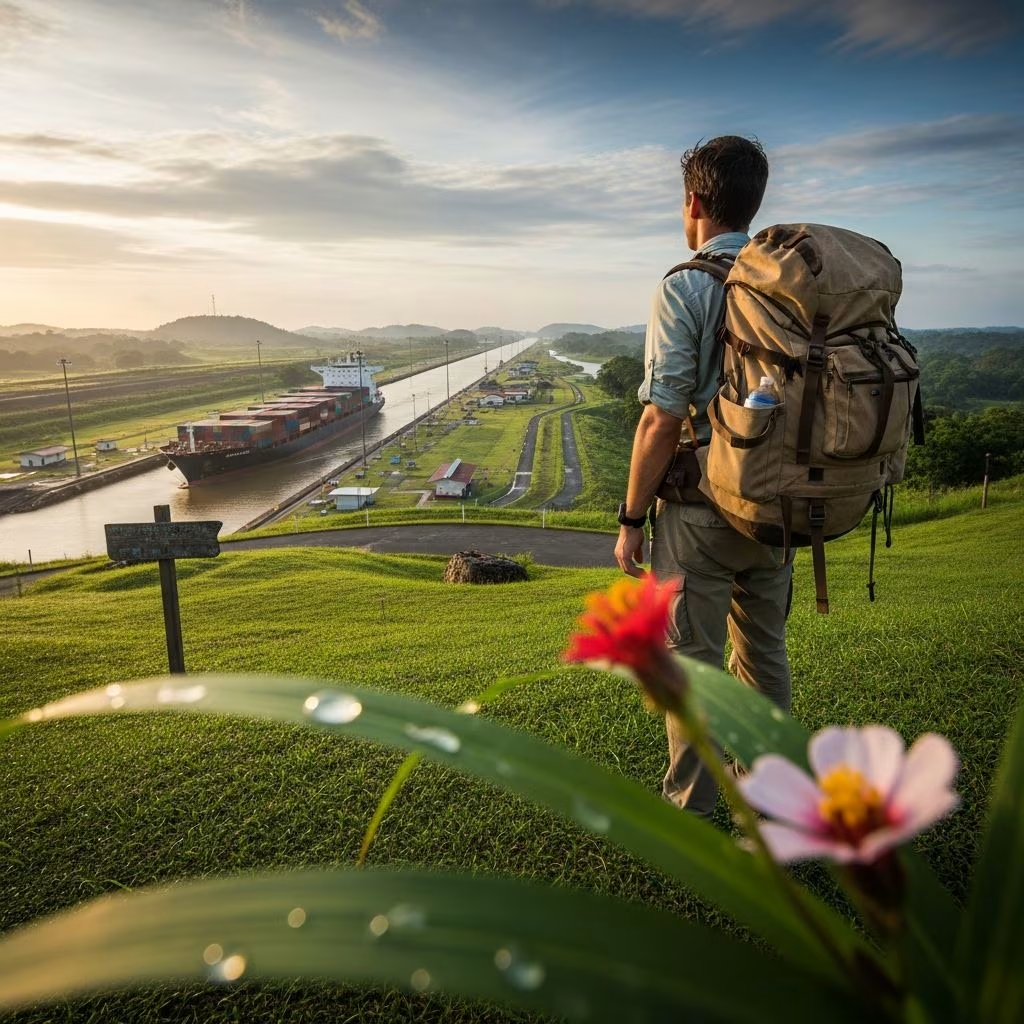
The Panama Canal itself accommodates budget-conscious visitors. Rather than expensive cruise-ship experiences, the Miraflores Locks Visitor Center provides comprehensive understanding of the canal’s history, engineering, and operations for just $17. This represents exceptional value for the educational depth and engineering marvel you witness.
Understanding how different travelers allocate their daily budgets provides practical reference points for planning your specific trip. These frameworks acknowledge that various approaches to travel carry distinct financial implications:
| Expense Category | Ultra-Budget | Moderate Budget | Higher Comfort |
|---|---|---|---|
| Accommodation | $10–15 | $16–25 | $35+ |
| Meals | $5–10 | $11–15 | $20+ |
| Transportation | $5 | $6–10 | $20+ |
| Nightlife & Entertainment | $5–10 | $11–20 | $25+ |
| Activities & Attractions | $5 | $10–25 | $30+ |
| Daily Total | $30–45 | $54–95 | $130+ |
These figures provide context for planning. An ultra-budget traveler might spend $30 to $45 daily by maximizing free activities, cooking meals, and choosing dormitory accommodation. Moderate-budget travelers allocating $54 to $95 daily can enjoy private rooms, restaurant meals, and paid attractions while maintaining discipline. Even $130+ daily budgets remain economical compared to many destinations, providing comfortable middle-class experiences without luxury expenses.
Strategic route planning ensures you experience Panama’s diverse attractions while managing costs effectively. A well-designed itinerary moves through regions with distinct characteristics and accommodation values:
Panama City serves as the logical starting point, offering extensive budget accommodation and activity options. Spend 3-4 days exploring the canal, historic districts, and urban attractions. El Valle de Anton provides a decompression phase with mineral hot springs and nature immersion at moderate costs. Beach destinations like Santa Catalina or Playa Venao complete the circuit with Caribbean charm and water activities. This progression—urban exploration, mountain retreat, beach relaxation—prevents tourist fatigue while showcasing Panama’s geographic diversity.
Daily budgets range from $30-45 for ultra-budget travelers using hostels and street food, $54-95 for moderate comfort with private rooms and restaurant meals, and $130+ for higher comfort levels. Your actual spending depends on accommodation choices, dining preferences, and activity selections.
Budget travel in Panama is generally safe when you use established hostels, public transportation, and exercise standard urban awareness. Many budget accommodations cluster in backpacker-friendly areas where collective traveler presence creates natural security.
Yes. The Miraflores Locks Visitor Center offers educational canal experiences for $17, providing exceptional value compared to commercial cruise packages. Buying tickets in advance streamlines entry despite potential line length.
May through November represents the wet season with hotel rates 10-30% lower than peak season. While afternoon rains occur regularly, they typically last 1-2 hours, and certain activities like birdwatching actually improve during this period.
Extremely reliable. Buses operate frequently throughout the country at under $1 per hour of travel, and Panama City’s subway system charges only $0.35 per ride. Rideshare apps provide additional options for areas without transit coverage.
