

 Travel Essentials
 Travel Essentials

Discover Panjin Red Beach, a crimson wetland in northeastern China where red seepweed, rare birds, and striking autumn scenery create a natural wonder.
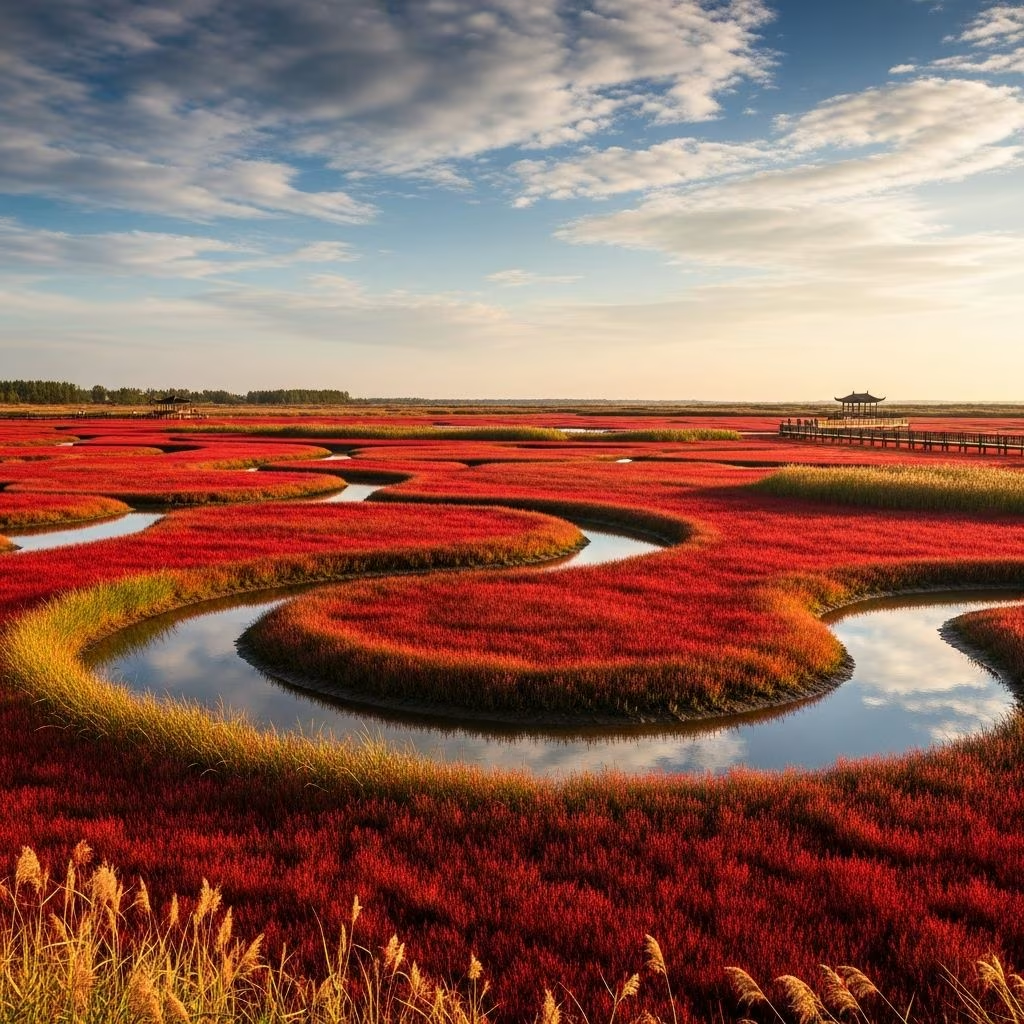 Travel Essentials
This extraordinary site in northeastern China defies typical beach expectations, offering instead a mesmerizing expanse of red-hued vegetation amid one of the planet’s most vital ecosystems. Far from sandy shores, Panjin Red Beach captivates with its unique biology and biodiversity.
The striking crimson color stems from **Suaeda salsa**, a resilient seepweed species adapted to harsh saline conditions. This halophyte begins sprouting in spring, shifting from pale green through jade tones to intense red by autumn, creating a sea-like blanket over the marshlands.
Thriving in the alkaline, salty soils of the Liaohe River Delta, Suaeda salsa accumulates pigments as a survival mechanism against environmental stress. The transformation peaks from September to October, when the landscape achieves its most vivid scarlet intensity, drawing global attention.
Situated in Dawa County near Panjin City, Liaoning Province, the Red Beach forms part of the Shuangtaizi Hekou National Nature Reserve. Spanning approximately 51 square miles, it ranks as the world’s largest continuous reed marsh and a cornerstone of coastal wetland preservation.
This delta ecosystem supports a complex food web, with saline waters fostering microorganisms that nourish the seepweed. The reserve hosts **399 species of wildlife** and over **260 bird types**, including endangered red-crowned cranes, black-beaked gulls, white storks, and whooper swans. These birds rely on the area for breeding, nesting, and migration routes between East Asia and Australia.
| Key Wildlife Highlights | Status | Role in Ecosystem |
|---|---|---|
| Red-crowned crane | Endangered | Breeding and wintering |
| Black-beaked gull | Protected | Nesting in reeds |
| White stork | Protected | Migration stopover |
| Whooper swan | Protected | Foraging in wetlands |
Declared a state-protected area in 1988, the reserve safeguards this biodiversity hotspot against encroachment, though challenges like pollution persist.
Visitors witness a dynamic color palette year-round. Spring (April-May) brings initial green shoots; summer deepens to jade; and autumn unleashes the full crimson spectacle. The optimal window is **September**, when hues are boldest and fledglings prepare for southward journeys.
Even in off-seasons, the reed marshes offer serene beauty and birdwatching opportunities.
Most of the 18-km Red Beach remains off-limits to preserve its fragility, but a designated tourist zone features a **6,500-foot wooden boardwalk** extending into the crimson fields. This elevated path allows close-up views without disturbing the habitat.
Boat tours glide through reed-choked channels, offering panoramic vistas and wildlife sightings. Photography enthusiasts revel in the surreal, otherworldly scenes—perfect for dramatic landscapes and avian portraits. Dawn and dusk yield the most magical lighting for captures.
Additional attractions include observation towers for elevated perspectives and educational exhibits on local ecology.
From Beijing, high-speed trains reach Panjin in 4-6 hours. Local buses or taxis cover the final 20 miles to the reserve entrance. Shuttles from Panjin city center simplify the journey.
Aim for September for maximum color, though summer provides reliable displays. Check weather forecasts, as autumn can bring cooler temperatures (10-20°C / 50-68°F).
Panjin offers hotels from budget guesthouses to resorts. Eco-lodges near the reserve provide immersive stays with wetland views.
Since 1988 protections, authorities have expanded monitoring and habitat restoration. The reserve’s status as a Ramsar wetland candidate underscores its global significance. Yet, industrial proximity threatens water quality, prompting ongoing anti-pollution initiatives.
Community programs educate locals on sustainable practices, balancing tourism with preservation. Visitor limits and revenue reinvestment support these endeavors.
Unlike sandy beaches, this mudflat marvel showcases nature’s adaptive artistry. Its scale, color drama, and faunal richness position it among the world’s top natural spectacles, rivaling phenomena like Iceland’s black sands or Hawaii’s green beaches.
For travelers seeking authentic eco-adventures, Panjin delivers unparalleled immersion in a living, breathing canvas of red.
The crimson shade comes from Suaeda salsa, a seepweed that turns red in autumn due to pigment accumulation in saline soils.
Yes, but the tourist section operates seasonally with peak access in autumn. Confirm current hours via official channels.
Boardwalk access is self-guided, but boat tours and birdwatching guides are offered on-site.
Trains from Beijing (4-6 hours), shuttles from Panjin station to the site (20 miles).
Yes, with easy boardwalks suitable for all ages, though young children need supervision near water.
Over 260 bird species, including endangered cranes and gulls, plus mammals and aquatic life.
Panjin Red Beach invites explorers to witness a rare fusion of color, life, and resilience. Whether for photography, nature study, or quiet reflection, this crimson wonder promises memories etched in scarlet.
