

 Travel Essentials
 Travel Essentials

A comprehensive guide to Paris's hip-hop landscape, featuring legendary venues, breakthrough artists, and the cultural significance of rap in the French capital.
 Travel Essentials
Paris stands as one of Europe’s most influential hubs for hip-hop and rap music, a cultural phenomenon that has transformed the city’s musical landscape over the past three decades. What began as an imported American art form has evolved into a distinctly Parisian expression, reflecting the city’s diverse communities, social narratives, and artistic innovation. The French capital’s hip-hop scene is not merely a carbon copy of its transatlantic origins; instead, it has developed its own identity, drawing inspiration from local experiences while maintaining a global perspective that attracts artists and enthusiasts from around the world.
The journey of hip-hop in Paris mirrors the broader transformation of French society itself. Over three decades, the scene has matured significantly, expanding beyond its initial subculture status to become a mainstream cultural force. This evolution reflects how the genre has adapted to the changing demographics and socioeconomic conditions of the city and its surrounding regions.
Early French rappers used the medium to address colonization, socioeconomic inequality, and the lived experiences of residents in the city’s peripheral neighborhoods known as the banlieues. These artists channeled authentic storytelling, turning their narratives into powerful social commentary. Today, the contemporary rap landscape has broadened considerably, with performers emerging from varied backgrounds and addressing topics that resonate across multiple demographics. This diversification signals how Paris’s hip-hop community has become more inclusive and reflective of the city’s multicultural population.
Paris offers an impressive array of venues catering to different scales and styles of hip-hop performances. The infrastructure for live rap has developed dramatically, accommodating everyone from international superstars to emerging underground talents.
Beyond central Paris, the expansion known as the “Grand Paris” initiative has extended the hip-hop circuit into surrounding areas. Venues like Le Tamanoir in Gennevilliers, situated north of the ring road, now serve as platforms for urban and world music, including hip-hop alongside reggae, Voodoo rock, and Comores blues. This geographical expansion demonstrates how the scene continues to grow beyond traditional downtown entertainment districts.
La Place represents a significant institutional commitment to hip-hop culture within Paris proper. Located within a distinctive glass structure that straddles Chatelet metro station in the heart of the city, this dedicated hip-hop culture center was established as part of a broader city hall initiative to revitalize the district. Such official recognition underscores how hip-hop has transitioned from a marginalized subculture to an art form worthy of municipal investment and cultural programming.
Modern Paris hip-hop encompasses both established figures and dynamic emerging talent. The scene’s vitality stems from this mix of veteran performers and fresh voices pushing boundaries and exploring new sonic territories.
Jul stands out as France’s best-selling rap artist, boasting approximately 4 million albums sold by age 30. Originally from Marseille, Jul commenced his professional career in 2013 and has maintained an extraordinary output of two albums annually, with virtually all releases achieving platinum certification. His signature sound combines trap production with what industry observers term “Thai beat,” creating a distinctive musical signature. One of his most successful projects, Je ne me vois pas briller (I Don’t See Myself Shine), achieved triple platinum status, while certain music videos have accumulated over 164 million views. Jul’s commercial dominance demonstrates how contemporary French rappers can achieve international recognition while maintaining creative prolificacy.
Beyond mainstream success, a dynamic cohort of emerging artists including Bekar, TIF, and Meryll are expanding the creative possibilities of Parisian hip-hop. These figures represent the next generation of voices, each bringing unique perspectives and production approaches to the evolving landscape.
Physical music retail continues to play an important role in Paris’s hip-hop ecosystem. Most record shops throughout the city maintain dedicated hip-hop and rap sections, serving both collectors and casual fans. Music Avenue, situated in the Bastille neighborhood near Faidherbe Chaligny, exemplifies these specialized retail spaces where enthusiasts can browse vinyl, CDs, and other formats while connecting with the broader community of dedicated listeners and musicians.
Beyond the boundaries of France, Paris holds symbolic significance throughout international hip-hop culture. The city has inspired numerous rappers worldwide, functioning as a metaphorical landscape in countless lyrics and creative narratives. For many artists, Paris embodies luxury, fashion sophistication, and artistic heritage—qualities that align naturally with hip-hop’s aspirational narratives.
The imagery associated with Paris—from the Eiffel Tower to iconic fashion runways—provides convenient shorthand for elegance and cosmopolitan success. Rappers frequently reference the city to convey concepts of refinement, global influence, and elevated lifestyle ambitions. Additionally, Paris represents creativity and cultural connection, drawing on the city’s historical significance as a center for artistic innovation and intellectual exchange. Some artists utilize Paris references to metaphorically explore personal achievements or demonstrate their international reach and cultural awareness.
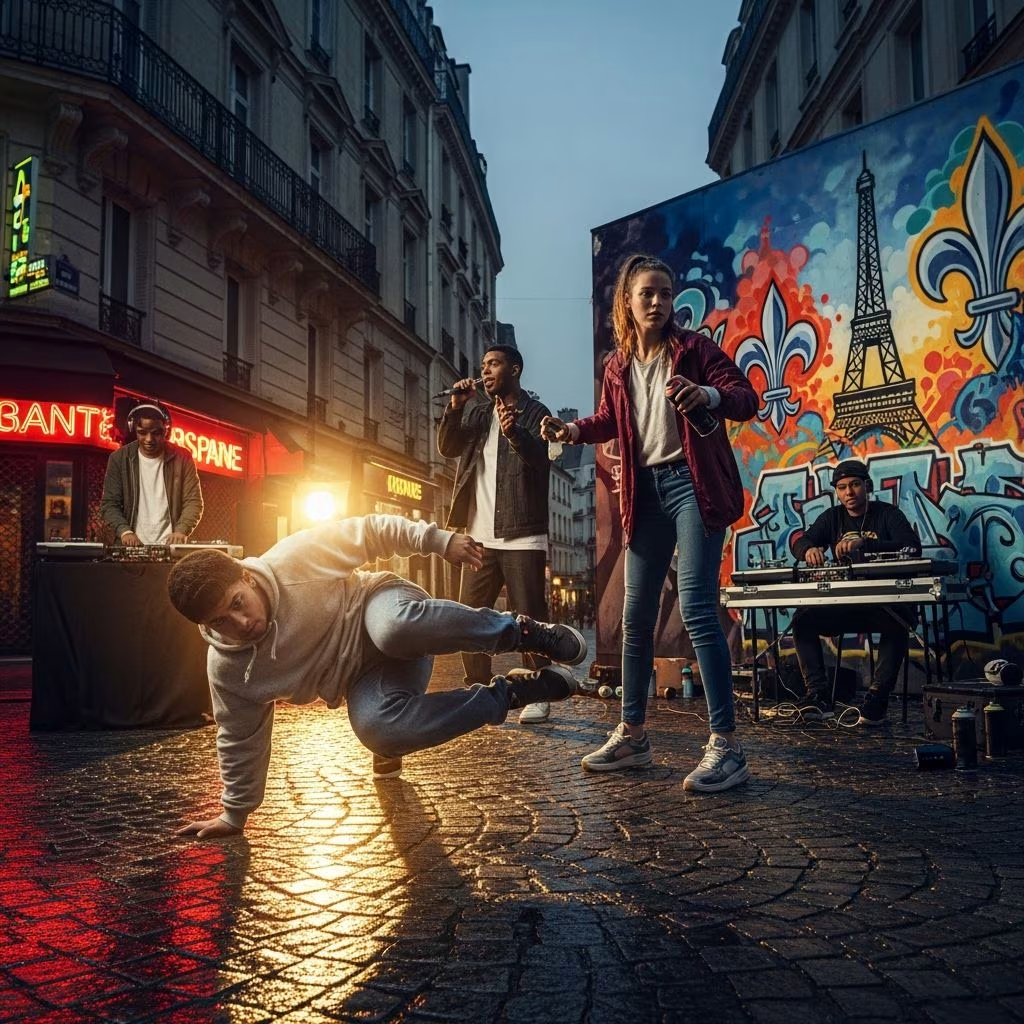
The authentic Paris hip-hop experience extends beyond formal venues into grassroots spaces where the culture maintains its original rebellious and creative energy. Graffiti art adorns tunnels throughout the city, while makeshift studios in suburban neighborhoods serve as incubators for raw, unfiltered artistic expression. Underground cyphers—freestyle rap circles in darkened alleyways and hidden urban spaces—continue to function as vital training grounds where new talent develops skills and tests material before seeking professional opportunities.
Dance communities represent another crucial dimension of Paris’s hip-hop culture. Dedicated schools such as the Juste Debout School and Flow Dance Academy train the next generation of dancers, while casual spaces like Sneakers and Chill provide informal gathering venues. The city’s prominence in the international breakdancing and hip-hop dance circuit, particularly as host to events like the Dance Your Style World Final, underscores Paris’s multifaceted contribution to the global movement.
Hip-hop in Paris continues to function as a vehicle for social commentary and political expression, maintaining the genre’s historical relationship with activism and community advocacy. The music serves as a mirror reflecting contemporary social issues, community struggles, and cultural identities. Through rap narratives, artists address systemic inequality, immigration, identity formation, and the experiences of marginalized populations—themes that resonate deeply in a city with complex demographic composition and ongoing social dynamics.
The trajectory of Paris’s hip-hop scene points toward continued growth and global influence. As the genre matures within French cultural institutions—evidenced by dedicated performance festivals, retail spaces, and community centers—the scene becomes increasingly formalized while simultaneously maintaining its grassroots creative energy. The diversification of artist backgrounds and thematic content suggests the scene will continue expanding beyond traditional hip-hop audiences to reach increasingly broad demographic segments.
The international recognition of French rap artists, combined with Paris’s status as a cultural capital, positions the city as an essential nexus in the global hip-hop network. As emerging artists continue developing innovative sounds and established performers reach new commercial heights, Paris remains a vital center where hip-hop culture continues evolving, adapting, and inspiring both local communities and worldwide audiences seeking authentic urban expression.
