

 Travel Essentials
 Travel Essentials

Discover how Paris is evolving in 2026 with greener streets, faster transport, landmark reopenings, and practical tips for visitors.
 Travel Essentials
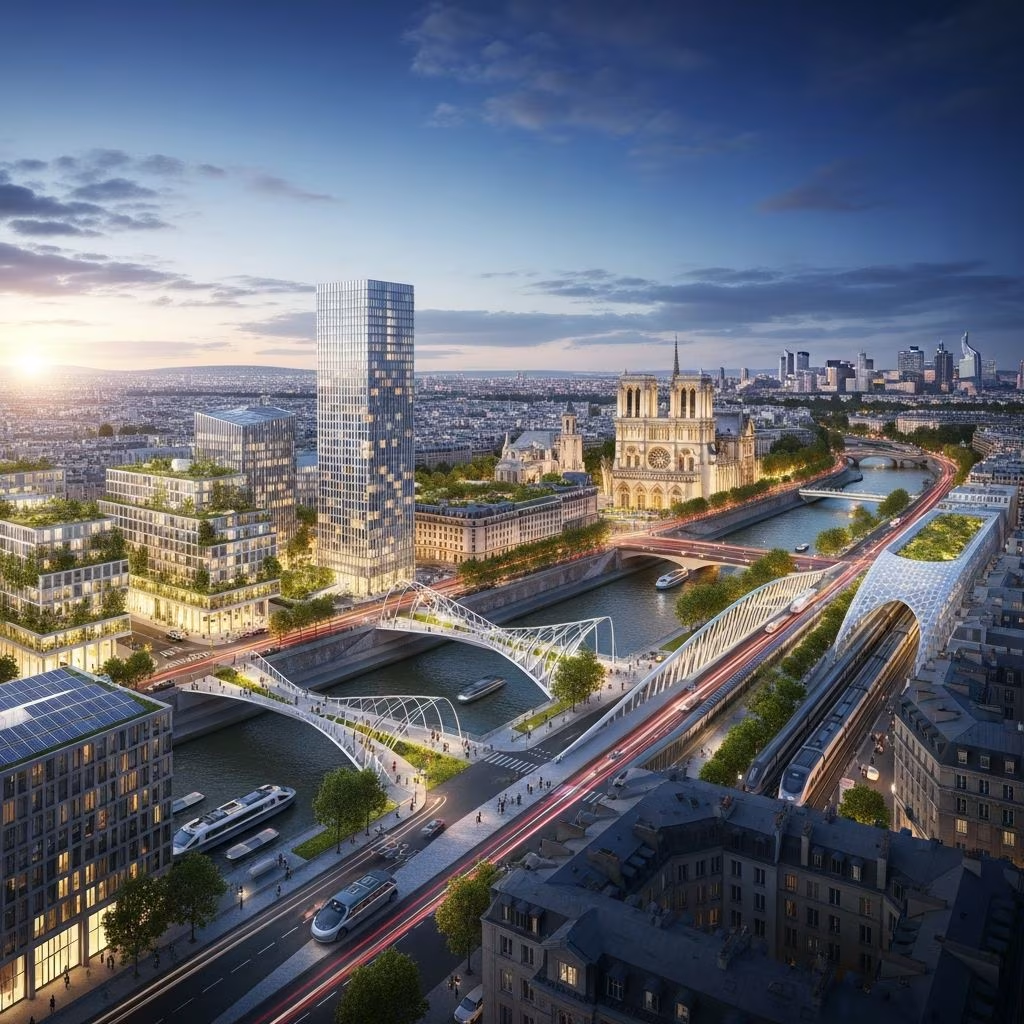
Paris continues to reinvent itself as a global leader in urban innovation, sustainability, and cultural preservation. Following the transformative impact of the 2024 Olympics and Paralympics, the city has accelerated projects aimed at reducing car dependency, enhancing public transport, restoring landmarks, and creating greener public spaces. These developments make Paris more accessible, eco-friendly, and vibrant for visitors in 2026.
The restoration of historic sites remains a focal point, balancing preservation with modern accessibility. Notre-Dame Cathedral, devastated by a 2019 fire, fully reopened in late 2024 after meticulous reconstruction. Visitors now experience timed-entry tickets to manage crowds at this restored gem, featuring enhanced safety features and digital guides.
However, not all sites are immediately accessible. The Musée d’Orsay Saint-Germain extension faces delays until 2027, while the Centre Pompidou’s comprehensive overhaul extends to 2030. Travelers should plan around these closures, opting for alternatives like the Louvre, which introduced new pricing structures in 2026 alongside crowd-control measures.
Further afield, Disneyland Paris sees upgrades, including the Disney Sequoia Lodge renovation starting in January 2026, targeting a refreshed luxury experience by late 2026 or early 2027. In central Paris, the Hôtel de Ville-adjacent ‘Cœur Paris’ project will transform a Haussmann-era complex into mixed-use spaces with housing, offices, health facilities, and shops by 2028.
Paris’s commitment to sustainable transport has reshaped daily movement. Mayor Anne Hidalgo’s vision has expanded bike lanes dramatically, spurred by the COVID-19 shift from crowded metros. Dedicated paths now crisscross the city, with cyclists dominating peak hours—pedestrians must yield to these fast-moving pelotons.
The Grand Paris Express, a 200km driverless metro network with 68 stations across four new lines (15-18) and extensions, is rolling out from 2021 to 2030. This system decongests existing lines, promotes dense urban growth, and connects suburbs like Saint-Denis-Pleyel, a future mega-hub intersecting five metro lines and RER D. Line 4 achieved full automation in December 2023, following Line 1’s 2013 upgrade, with suburban metro expansions providing commuter relief.
By 2025, the CDG Express shuttle links central Paris to Charles de Gaulle Airport swiftly. Regional rail enhancements, like the RER E east-west link completed in 2022-2024, bolster connectivity from Nanterre-La Défense to Val-de-Fontenay.
| Transport Upgrade | Timeline | Impact |
|---|---|---|
| Grand Paris Express Lines 15-18 | 2021-2030 | 200km new tracks, 68 stations, reduced car use |
| Line 4 Automation | Dec 2023 | Driverless efficiency, suburb links |
| CDG Express | By 2025 | Fast airport access |
| RER E Extension | 2022-2024 | East-west regional connectivity |
Air quality initiatives define Paris’s urban evolution. The 2022 ban on outdoor heating units curbed emissions, while the ‘Paris Respire’ program designates car-free zones. Year-round pedestrian areas and seasonal closures—like the first Sunday monthly—offer pollution-free respites. Check interactive maps for locations.
Post-Olympics, low-traffic zones around venues became semi-permanent, prioritizing locals with planters, trees, and street furniture. Future plans include vegetable allotments, composting sites, playgrounds, and eco-toilets in these revitalized spaces.
School-friendly streets limit traffic during drop-off times, creating ‘fresh air islands’ to combat pollution. Car usage has declined steadily since 2012, dropping regionally in 2020, encouraging walking and cycling in the compact city center. The Seine cleanup enabled water sports during the Games, with ongoing efforts for swimmability.
Hotels adapt to the green shift. The iconic Westin Paris Vendôme closed in April 2026 for a €1 billion renovation, reopening as a luxury pinnacle in 2028. New openings cluster around Olympic legacies, emphasizing sustainability and diversity.
Attractions like Etoile Voltaire in the 11th arrondissement advance since 2016, enhancing neighborhood vibrancy. Versailles and Eiffel Tower implement 2026 updates, including timed tickets and accessibility improvements.
Book timed entries for high-demand sites like Notre-Dame and Louvre early. Embrace bikes via Vélib’ stations, but cross lanes cautiously. Use apps for real-time ‘Paris Respire’ schedules and Grand Paris Express progress. Opt for public transport passes covering metros, trams, and RER for seamless travel.
Expect fewer cars, more greenery, and efficient metros. Stay in pedestrian-friendly areas for authentic immersion.
Notre-Dame reopened in 2024; Hôtel de Ville’s Cœur Paris by 2028; Westin Vendôme post-2026 renovation.
Yes, extensive lanes and Vélib’ rentals make it ideal, though busy during commutes.
Phased rollout through 2030, with key lines operational now.
Yes, ‘Paris Respire’ includes first Sundays and seasonal zones.
Accelerated metro automation, bike expansions, and low-traffic permanence.
