

 Travel Essentials
 Travel Essentials

Learn practical strategies for visiting Paris economically, from transit passes to museum discounts and free attractions that showcase the city's charm.
 Travel Essentials
Paris has long captivated travelers with its iconic landmarks, world-class museums, and romantic ambiance. Yet many assume visiting the City of Light requires substantial financial resources. The reality is far more encouraging. With thoughtful planning and knowledge of strategic money-saving opportunities, visitors can experience Paris authentically while maintaining reasonable daily expenditures.
Before embarking on a Paris adventure, it helps to establish realistic spending expectations. Budget categories vary significantly based on travel style and preferences.
Backpackers can navigate Paris on approximately €80 daily by staying in dormitory-style accommodations, preparing some meals independently, utilizing public transportation exclusively, and focusing on complimentary or minimal-cost activities. Mid-range travelers typically spend around €175 daily, which accommodates private hostel rooms or budget hotels, frequent restaurant meals at casual establishments, occasional beverages, selective use of taxi services, and moderate museum visits.
Understanding these baseline figures allows travelers to customize their itineraries according to available resources and desired comfort levels.
Transportation represents one of the most controllable budget categories. Paris possesses an extensive public transit network spanning over 300 subway stations, making private transportation largely unnecessary. Individual metro or bus journeys cost €2.50 per trip, while day passes are available at €12. For extended stays, purchasing passes becomes particularly economical.
Notably, airport transfers need not drain resources either. Rather than expensive taxi services or ride-sharing applications—which typically cost €12–15 for short distances—travelers can utilize RER trains from Charles de Gaulle Airport to central Paris for approximately €10. This single decision can conserve substantial funds.
The Paris public transportation system integrates seamlessly with navigation applications, simplifying route planning for visitors unfamiliar with the city layout.
Lodging expenses traditionally consume the largest portion of travel budgets. Fortunately, Paris offers diverse options at various price points. Hostel dormitory beds start from €25 nightly, while budget hotels begin around €150. Studio apartments and Airbnb accommodations commence at approximately €125.
Selecting accommodations slightly outside central districts can yield meaningful savings. Suburban locations remain accessible via rapid public transportation while offering considerably lower nightly rates. This trade-off—slightly longer commute times in exchange for reduced costs—frequently proves worthwhile for multi-day visits.
Parisian cuisine need not represent luxury spending. Two-course bistro menus often cost from €18, providing authentic dining experiences at reasonable rates. The key involves understanding where locals eat rather than patronizing obvious tourist-oriented establishments.
Markets throughout the city offer fresh produce, cheeses, breads, and prepared foods at fraction of restaurant prices. Constructing picnic meals from market purchases provides both budget-friendly dining and memorable experiences along the Seine or in neighborhood parks. This approach simultaneously saves money and facilitates intimate connections with Parisian culture.
Additionally, many establishments offer daily lunch specials significantly cheaper than evening menus. Strategic midday dining allows visitors to experience quality cuisine while spending substantially less than dinner-time pricing would require.
Paris houses remarkable museums that need not consume excessive budgets. The Louvre, while famous worldwide, charges only €22 for admission—comparable with major European museums. However, strategic timing maximizes value further.
Both the Louvre and Musée d’Orsay offer free entry on specific occasions. The Louvre provides complimentary evening access on the first Friday of each month, while Musée d’Orsay offers free admission on the first full Sunday. Advance booking on each museum’s website proves essential for these popular times.
For comprehensive museum exploration, the Paris Museum Pass covers admission to over 50 attractions, including major venues like the Louvre, Musée d’Orsay, Notre Dame towers, the Arc de Triomphe, and Château de Versailles. Additionally, museums waive fees on the first Sunday of each month—a significant advantage for culture enthusiasts.
Alternative passes like the Go City Paris Pass (starting from €89) and Paris Passlib’ combine sightseeing access with transit combinations, offering tailored solutions for different travel priorities.
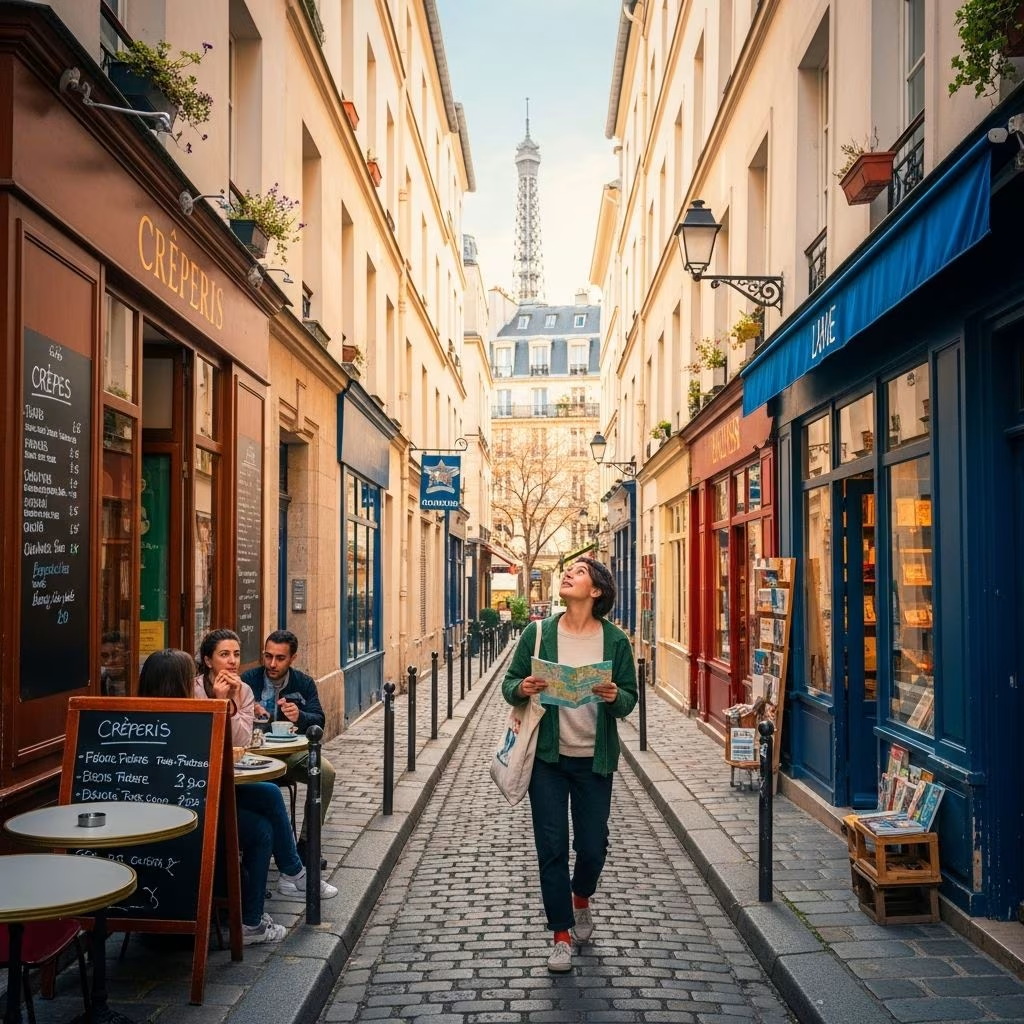
Walking represents the quintessential Paris experience and costs absolutely nothing. The city’s street-level charm—architecture, street performers, bridges over the Seine, and neighborhood character—emerges most vividly when experienced on foot rather than from transit vehicles.
The French concept of “flâneur,” essentially mindful wandering and people-watching, encapsulates this approach perfectly. Neighborhoods like Montmartre, Marais, and Saint-Germain-des-Prés reveal themselves gradually through unhurried exploration, with each street potentially offering discoveries that photographs alone cannot capture.
Free self-guided walking routes available online direct visitors through historically significant areas while requiring only comfortable footwear and time. This methodology provides comprehensive city orientation at zero financial cost.
Quality guided experiences need not necessitate expensive commercial tours. Paris Greeters, an organization of local volunteers, provides complimentary walking tours through requests submitted via their website, ideally several weeks in advance.
Alternative companies including Discover Walks, Sandeman’s New Europe Tours, and City Free Tour operate tip-based model tours ranging from 90 minutes to 2.5 hours. Suggested gratuities of €10–15 provide meaningful compensation to guides while remaining substantially less expensive than traditional paid tours.
An unconventional yet effective sightseeing approach involves utilizing regular public buses as transportation and sightseeing vehicles simultaneously. Bus 69 traverses Paris east to west, passing the Eiffel Tower, Louvre, Marais, Bastille, and Père Lachaise Cemetery for merely €2.50. Bus 42 connects Gare du Nord to Place de l’Opéra, Place de la Concorde, Champs-Élysées, and the Eiffel Tower using the same economical fare.
Paris encompasses numerous parks and gardens accessible free of charge. These spaces provide respite from urban intensity, opportunities for relaxation, and observation of Parisian life. Beyond recreational value, parks offer picnicking locations, cultural observation venues, and architectural appreciation settings.
Many churches throughout the city permit free entry, allowing visitors to appreciate interior architecture and artistic elements. Wandering through neighborhood streets—window shopping at boutiques, observing market activities, and absorbing street life—requires no expenditure while providing authentic cultural immersion.
Planning travel dates around specific promotions yields substantial savings. Visiting during the first Sunday of each month unlocks free museum admission across numerous institutions, potentially saving €100 or more for museum enthusiasts. Similarly, the Louvre’s first Friday evening free entry provides another strategic opportunity.
Traveling during shoulder seasons (April-May or September-October) typically offers lower accommodation rates compared with peak summer months, allowing budget reallocation toward experiences rather than lodging.
Beyond daily passes, weekly transportation cards and multi-day passes exist at various price points. Evaluating personal travel patterns determines whether daily, weekly, or multi-day passes provide better value. The Paris Passlib’ offers customizable combinations integrating transportation and attraction access, potentially delivering superior overall value compared with individual ticket purchases.
| Dining Option | Approximate Cost | Best For |
|---|---|---|
| Market Picnics | €5–10 | Lunch with riverside views |
| Bistro Lunch Specials | €12–18 | Authentic cuisine at reasonable rates |
| Café Breakfast | €3–6 | Morning meals and coffee |
| Street Crepes | €2–4 | Quick snacks while exploring |
| Casual Dinner | €15–25 | Evening meals without fine dining prices |
Organizations like Worldpackers facilitate volunteer exchanges providing free accommodation and sometimes meals in exchange for several hours of work daily. This arrangement dramatically reduces lodging costs while enabling meaningful cultural interaction and community contribution.
Backpackers should anticipate €80 daily for hostels, self-catering, and free activities. Mid-range travelers typically budget €175 daily for private accommodations, restaurant meals, and selective attractions.
Utilize free entry days on the first Sunday of each month at numerous museums, or the Louvre’s first Friday evening free entry. Museum passes covering 50+ attractions provide value for comprehensive sightseeing.
Individual metro rides cost €2.50, with daily passes at €12. Day passes become economical with multiple trips. Airport transfers via RER trains cost approximately €10.
Hostel dormitory beds start at €25 nightly. Suburban accommodations remain accessible via public transit while offering significantly lower rates than central locations.
Absolutely. Walking explorations, market visits, neighborhood discovery, park time, and free cultural venues provide authentic experiences without substantial spending.
Visiting Paris affordably requires intentional planning rather than deprivation. Strategic accommodation selection, public transportation utilization, market-based dining, and knowledge of free or discounted cultural access combine to create meaningful experiences at reasonable costs. The city’s walkable neighborhoods, accessible public spaces, and cultural institutions designed for residents as well as visitors facilitate authentic exploration regardless of budget level. By implementing these approaches, travelers discover that Paris remains accessible and enchanting for visitors prioritizing experience over expenditure.
