

 Travel Essentials
 Travel Essentials

Discover how recent unrest in Paris affects travel, from transport issues to safety tips and insurance options. Stay informed to visit confidently.
 Travel Essentials
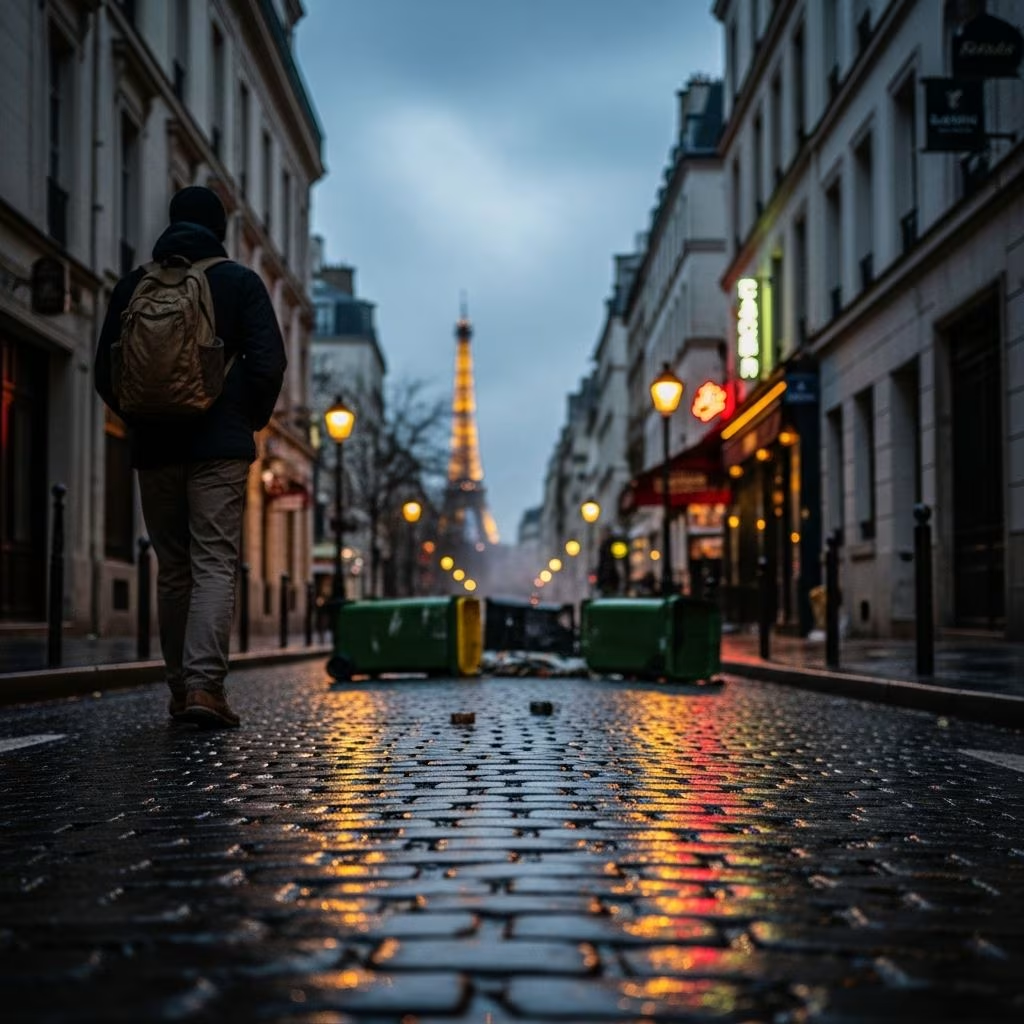
France, particularly Paris, has experienced periodic civil disturbances including protests and strikes that can disrupt travel plans. These events often stem from social, economic, or political issues, affecting transportation, attractions, and public safety. Travelers can still visit safely by staying informed and following precautions.
Civil unrest in Paris frequently arises from labor disputes, pension reforms, or incidents involving law enforcement. For instance, widespread demonstrations occurred due to union-called general strikes, drawing hundreds of thousands of participants and leading to business closures and transit halts. More recently, protests erupted following a police shooting of a teenager in a Paris suburb, sparking riots, arson, and clashes across multiple cities.
These events highlight deeper societal tensions around inequality, policing, and economic policies. While violence peaked during specific nights, authorities reported significant reductions in incidents shortly after, with urban areas returning to relative calm. Travelers should recognize that such unrest can flare up unpredictably, often concentrated in certain neighborhoods rather than tourist hubs.
The U.S. Department of State maintains a Level 2 advisory for France, urging increased caution due to terrorism and civil unrest. A specific “U” indicator flags demonstrations and protests. Following recent events, the U.S. Embassy in Paris issued security alerts warning of ongoing demonstrations that may turn violent, advising avoidance of mass gatherings and areas with heavy police presence.
No blanket travel bans exist for Paris, and major sites like the Louvre and Eiffel Tower have largely remained operational, though temporary closures occurred during peak unrest. Other nations issue similar guidance: monitor local news from reliable outlets like France 24 or RFI, and check for curfews in affected suburbs. The French government deploys riot police to manage crowds, using measures like tear gas if needed.
Public transit bears the brunt of disruptions. Metro, bus, tram, and RER lines in Paris (operated by RATP) have faced suspensions or limitations during protests and strikes. Airport links, such as RER B from Charles de Gaulle (CDG), are prone to delays and pickpocketing. Strikes by air traffic controllers or rail workers can cause last-minute flight or train cancellations.
| Transport Mode | Common Disruptions | Tips for Travelers |
|---|---|---|
| Metro/RER | Suspensions, delays | Check RATP app; allow extra time |
| Buses/Trams | Route changes, halts | Use real-time trackers; walk if safe |
| Airports (CDG/Orly) | Access delays, strikes | Confirm flights; arrive 3+ hours early |
| Taxis/Rideshares | Traffic jams, surges | Book in advance; avoid protest zones |
Protests create congestion, especially between city centers and airports. Crisis management reports recommend confirming all reservations and not checking out of hotels until onward travel is secured. Strikes are often announced ahead, allowing planning adjustments.
On-the-ground reports indicate Paris feels normal for most visitors outside protest hotspots. Freelance journalists note that awareness via news suffices, with attractions reopening quickly.
Iconic sites generally stay open. The Eiffel Tower, Louvre, Musée d’Orsay, and Sacré-Cœur operated through recent unrest, barring brief closures for safety. Street markets, cafés, and neighborhoods like Le Marais buzz with routine activity. Hotels report minimal impacts, though book flexible options.
Protests dwindle rapidly; post-event calm allows normalcy. President Macron has addressed tensions by restricting large events temporarily, aiding stabilization.
Standard policies exclude cancellations for civil unrest or strikes. Opt for “Cancel For Any Reason” (CFAR) add-ons, reimbursing up to 75% of non-refundable costs if canceled 48-72 hours before departure. “Interrupt For Any Reason” covers early returns.
Emergency evacuation may be included if unrest escalates during your trip. Check providers like VisitorsCoverage for France-specific coverage. Airlines like Air France warn of potential delays but maintain schedules.
Monitor announcements: unions publicize strikes days ahead. Use tools like the French government’s traffic site or apps for live transit data. Consider travel windows outside peak protest periods, like avoiding weekends.
For groups or families, prioritize central accommodations near metros. Build buffers: extra days, refundable bookings. Many travelers proceed confidently, as disruptions are localized and short-lived.
Tourist areas are rarely targeted, but avoid any gatherings. Violence is confined to suburbs or specific streets.
No advisories recommend this. Assess personal risk tolerance and buy flexible insurance.
They’ve stayed open mostly; verify hours daily via official sites.
Air traffic controller actions cause delays; monitor Air France updates.
Central areas yes, but heed curfews and avoid outskirts.
France’s protest culture is longstanding, yet tourism thrives annually. Recent events, while disruptive, resolved within days, underscoring resilience. Travelers prioritizing vigilance enjoy iconic experiences undeterred. Paris awaits with its lights, culture, and charm—plan smartly.
