

 Travel Essentials
 Travel Essentials

Chronic high bacteria levels at Park View kayak launch prompt no-contact advisories. Explore causes, health risks, and city efforts to clean up this Miami Beach waterway.
 Travel Essentials
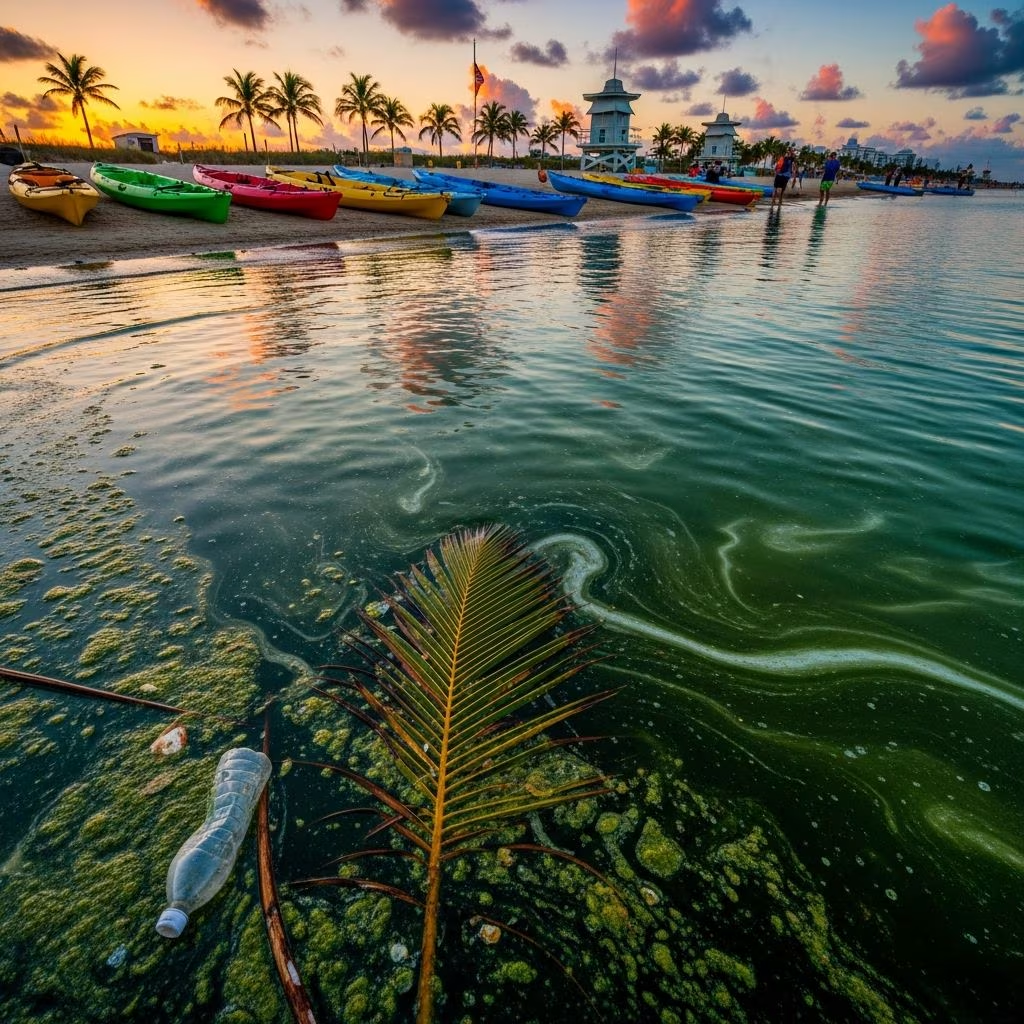
The scenic Park View Canal in Miami Beach, home to a beloved kayak launch near 73rd Street, has become a cautionary tale for water enthusiasts. Chronic elevations in fecal indicator bacteria have led to prolonged no-contact advisories, raising alarms for paddlers, swimmers, and the local ecosystem. This hotspot in Biscayne Bay highlights broader challenges in urban waterway management.
Water quality monitoring at the Park View kayak launch, located at coordinates 25°51’31.20″ N, 80°07’33.00″ W, reveals consistently high levels of enterococci and fecal coliform bacteria. These microbes exceed Florida Department of Health (FDOH) recreational standards, with enterococci often surpassing the 70 MPN/100 mL threshold by wide margins—up to 90% of samples since 2020.
City records document exceedances severe enough to warrant emergency measures. For instance, on March 6, 2020, concentrations reached 345 times the safe swimming limit, prompting immediate closures. Recent data from 2023 monitoring by groups like the Blue Water Task Force (BWTF) show persistent highs, with levels frequently above advisory red lines.
Investigations point to multiple non-human contributors rather than a single municipal failure. Key culprits include:
Advanced studies by the University of Miami analyzed historical city data and new samples, finding human DNA in some instances but primarily non-human origins. Catch basin sediments and waters also tested positive, indicating urban runoff plays a role.
Exposure to elevated enterococci poses risks of gastrointestinal illness, skin infections, ear/nose/throat issues, and respiratory problems, especially via incidental ingestion or open wounds. The FDOH’s no-contact advisory explicitly warns against swimming, wading, or submerging heads at this site.
| Bacteria Type | Threshold (MPN/100mL) | Typical Levels at Site | Health Impact |
|---|---|---|---|
| Enterococci | 70 | 257–477+ (often >10,000) | GI illness, infections |
| Fecal Coliform | Varies by standard | Chronically elevated | Similar to enterococci |
Kayakers face unique risks from paddle splashes, boat scrapes stirring sediments, and proximity to contaminated banks. Children and immunocompromised individuals are most vulnerable.
Since 2020, Miami Beach has launched multi-phase studies. An emergency purchase in 2022 funded specialized analysis after initial probes ruled out major city infrastructure faults. Key actions include:
Phase 1b evaluations confirmed sediments as reservoirs, recommending further environmental correlation studies. Surfrider Foundation reports corroborated findings, urging comprehensive remediation.
Park View Canal’s issues mirror Biscayne Bay’s degradation, where urban development, stormwater runoff, and wildlife converge. BWTF’s 2023 data underscores the kayak launch as a persistent hotspot amid regional efforts. Slow canal circulation exacerbates problems compared to main bay waters.
While advisories stand, determined kayakers can minimize risks:
Alternative spots like nearby cleaner bay accesses offer safer options.
Proposed solutions include sediment dredging, enhanced flushing via pumps, bird/dog waste controls, and infrastructure audits. Ongoing University partnerships aim to model bacteria dynamics against environmental factors like rainfall and tides.
Success hinges on inter-agency coordination, as seen in LTC 250-2022 approvals. Public vigilance through citizen science bolsters efforts.
No, a no-contact advisory remains due to high bacteria. Check latest FDOH or city updates.
Mainly dog/bird waste in sediments, poor flushing, and possible old sewer relics.
Paddling is allowed but avoid water contact. Follow safety protocols.
Since at least 2020, with chronic elevations.
Studies, signage, outreach, and source tracing via experts.
| Location | Bacteria Risk | Facilities | Accessibility |
|---|---|---|---|
| Park View (73rd St) | High (Advisory) | Kayak ramp, parking | Easy, urban |
| North Beach (69th St) | Moderate | Beaches, ramps | Moderate |
| Haulover Park | Low | Full marina | Drive required |
