

 Travel Essentials
 Travel Essentials

Explore Parma’s layered architectural heritage, from Roman foundations and medieval masterpieces to Renaissance frescoes and Farnese Baroque splendor.
 Travel Essentials
Parma, nestled in Italy’s Emilia-Romagna region, stands as a testament to architectural evolution spanning millennia. From its Roman foundations to medieval Romanesque gems and opulent Baroque palaces, the city’s buildings weave a narrative of cultural and artistic prowess. This exploration delves into the key structures that have shaped Parma’s identity, highlighting their historical context, design innovations, and enduring appeal.
Parma’s story begins in 183 BC when it was established as a Roman colony along the vital Via Aemilia road, connecting Piacenza to Rimini. This strategic location fostered early urban development, with theaters, amphitheaters, temples, and villas dotting the landscape. Though many Roman remnants lie buried underground—such as arches uncovered beneath Via Mazzini in the 1950s—fragments persist in modern sites like the Archaeological Museum within Palazzo della Pilotta.
These ancient layers influenced subsequent eras, as medieval builders repurposed Roman materials. The city’s Bronze Age terramare villages, elevated wooden settlements near rivers, underscore even earlier human presence from 1500 to 800 BC, with necropolises at sites now occupied by Piazza Duomo.
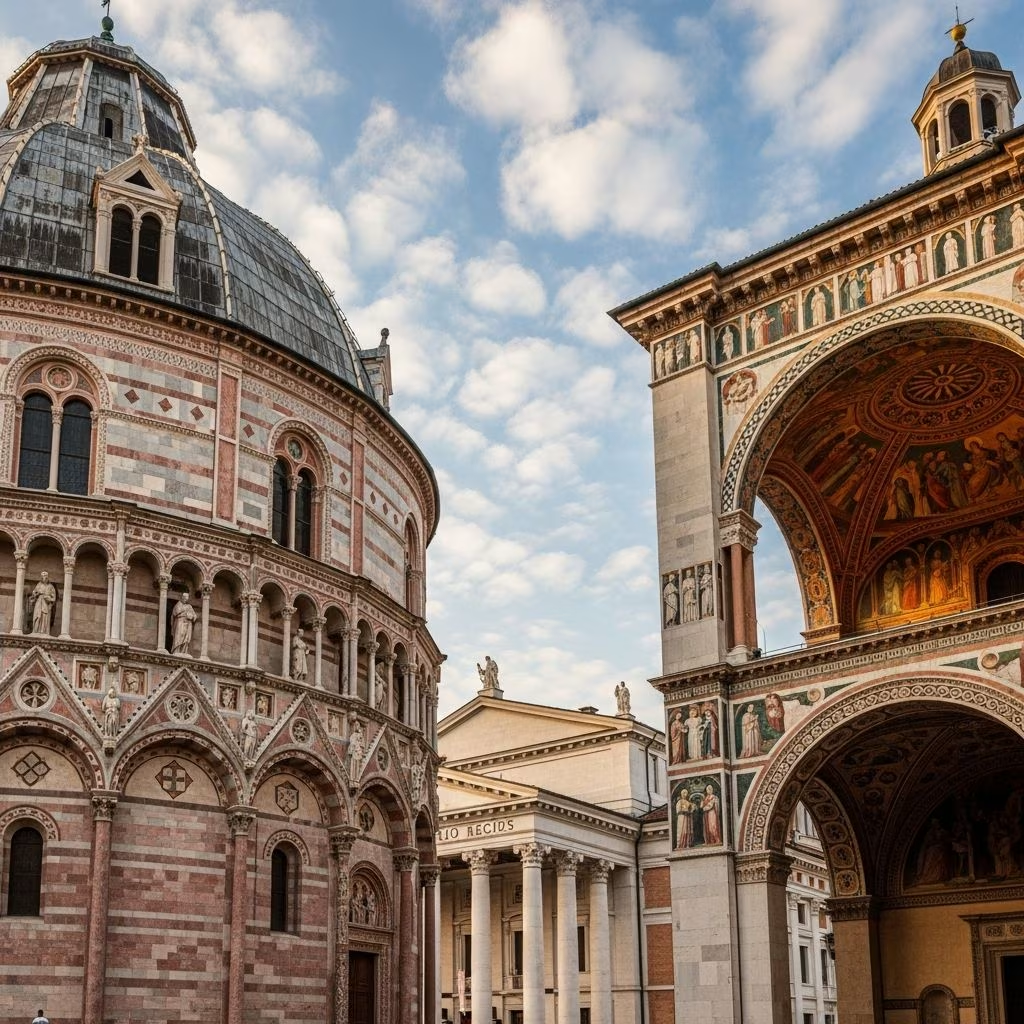
The Middle Ages marked Parma’s architectural renaissance under count-bishops and the emerging Comune. Piazza Garibaldi, built over the Roman Forum, emerged as a second civic heart alongside the Duomo square. Two standout monuments exemplify the shift from Romanesque solidity to Gothic elegance: the Parma Cathedral and the adjacent Baptistery.
Benedetto Antelami’s touch graces both, with his 12th-century cathedral sculptures showcasing intricate detail.
The Renaissance elevated Parma through artists like Correggio and Parmigianino. In 1545, Pope Paul III (Alessandro Farnese) established the Parma-Piacenza Duchy, spurring patronage. Frescoes in the Cathedral dome and Camera di San Paolo at San Paolo convent (11th century, former Benedictine site) highlight Correggio’s luminous style.
| Site | Key Artist/Feature | Period |
|---|---|---|
| Camera di San Paolo | Correggio frescoes | 1519-1520 |
| Oratory of Saint’Ilario | 16th-century chapel art | Renaissance |
| Santa Maria della Steccata | Renaissance sanctuary | 16th century |
The Oratory of Saint’Ilario, Parma’s patron saint, opens to porticos of the Old Hospital complex—rare surviving hospital architecture with high ceilings and large windows, soon to host a cultural gallery.
The Farnese dynasty refounded palaces, churches, and monasteries. Palazzo della Pilotta (1583) houses the Farnese Theatre (1618), a Baroque jewel, alongside museums. Partially WWII-damaged, it remains a cultural hub.
Parma’s ecclesiastical tapestry includes San Giovanni Evangelista abbey church, San Francesco del Prato (13th-century Gothic, Napoleonic jail until 1990s with reopened 16th-century windows), Santa Croce (Romanesque), San Sepolcro, and Church of St. Rocco (from 1528 plague vow).
San Paolo’s convent houses Araldi paintings and Correggio works. Palazzo Eucherio Sanvitale within Palazzo del Giardino boasts Parmigianino frescoes and Gianfrancesco d’Agrate decorations.
Restoration efforts sustain Parma’s legacy, from the Old Hospital to WWII-repaired Pilotta. Walking Strada Repubblica traces the Via Aemilia; Piazza Duomo offers prime views of Cathedral and Baptistery.
The Baptistery, designed by Benedetto Antelami, is often cited as Europe’s key medieval monument for its Gothic-Romanesque fusion.
Benedetto Antelami for medieval sculptures; Correggio and Parmigianino for Renaissance frescoes; Bibiena for Baroque designs.
Yes, the compact center allows covering Cathedral, Baptistery, Pilotta, and key churches via pedestrian paths.
Primarily underground, but the Archaeological Museum displays finds.
Its seamless blend of eras—from Roman roads to Farnese Baroque—in a walkable, food-famous city.
