

 Travel Essentials
 Travel Essentials

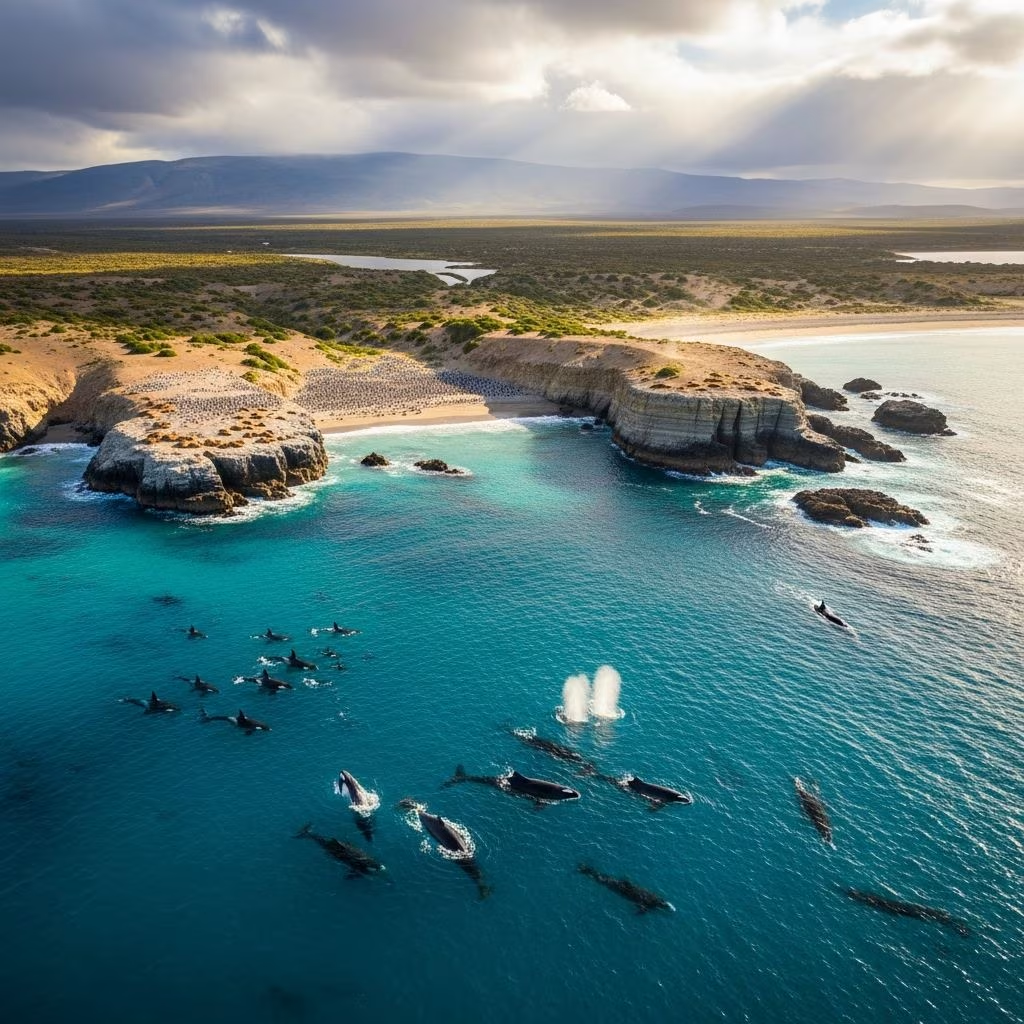
Patagonia Azul Provincial Park in Chubut, Argentina, safeguards 300,000 hectares of biodiverse coastal waters, boosting conservation and sustainable tourism south of Peninsula Valdes.
 Travel Essentials
Argentina’s Chubut province has unveiled Patagonia Azul Provincial Park, a monumental 729,294-acre (300,000-hectare) coastal-marine reserve that stands as the region’s first dedicated marine provincial park. This expansive area, comparable in size to Yosemite National Park in the United States, establishes a strict no-take zone to shield one of the Argentine Sea’s richest biodiversity hotspots from industrial fishing pressures.
In April 2025, the Chubut provincial legislature unanimously passed legislation creating Patagonia Azul, culminating six years of collaborative efforts among government bodies, non-governmental organizations like Rewilding Argentina, the Argentine National Parks Administration, and local communities such as Camarones. This initiative expands a small existing protected coastal zone into a vast sanctuary encompassing over 60 islands, islets, kelp forests, and rocky intertidal zones.
The park’s establishment addresses escalating threats to marine ecosystems, including overfishing, by legally mandating protection for breeding, feeding, and migration sites critical to diverse species. Sofia Heinonen, Executive Director of Rewilding Argentina, hailed it as a “resounding win for marine conservation,” emphasizing its role in preserving unique ecosystems where marine life converges.
Patagonia Azul teems with life, hosting over 50 seabird species that nest on its islands and rocky outcrops. Key marine mammals include humpback whales, sei whales, Southern elephant seals, and South American sea lions, alongside massive colonies of Magellanic penguins. Giant petrels and imperial cormorants thrive here, drawn to the nutrient-rich waters fueled by kelp forests.
These habitats support intricate food webs, from microscopic plankton to top predators, making the park a vital corridor for South Atlantic marine biodiversity.
Situated south of the renowned Peninsula Valdes—about 250 km south of Trelew and near Bahía Bustamante—Patagonia Azul unlocks previously restricted coastal wonders. A scenic byway connects from Cabo Dos Bahías Protected Natural Area southward, featuring four public gateways for visitor entry.
Current access points include Isla Leon and Bahía Bustamante, both offering free campsites. Future developments at Tova Island will introduce a small port for tourist boats, a biological research station, and the Huella Azul coastal trail, enhancing low-impact exploration.
| Access Point | Features | Activities |
|---|---|---|
| Isla Leon | Free campsites, coastal views | Wildlife watching, hiking |
| Bahía Bustamante | Beaches, basic facilities | Camping, boating |
| Tova Island (planned) | Port, research station | Boat tours, trails |
| Cabo Dos Bahías | Gateway to byway | Scenic drives |
The park pioneers a regenerative economy through nature-based tourism, fostering employment and public sea access in a region historically dominated by ranching. Private ranches once blocked coastal views, but Patagonia Azul promotes Argentinians’ connection to their 4,000-km coastline, revealing hidden penguin colonies and whale spectacles.
Tour operators will offer guided boat trips to uninhabited islands for ethical wildlife viewing, camping, and beach exploration. Developments prioritize low-impact infrastructure, ensuring biodiversity thrives alongside visitor experiences.
Rewilding Argentina, supported by initiatives like the Wyss Campaign for Nature, donated 45,000 acres (18,000 hectares) for the park’s entrance, securing national-level protections despite its provincial status. Partnerships with Camarones residents emphasize community involvement in monitoring and tourism operations.
This model contrasts with Peninsula Valdes’ whale-focused tourism, expanding opportunities across Chubut’s underappreciated shores. Mariana Cassini of Rewilding Argentina notes the ocean’s abundance: “four different species of whales… huge penguin colonies,” now accessible sustainably.
Kelp forests and intertidal zones form nurseries for juvenile fish and invertebrates, sustaining the food chain. Industrial fishing previously endangered this balance, but the no-take zone restores equilibrium, aiding species recovery.
The park buffers climate change impacts, preserving migration routes amid warming oceans. Its creation aligns with global marine protection goals, positioning Argentina as an ocean conservation leader.
Visitors should prepare for windy, rugged conditions with sturdy gear, binoculars for wildlife, and bookings via authorized operators. Best seasons align with whale migrations (austral winter-spring) and penguin breeding (September-March).
Ongoing plans include trail networks, visitor centers, and research hubs to monitor species health. Economic ripple effects promise job growth in guiding, hospitality, and conservation, transforming coastal communities.
Patagonia Azul sets a blueprint for Argentina’s marine expansion, inspiring similar protections along its coastline and fostering national pride in oceanic heritage.
A 729,294-acre marine reserve in Chubut, Argentina, protecting coastal biodiversity with a no-take zone.
Approved in April 2025 by Chubut’s legislature.
Humpback whales, Magellanic penguins, sea lions, and over 50 seabird species.
Yes, free sites at Isla Leon and Bahía Bustamante; more facilities planned.
Fly to Trelew, then drive 250 km south; use scenic byway gateways.
Yes, with guided tours emphasizing low-impact, educational experiences.
