

 Travel Essentials
 Travel Essentials

Explore Patagonia's incredible wildlife including pumas, whales, penguins, and condors. Learn where to find them, best viewing seasons, and conservation efforts.
 Travel Essentials
Patagonia stands as one of South America’s premier destinations for observing diverse fauna in their natural habitats. The region spans across southern Chile and Argentina, encompassing vast expanses of steppe, fjords, coastal regions, and mountainous terrain that support an extraordinary variety of wildlife. From apex predators to seabirds, marine mammals to endemic species found nowhere else on Earth, Patagonia offers unparalleled opportunities for naturalists, photographers, and adventure seekers to witness animals in pristine wilderness settings.
Among Patagonia’s most iconic inhabitants is the puma (mountain lion), the largest terrestrial predator in the region and the southernmost-dwelling member of its species. These elusive felines have experienced a remarkable resurgence following legal protections. Until 1980, puma hunting remained legal in Chile, resulting in drastically reduced populations across the territory. Following the implementation of protective legislation, these magnificent cats have gradually increased in numbers and have even begun losing their natural wariness of human observers.
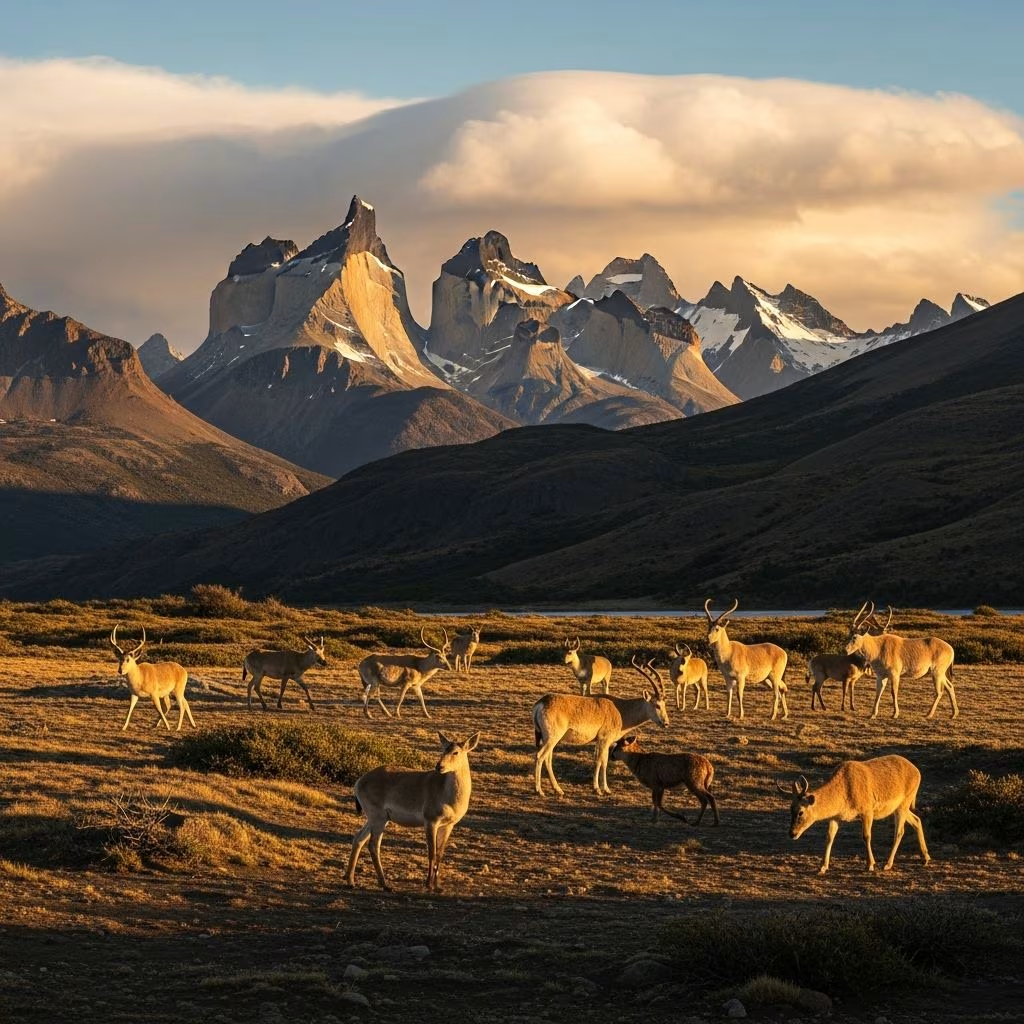
The comeback of pumas has been accelerated by deliberate rewilding initiatives within Patagonia National Park, which have restored prey populations—particularly guanacos—across the grasslands. Guanacos, graceful South American camelids, now number approximately 1,500 individuals within Torres del Paine National Park alone. These herbivores form the dietary foundation for puma hunting, making their abundance directly tied to predator survival rates.
Observing pumas requires patience and strategic timing. The cats are most active during twilight hours—at dusk and dawn—when they venture out to hunt guanacos grazing across the Patagonian Steppe. Torres del Paine National Park in Chile remains the most reliable location for puma sightings, particularly along the park’s edges during these low-light periods. The dramatic mountain backdrops create exceptional photography opportunities, with the cats frequently positioned sentinel-like on rocky outcrops scanning for threats.
Patagonia’s terrestrial fauna encompasses far more than pumas. The region hosts what enthusiasts refer to as “Patagonia’s Big Five”—a roster of species that exemplify the region’s biological significance: the puma, guanaco, huemul (endangered Andean deer), Andean condor, and Darwin’s rhea (a flightless bird).
The Andean condor represents one of the world’s largest flying birds and holds profound cultural significance as Chile’s national bird. Historically, these vultures ranged from Venezuela to Tierra del Fuego, but hunting and habitat destruction decimated populations across their range. Modern condors have adapted by scavenging livestock carcasses and introduced herbivores like European hares and red deer, as their traditional food sources—wild guanaco and vicuna carcasses—have diminished. Major condor colonies exist within Patagonia, offering opportunities to observe these magnificent raptors without disturbing their natural behaviors.
The region supports exceptional bird diversity beyond condors. Torres del Paine National Park alone hosts 118 bird species, alongside 26 mammal species creating one of South America’s richest concentrations of terrestrial fauna. Additional species include huemul deer, pudu deer (the world’s smallest deer), Andean foxes, and Darwin’s rheas—each adapted to specific ecological niches across grasslands, forests, and high-altitude zones.
Patagonia’s coastal waters contain some of Earth’s most remarkable marine aggregations. The Valdés Peninsula, jutting into Argentina’s Atlantic coast, delivers extraordinary wildlife encounters impossible to ignore. Southern right whales arrive between July and December, congregating in protected bays to breed and calve—frequently visible from shore and sometimes startlingly close. These massive cetaceans, once hunted to near extinction, have recovered sufficiently to support regular observation throughout the austral winter breeding season.
The peninsula functions as a convergence zone for multiple marine species. Elephant seals haul out on beaches for rest and reproduction, penguins navigate coastal waters with characteristic waddles, and during specific months, orcas hunt in the shallows creating dramatic predator-prey interactions. This concentration of megafauna makes Valdés one of the Southern Hemisphere’s premier wildlife-viewing destinations.
Four principal whale species inhabit Patagonian waters: the orca (killer whale), humpback whale, southern right whale, and blue whale. Peninsula Valdés offers optimal viewing for southern right whales (June-December) and orcas (September, March, and April). Humpback whales frequent southern Patagonian waters, accessible through specialized whale-watching cruises, while blue whales congregate off Chiloé Island. The region may represent Argentina’s finest location for whale-watching experiences, with day-long excursions (lasting up to 12 hours) providing opportunities to encounter multiple cetacean species simultaneously.
Patagonia’s penguin populations rank among the hemisphere’s most significant. Magellanic penguin colonies represent the primary penguin species throughout the region, with Punta Tombo Nature Reserve hosting breeding grounds where hundreds of thousands return annually to mate and rear chicks. The Punta Tombo reserve also protects the continent’s only major sea lion colony, featuring individuals exceeding five meters in length. Isla Magdalena National Park, accessible through sailing expeditions into remote fjords, supports one of the region’s largest Magellanic penguin populations alongside endangered southern river otters.
Penguin observations peak during the austral summer (December-January) when fuzzy chicks remain in nests, still dependent on parental feeding. Penguins begin arriving along Patagonian coastlines in September and persist through mid-March, offering extended viewing windows but varying photographic and observational opportunities depending on breeding cycle phases.
Beyond penguins, Patagonia’s coastlines support remarkable seabird diversity. Argentina’s Río Negro province alone hosts over 121 marine, coastal, and terrestrial bird species, including Antarctic pigeons, cormorants, terns, and northern eagles. The Chubut coast offers specialized birdwatching at “Isla de los Pájaros” (Bird Island) within the Valdés Peninsula National Park, where concentrated seabird populations facilitate systematic observation and photography.
Several key destinations concentrate Patagonian wildlife viewing opportunities:
Wildlife viewing seasons in Patagonia vary significantly by species and habitat type, requiring strategic planning for optimal encounters:
| Wildlife Type | Peak Viewing Season | Additional Notes |
|---|---|---|
| Pumas | Year-round | Best at dawn and dusk; summer offers extended light hours for observation |
| Guanacos | Year-round | Most visible during grazing hours on open steppe |
| Southern Right Whales | July-December | Breeding and calving aggregations; June-December at Peninsula Valdés |
| Humpback Whales | December-March | Peak season for southern Patagonian whale-watching cruises |
| Orcas | September, March, April | Peninsula Valdés offers most reliable sightings |
| Magellanic Penguins | September-March | Chicks visible December-January; breeding colonies most active |
| Elephant Seals | Year-round | Hauling out on Valdés beaches for rest and reproduction |
Summer and fall represent optimal visiting periods for combining hiking opportunities with wildlife observation, as extended daylight enables both mountain exploration and concentrated animal-watching sessions. Winter months (June-December) concentrate certain marine species, particularly whales and seals, making coastal visits during these periods exceptionally productive.
Patagonia’s wildlife recovery reflects successful conservation policies. The transition from hunting to photography-based observation has fundamentally altered human-wildlife relationships, particularly regarding pumas. Visitor numbers reaching 300,000 annually before recent disruptions demonstrate the region’s popularity, underscoring the importance of sustainable tourism practices that protect habitats while enabling continued observation.
Active rewilding initiatives and research programs enhance conservation outcomes. Estancia Cerro Guido, for instance, operates a puma conservation research project welcoming visitors to participate in scientific fieldwork. Such programs translate wildlife observation into direct conservation support, creating positive feedback loops where tourism revenue funds protection efforts.
Successfully observing Patagonia’s fauna requires more than seasonal awareness. Dedicated wildlife safaris combine hiking with targeted animal-watching, offering balanced experiences for visitors seeking both activity and observation. Full-day puma encounters and extended tracking expeditions cater to enthusiasts willing to invest significant time for elusive species. Kayak adventures provide alternative access to remote habitats unreachable by land.
Multiple tour operators offer curated experiences ranging from day trips to multi-week expeditions. Options include whale-watching cruises to remote fjords, specialized puma-tracking programs, and comprehensive packages combining terrestrial and marine wildlife observation. Timing visits to coincide with specific breeding seasons or migration periods dramatically increases encounter probability and photographic opportunities.
Patagonia’s wildlife-watching potential extends beyond famous megafauna. Lesser-known species—Darwin’s rheas, huemul deer, Andean foxes, and diverse bird populations—contribute to comprehensive natural history experiences. The region’s 118 bird species at Torres del Paine alone ensure that birdwatchers discover regular sightings rather than rare occurrences.
Patagonia represents an extraordinary convergence of terrestrial and marine ecosystems supporting some of Earth’s most charismatic and ecologically significant wildlife. Recovery trajectories for previously hunted species demonstrate that protection policies, combined with habitat restoration, enable animal populations to rebound even after severe depletion. The transition from exploitation to observation-based conservation models has created sustainable tourism frameworks supporting both economic development and ecological preservation.
Whether observing pumas hunting across moonlit steppes, witnessing whale aggregations from coastal shores, or photographing penguin colonies in breeding season, Patagonia delivers wildlife encounters of unparalleled intensity and authenticity. Strategic planning aligned with seasonal patterns, dedicated participation in specialized tours, and commitment to responsible observation practices ensure that visitors experience the full spectrum of this region’s remarkable fauna while contributing to its ongoing conservation and protection.
