

 Travel Essentials
 Travel Essentials

Complete guide to hiking the Path of the Gods on Italy's Amalfi Coast, featuring route options, difficulty levels, logistics, and insider tips for planning your adventure.
 Travel Essentials
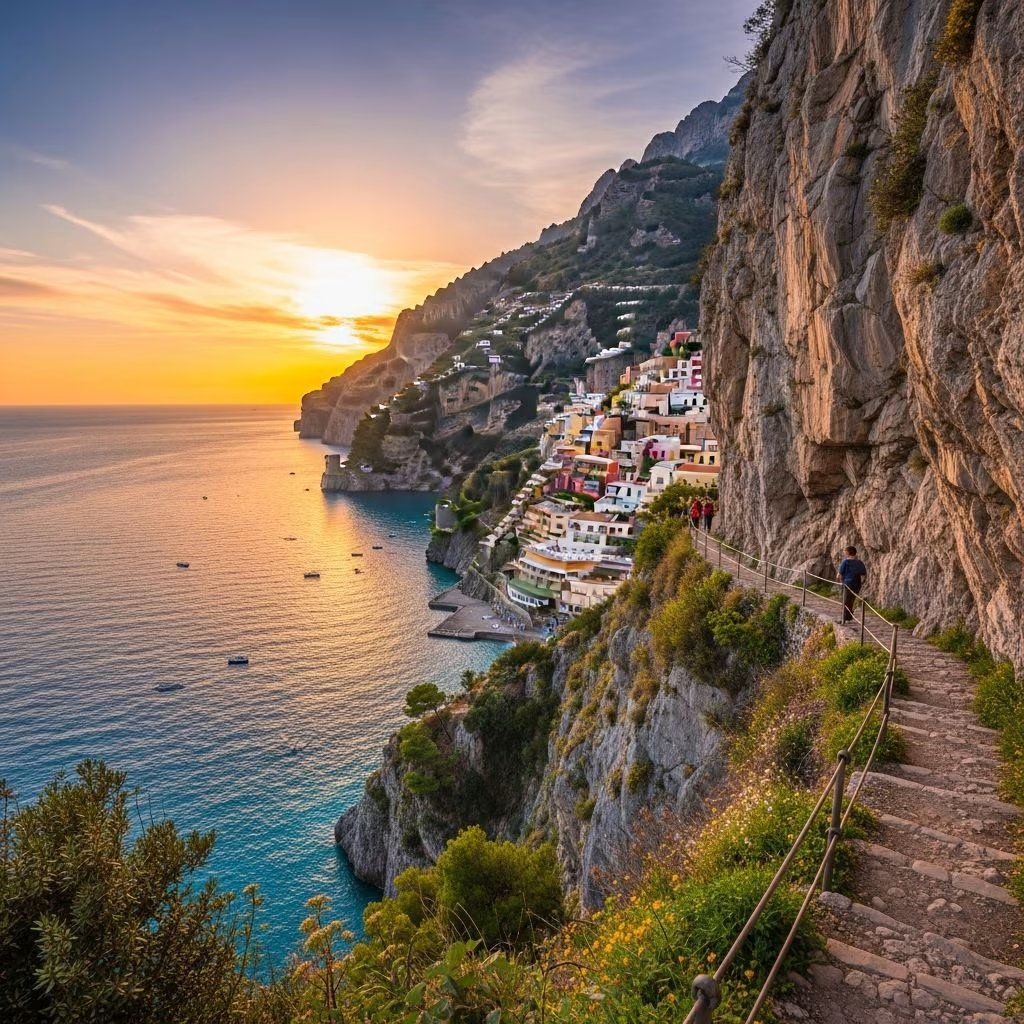
The Amalfi Coast stretches along southern Italy like a jewel necklace, and among its many treasures sits one of Europe’s most celebrated mountain trails. Known locally as the Sentiero degli Dei, this legendary pathway winds through dramatic landscapes where limestone cliffs meet the Tyrrhenian Sea, offering hikers an unforgettable journey through Mediterranean terrain. The trail has earned its divine name through centuries of local lore and undeniable natural beauty, drawing adventurers from around the world who seek both physical challenge and visual splendor.
The Sentiero degli Dei occupies a unique position on the Italian coastline, suspended between mountain and sea at elevations ranging from approximately 80 to 650 meters above sea level. This dramatic elevation change creates a hiking experience that feels almost otherworldly—you traverse through environments that shift from Mediterranean scrubland to ancient terraced gardens, each section revealing new perspectives of the surrounding landscape. The trail’s highest points offer commanding views across the Sorrento Peninsula and, on exceptionally clear days, glimpses of the island of Capri rising from the horizon.
The geographical placement of the Sentiero degli Dei makes it particularly special because it doesn’t simply pass near the coast—it clings to it. Hikers travel along pathways that were originally created centuries ago by locals navigating between isolated villages. These ancient routes have been preserved and improved over generations, creating a hiking corridor that modern travelers can experience with a sense of historical continuity.
One of the most appealing aspects of the Sentiero degli Dei is its flexibility. Unlike rigid hiking trails with single fixed routes, this pathway offers multiple configurations, allowing visitors to customize their experience based on fitness level, available time, and personal preferences.
The Sentiero degli Dei is generally classified as easy to moderate in difficulty, though this designation benefits from clarification. When hiked in the recommended direction—downhill from Bomerano toward Nocelle—the trail presents minimal sustained climbing challenges. However, several factors influence the actual difficulty experienced by individual hikers.
The descent from Bomerano involves 410 meters of elevation loss, which, while manageable, requires significant knee and leg engagement on uneven terrain. The path alternates between paved sections, stone staircases, dirt tracks, and narrow ledges carved into the mountainside. Some sections feature handrails, while others expose you fully to the surrounding landscape. Those with mobility concerns, knee problems, or fear of heights may find certain portions challenging regardless of the “easy to moderate” classification.
Physical conditioning matters considerably. Hikers accustomed to mountain terrain and regular long walks will find the standard route refreshingly manageable, while less active individuals might require more frequent rest stops. The Mediterranean sun reflects intensely off the pale rock, creating heat accumulation even during cooler months, which can affect endurance.
The Amalfi Coast experiences a Mediterranean climate characterized by hot, dry summers and mild, occasionally wet winters. Each season presents distinct advantages and challenges for the Sentiero degli Dei.
Spring (March through May) and autumn (September through October) represent optimal hiking windows. Temperatures remain comfortable, typically ranging from 15 to 22 degrees Celsius, while rainfall remains minimal. The vegetation appears vibrant during spring, with wildflowers and blooming lemon trees adding color to the landscape. Autumn provides equally pleasant conditions with lower humidity levels compared to summer months.
Summer (June through August) brings intense heat and maximum tourist crowds. While the weather remains clear and reliable for hiking, temperatures frequently exceed 30 degrees Celsius, and the trail becomes congested with visitors. Starting very early in the morning becomes essential to avoid midday heat and to secure parking at Bomerano before it fills completely.
Winter months bring cooler temperatures and occasional rain, which can render stone staircases and narrow ledges dangerously slippery. While the trail rarely closes completely, hiking requires greater caution and appropriate waterproof gear. The upside is virtually no crowds and dramatic cloud formations that create moody atmospheric conditions.
At the Colle Serra fork, approximately midway through the standard route, the trail splits into two distinct paths: the high road (Route 327A) and the low road (Route 327). Understanding these variations helps hikers make informed decisions aligned with their capabilities and preferences.
The high road climbs an additional 150 meters compared to the low road, creating steeper inclines and longer hiking duration. However, this elevated path offers more expansive panoramic vistas and generally feels more remote. Hikers choosing the high road should expect additional physical demands but will be rewarded with perspectives that extend further across the coastline.
The low road presents a gentler walking experience, passing near a refreshing fountain and requiring less elevation gain. While offering slightly less dramatic scenery than the high road, the low route still provides exceptional coastal views while maintaining easier footing and reduced physical exertion. Both paths eventually reconverge, allowing hikers to select either route without permanently altering their overall experience.
Successfully completing the Sentiero degli Dei requires coordinating transportation to the starting point and from the ending point, as most hikers cannot park their vehicle at both locations.
The SITA bus system connects the major towns along the Amalfi Coast and provides affordable access to Bomerano (Bus 350) and Agerola. Buses run regularly throughout the day, though schedules vary seasonally. For the standard route beginning in Bomerano, buses deliver you to Piazza Paolo Capasso, where the trailhead begins. After completing your hike to Nocelle, local shuttle services or buses transport you down to Positano, where additional transportation options connect to Amalfi, Sorrento, and other coastal towns.
Parking at Bomerano fills quickly, particularly during summer months and weekends. Many hikers opt to use public transportation rather than navigating the narrow roads and limited parking. Alternatively, private taxi services can arrange drop-off and pick-up logistics, though costs are considerably higher than public transit.
The Sentiero degli Dei traverses remarkably diverse environments despite its relatively short distance. Early sections pass through historic lemon groves where gnarled trees produce the region’s famous lemons, their fragrance drifting through the air. Stone terraces built by previous generations stabilize the hillsides, creating a human-landscape integration that reflects centuries of agricultural tradition.
As elevation increases, Mediterranean scrubland dominates—fragrant rosemary, wild herbs, and coastal flowers create an aromatic corridor. These plants thrive in the intense sunshine and thin soil, their resilience reflecting adaptation to challenging growing conditions. Rocky outcrops reveal the limestone foundations underlying the entire Amalfi Coast, stone that has been shaped by wind, water, and time into dramatic formations.
Scattered throughout the trail are remnants of old stone structures—abandoned buildings, ruined walls, and ancient terraces—silent witnesses to centuries of human habitation. These architectural fragments provide tangible connections to the communities that once thrived in these locations before modern infrastructure drew populations toward larger towns.
The Sentiero degli Dei consistently ranks among Italy’s most photographed hiking trails, and with good reason. Nearly every section offers compelling visual subjects, from expansive coastal panoramas to intimate detail shots of Mediterranean flora.
The most celebrated photo locations include the overlooks near Nocelle with Positano sprawling below, the perspective across the Sorrento Peninsula toward Capri, and close-up shots of wildflowers against dramatic cliff backgrounds. Afternoon light creates particularly striking shadows and color saturation, though morning light provides softer, more romantic tones.
Several safety factors warrant attention when planning your Sentiero degli Dei experience. The trail’s clifftop positioning means certain sections feature minimal safety barriers between you and significant drops. This reality demands appropriate footwear, cautious footing on wet surfaces, and awareness of your physical limits.
Sun exposure accumulates rapidly, even in mild seasons. Dehydration can occur insidiously, particularly in visitors unaccustomed to Mediterranean intensity. Starting with more water than feels necessary and reapplying sunscreen frequently prevents common hiking complications.
The narrow pathways occasionally create congestion during peak seasons, requiring patience and courtesy when encountering other hikers on sections too narrow for comfortable passing.
The communities dotting the Sentiero degli Dei maintain distinct identities despite their geographic proximity. Agerola maintains its reputation as an agricultural center, Positano remains an upscale beach destination, and smaller villages preserve traditional Mediterranean lifestyles. Respecting these communities by staying on marked trails and purchasing from local vendors contributes positively to the region’s sustainable tourism balance.
