

 Travel Essentials
 Travel Essentials

A comprehensive travel guide to the Peloponnese featuring archaeological sites, scenic landscapes, regional cuisine, and practical information for planning your Greek peninsula adventure.
 Travel Essentials
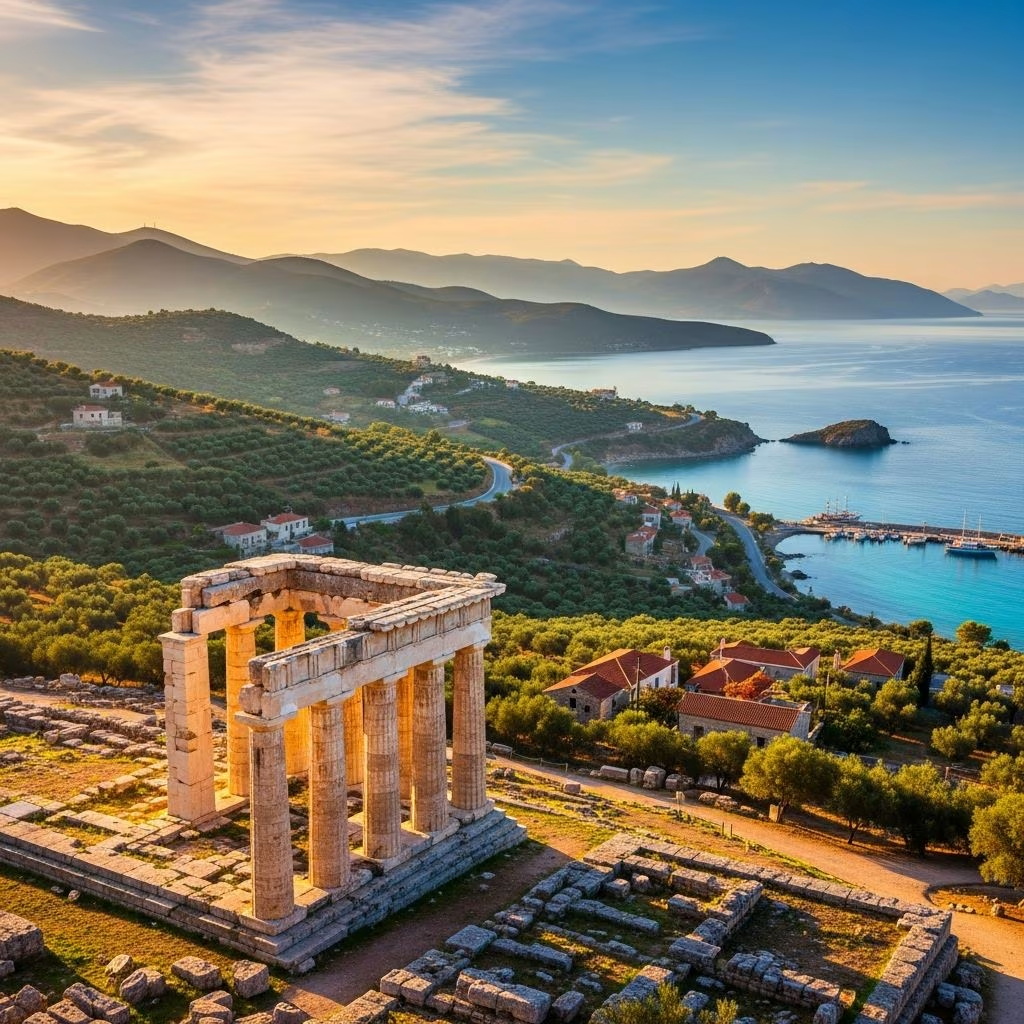
Tucked beneath Athens and connected to the Greek mainland by the iconic Corinth Canal, the Peloponnese represents one of Europe’s most historically rich and geographically diverse destinations. This sprawling peninsula combines layers of ancient civilizations with contemporary charm, offering visitors an intoxicating blend of archaeological wonders, natural beauty, and authentic Mediterranean culture. From windswept mountain villages perched among pine forests to pristine beaches embraced by turquoise waters, the Peloponnese delivers experiences that extend far beyond the typical Greek island fantasy.
The Peloponnese occupies a unique position in Greek geography and consciousness. Separated from the mainland by an engineering marvel completed in 1893, this 21,549-square-kilometer peninsula functions almost as an island, yet maintains its own distinct character within mainland Greece. The region encompasses multiple sub-regions, each with specialized offerings that reward extended exploration.
What distinguishes the Peloponnese from other Greek destinations is its remarkable concentration of Bronze Age civilizations, Byzantine heritage, and medieval Venetian influence preserved in fortress towns and architectural remnants. The landscape itself tells stories of conquest and resilience, with dramatic mountain ranges alternating with fertile valleys cultivated for millennia.
The ideal length for a Peloponnese visit depends entirely on your travel philosophy and available time. A four to five-day excursion allows visitors to experience key highlights without exhaustion, visiting foundational archaeological sites and establishing a comfortable rhythm. This timeframe suits travelers transitioning between multiple Greek destinations or combining a Peloponnese portion within a broader Hellenic itinerary.
Two weeks opens considerably more possibilities, permitting unhurried exploration of primary attractions while incorporating secondary destinations and natural experiences. Visitors can combine coastal relaxation with mountain hiking, archaeological investigation with culinary exploration, and structured touring with spontaneous discovery.
Three weeks represents the threshold where genuine regional understanding becomes possible. This duration accommodates deeper dives into cultural specifics, extended mountain trekking, and visits to lesser-known archaeological sites and villages. Time pressures diminish, allowing for meaningful conversations with locals and unscheduled wandering.
One month facilitates comprehensive regional knowledge, with capacity to explore all major sub-regions systematically: the Arkadian mountain highlands, the cultivated agricultural plains, the dramatic Mani peninsula, and multiple coastal stretches offering distinct environmental and cultural characteristics.
Nafplio, situated in the northeast, functions as the region’s most practical entry point and serves exceptionally well as a base for initial exploration. This picturesque coastal town offers boutique accommodations, excellent pastry shops, boutique retail, small galleries, and a beautiful waterfront promenade especially enchanting at sunset. Three distinct fortifications reward visitor attention: the accessible Akronafplia, the dramatic Palamidi Fortress accessible via 900 steep stairs or by car, and the island fortress Bourtzi, approachable by boat.
From Nafplio, visitors enjoy convenient access to major archaeological sites within driving distances suited to day excursions. The town’s sophisticated infrastructure supports various traveler preferences without sacrificing authentic local character. An archaeological museum enriches cultural context, while Syntagma Square provides social gathering spaces and dining venues.
Epidaurus presents another strategic location, particularly for visitors prioritizing ancient theater experiences and archaeological investigation over urban comforts. The famous theater’s acoustic properties remain extraordinary despite millennia of exposure to Mediterranean elements.
Kalamata, in the southwestern lowlands, offers a distinct character emphasizing regional cuisine and agricultural heritage. Celebrated for the Kalamata olive variety cultivated throughout surrounding Messinia territory, the town serves as an excellent base for food-focused travelers. Professional food tour operators guide visitors through contemporary and historical culinary traditions while introducing local agricultural practices.
Kardamyli provides access to the middle Mani region, offering dramatic coastal scenery juxtaposed against impressive mountain ranges. The Viros Gorge backdrop creates spectacular hiking opportunities for visitors seeking active engagement with landscape.
The Peloponnese contains extraordinary concentration of archaeological sites representing different historical periods and civilizations. Ancient Corinth served as a critical commercial hub during classical periods, with visible remains including temples, shops, and residential structures providing tangible connection to ancient urban life. The site’s strategic positioning made it perpetually important across multiple civilizations.
Mycenae preserves Bronze Age palace complexes and monumental architecture from the civilization that preceded classical Greece. Visitors encounter cyclopean walls, royal tombs, and the famous Lion Gate entrance. Bronze Age artifacts and architectural remains provide context for understanding Homer’s epics and ancient Greek foundation stories.
Epidaurus functions simultaneously as archaeological site and functional theater, with the ancient healing center (Asclepieum) revealing medical and spiritual practices of antiquity. The theater itself remains operational for seasonal performances, allowing modern visitors to experience dramatic productions in precisely the setting where ancients watched plays over two millennia ago.
Ancient Olympia stands as perhaps the most emotionally resonant site, where Olympic Games occurred for over a thousand years beginning in 776 BCE. The archaeological remains include temples, athletic facilities, and structures supporting the religious and competitive events that defined Greek cultural identity.
Mystras represents Byzantine heritage, with ruins of a medieval city cascading down a mountainside near ancient Sparta. The site combines Byzantine churches with residential and military structures, illustrating medieval urban organization and religious priorities.
Messene and Nestor’s Palace offer additional Bronze Age and classical period connections. Nestor’s Palace preserves the world’s best-preserved Mycenaean palace architecture, referenced by Homer in classical literature.
The Peloponnese coastline extends approximately 1,000 kilometers, offering diverse coastal environments rather than uniform beach experiences. Certain beaches become established tourist destinations while others remain relatively undiscovered by international travelers.
Foneas Beach near Kardamyli features distinctive round pebbles and remarkably clear water, providing an intimate swimming experience surrounded by forested mountains descending to the waterline. Voidokilias Beach presents a crescent formation of golden sand meeting turquoise water, creating archetypal Mediterranean imagery.
Quiet coves near Nafplio provide swimming opportunities for visitors preferring privacy over beach amenities and social scenes. The scattered distribution of beaches throughout the coastline means most visitors encounter manageable crowds even during peak seasons.
The coastal towns themselves, particularly Methoni and Koroni, preserve medieval castle architecture overlooking harbors, combining beach access with historical exploration. These bijou towns escape mass tourism despite their photogenic qualities and architectural significance.
Beyond beaches and archaeological sites, the Peloponnese offers exceptional hiking opportunities across diverse terrain. A network of mountain trails, predominantly following former kalderimi (traditional donkey paths), provides structured hiking options for various fitness and experience levels.
The Menalon Trail represents a premier hiking route, spanning 47 miles through Arkadia with sections accommodating different commitment levels. Hikers traverse mountain villages, forest environments, and elevated terrain providing panoramic perspectives of surrounding landscape.
The Lousios Gorge walk guides visitors through dramatic ravine scenery with ancient monasteries clinging to cliff faces, combining natural beauty with spiritual and historical significance. The gorge’s vertical walls and flowing water create distinctive ecological conditions supporting specialized vegetation and wildlife.
Day walks emanate from Kardamyli, exploring the Viros Gorge through routes suitable for various abilities. Local guides and outdoor experience companies provide maps and professional expertise for visitors preferring structured approaches to mountain exploration.
The Arkadian mountain region offers extensive hiking possibilities among traditional villages, cultivated agricultural terraces, and forests of Mediterranean vegetation. Mount Chelmos and Mount Taygetus provide elevated terrain for visitors seeking significant elevation gains and expansive vistas.
Greek hospitality, expressed through the concept of filoxenia, manifests most tangibly through food and dining customs. The Peloponnese’s regional cuisine reflects agricultural products, historical influences, and local ingredients cultivated or raised throughout the peninsula.
Kalamata olives represent the region’s most internationally recognized agricultural product, with cultivation methods refined across centuries. Beyond olives, the Messinia region produces excellent honey and supplementary agricultural products that define local culinary character.
Professional food tours, particularly in Kalamata, guide visitors through contemporary and historical culinary dimensions while introducing agricultural practices supporting food production. Participating directly in markets, tavernas, and prepared food experiences creates visceral connection to regional food culture.
Traditional tavernas throughout coastal villages and mountain towns offer authentic preparations emphasizing fresh ingredients and simplified preparation methods. The dining experience itself represents cultural participation rather than mere consumption activity.
The Peloponnese possesses well-developed road infrastructure comprising highways and rural roads facilitating travel from major cities to lesser-known villages. Rental automobiles provide maximum flexibility for visitors preferring independent exploration schedules and spontaneous route adjustments.
Athens airport serves as the primary entry point, with approximately 2.5 hours of driving required to reach the northern Peloponnese. No direct international flights service regional airports, necessitating Athens transit for most international visitors.
Public transportation networks connect major towns via bus systems, though schedules may operate with less frequency than northern European standards. Organized guided tours provide alternative approaches for visitors preferring structured itineraries without driving responsibilities.
Local guides enhance archaeological site experiences through contextual knowledge and interpretive skills unavailable to independent visitors. Professional guides interpret architectural remains, historical narratives, and cultural significance with expertise developed through extensive training.
Mediterranean climate patterns influence Peloponnese visitation comfort levels. Summer months bring intense heat particularly in lowland regions, while mountain areas maintain more moderate temperatures. Shoulder seasons (spring and autumn) offer ideal combinations of pleasant weather, manageable tourist densities, and functional local services.
Winter months present reduced accommodation availability in smaller towns and occasional mountain area snow, though temperatures remain mild compared to northern European standards. Rainfall concentrates in winter months without creating impediments for determined visitors.
The Peloponnese provides mainland accessibility, exceptional archaeological concentration, and diverse landscape types within compact geography. Unlike island destinations emphasizing beach relaxation, the Peloponnese integrates beach, mountain, and cultural experiences within driving distances suitable for day excursions.
Day one visiting Ancient Corinth and Epidauros with overnight in Nafplio, day two exploring Mycenae and Tiryns with beach relaxation, day three traveling to Mystras through dramatic scenery with overnight in Kardamyli, day four relaxing on Kardamyli beaches, and day five visiting Messene and Nestor’s Palace with swimming at Voidokilias beach represents an effective introductory sequence.
Independent visits to archaeological sites provide satisfactory basic experiences, while professional guides dramatically enhance contextual understanding and historical interpretation. The investment in guided tours typically proves worthwhile for visitors prioritizing deeper cultural engagement.
Akronafplia, accessible by foot, provides convenient fortress exploration. Palamidi Fortress rewards physical effort with expansive views from its elevated position accessible via stairs or vehicular roads. The island fortress Bourtzi, reached by boat, offers distinctive perspectives of the coastline and harbor.
Monemvasia presents a unique settlement pattern, with medieval architecture concentrated on a dramatic rocky outcropping connected to mainland by bridge. The car-free environment within medieval walls creates walking experiences transporting visitors to historical periods. Byzantine and Venetian house architecture provides visual evidence of different occupation periods.
Stemnitsa and surrounding Arkadian villages offer mountain experiences emphasizing landscape beauty and traditional settlement patterns. The villages themselves provide accommodation and dining services while maintaining authentic character.
The Mani peninsula explores visitors to dramatic, relatively undeveloped coastlines and traditional defensive tower architecture reflecting historical bandit periods and clan conflicts. The region’s remote character creates distinctive atmospheric qualities.
