

 Travel Essentials
 Travel Essentials

A comprehensive guide to the Pennsylvanian train, covering schedules, stops, amenities, and travel tips for the 444-mile journey across Pennsylvania.
 Travel Essentials
For travelers seeking a scenic and comfortable way to explore the northeastern United States, the Pennsylvanian train offers a distinctive daytime journey that captures the natural beauty and cultural richness of the region. This Amtrak service connects two major metropolitan centers while making numerous stops through Pennsylvania’s heartland, providing passengers with an engaging alternative to driving or flying.
The Pennsylvanian operates as a daily daytime passenger train service managed by Amtrak, America’s national railroad passenger corporation. This route represents a comprehensive transportation solution for individuals traveling between New York City and Pittsburgh, two of the Northeast’s most significant urban destinations. The service distinguishes itself through its focus on daytime operations, allowing passengers to experience the journey during daylight hours and appreciate the landscape throughout their voyage.
As a federally-designated corridor for high-speed rail service development, the route utilizes infrastructure that has been strategically developed to support passenger rail expansion in the region. The service operates consistently throughout the year, providing reliable transportation seven days a week with a single daily departure in each direction.
The Pennsylvanian covers a 444-mile distance that traverses some of the most geographically diverse terrain in the eastern United States. Beginning in New York City at Moynihan Train Hall, the journey progresses through New Jersey, crosses into Pennsylvania, and concludes at Pittsburgh’s Union Station. The route’s path is notable for its integration with multiple significant geographic features and cultural regions.
Throughout its journey, the train passes through the Appalachian Mountains, Pennsylvania’s capital city of Harrisburg, the distinctive Pennsylvania Dutch Country region, suburban and central Philadelphia, and portions of New Jersey’s landscape. This geographic diversity means that travelers experience multiple climate zones, architectural styles, and cultural traditions within a single journey.
The Pennsylvanian makes stops at 17 distinct stations along its route, each serving important regional transportation hubs and communities. Understanding these stops helps travelers plan connections and identify optimal boarding or alighting points for their specific needs.
Eastern Corridor Stations (New York to Philadelphia):
Central Pennsylvania Stations (Philadelphia to Pittsburgh):
Western Pennsylvania Stations (Central to Pittsburgh):
The complete journey from Pittsburgh to New York City requires approximately 9 hours and 20 minutes of travel time. This duration breaks down into meaningful segments that reflect the geographic distances between major station clusters. Between Pittsburgh and Harrisburg, passengers spend approximately 5.5 hours traversing the mountainous terrain and intermediate stations. The Philadelphia to Harrisburg segment requires roughly 2 hours, while the New York to Philadelphia portion takes approximately 1.5 hours.
The train departs Pittsburgh early in the morning at 7:30 AM, arriving in New York City in the late afternoon at approximately 4:50 PM. The return service from New York operates later in the morning, providing passengers with flexibility in planning their day before departure.
| Day of Week | Departure from Pittsburgh | Arrival in New York | Operating Status |
|---|---|---|---|
| Monday – Sunday | 7:30 AM | 4:50 PM | Daily Service |
The Pennsylvanian maintains consistent service throughout the week with a single daily departure in each direction. This schedule reflects the service’s positioning as a premium daytime travel option rather than a high-frequency commuter service. Passengers traveling on weekends enjoy the same reliable service as weekday travelers, making the route accessible for both business and leisure purposes.
The Pennsylvanian provides several amenities designed to enhance passenger comfort during the extended journey. These services reflect Amtrak’s commitment to creating a competitive alternative to automobile and airline travel for this corridor.
One of the Pennsylvanian’s primary attractions involves its passage through geographically significant landscapes. The route’s western segment traverses complex mountain geography that has historically shaped transportation and settlement patterns in the region.
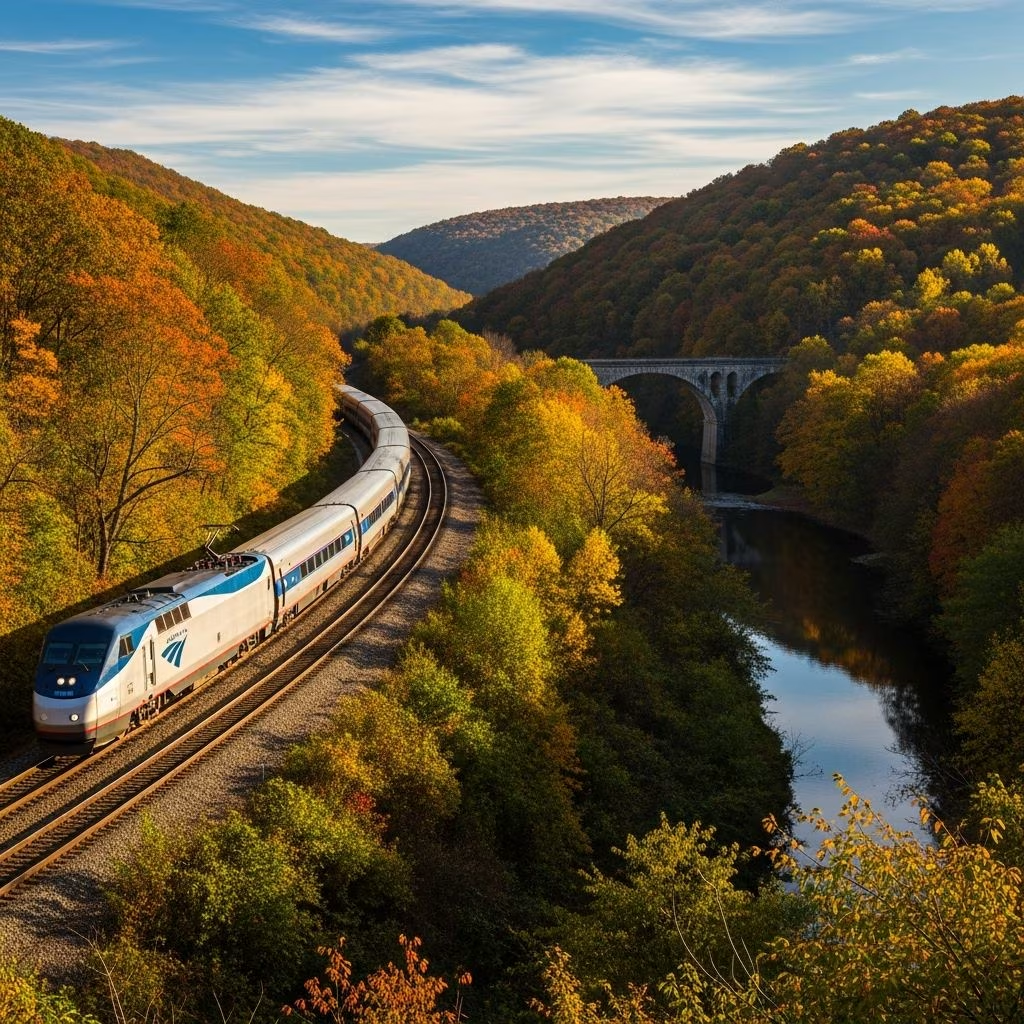
The train follows the Juniata River and Little Juniata River through the central portion of its journey, then ascends Allegheny Mountain and descends through the Little Conemaugh and Conemaugh River valleys. As the route approaches Pittsburgh, it crosses Chestnut Ridge and winds across the Allegheny Plateau before descending through Brush Creek and Turtle Creek valleys into the Pittsburgh metropolitan area. This routing creates opportunities for passengers to observe diverse natural landscapes and understand the region’s topographic character.
The Pennsylvanian functions as part of a larger Amtrak network that facilitates multimodal travel throughout North America. At Pittsburgh, passengers can connect with the Floridian train service, which provides transportation to Cleveland, Toledo, and Chicago for those wishing to extend their journey into the Midwest. These connections transform the Pennsylvanian from a point-to-point service into a component of a comprehensive national rail network.
Additionally, Amtrak provides motorcoach connections from Philadelphia to Washington, DC and Baltimore for passengers seeking alternative routing or wishing to access those metropolitan areas. This integration of rail and motorcoach services extends the practical reach of the Pennsylvanian beyond its direct route.
The Pennsylvanian operates over rail infrastructure with deep historical roots in American transportation development. The service utilizes the Northeast Corridor between New York and Philadelphia, Amtrak-owned infrastructure from Philadelphia to Harrisburg known as the Philadelphia to Harrisburg Main Line, and the Pittsburgh Line operated by Norfolk Southern Railway for the western portion of the route. This combination of ownership and operation reflects the complex nature of American freight and passenger rail infrastructure.
The Philadelphia to Harrisburg Main Line and Pittsburgh Line collectively constitute the Keystone Corridor, a federally-designated region for high-speed rail development and investment. This designation acknowledges the corridor’s importance for regional economic development and transportation policy.
Several stations serve as gateways to important regional destinations and attractions. These stops provide value for travelers with varied interests and objectives.
Travelers considering the Pennsylvanian should understand several practical aspects of the service. The daytime schedule limits flexibility compared to overnight trains on other routes, making it most suitable for travelers with compatible scheduling needs. The nine-hour journey length requires substantial time commitment compared to air travel, but offers cost savings and eliminates airport security and travel time to distant airport facilities.
The single daily departure in each direction means that missed trains cannot be easily recovered through alternative scheduling. Passengers should plan to arrive at stations with adequate time for boarding procedures and potential delays.
The Pennsylvanian covers 444 miles connecting New York City and Pittsburgh via Philadelphia and Harrisburg.
The total travel time is approximately 9 hours and 20 minutes from Pittsburgh to New York City.
The Pennsylvanian makes stops at 17 distinct stations along its route.
Passengers have access to café service, WiFi connectivity, and business class seating options in addition to standard coach accommodations.
Yes, the Pennsylvanian operates daily service with a single departure in each direction.
The morning departure from Pittsburgh occurs at 7:30 AM, with arrival in New York at approximately 4:50 PM.
